
Archivio fotografico

  • About
  • Digitization project
  • How to use the Archive
  • Browse the archive
ENG
  • English
  • Italiano
Search
Search by year
Browse the archive
  • Alexandria
  • Heliopolis
  • Cairo
  • Giza
  • Saqqara
  • Ashmunein
  • Asyut and Deir el-Gebrawi
  • Qau el-Kebir and Hammamiya
  • Abydos
  • Dendera
  • Theban region
  • Gebelein
  • Edfu
  • Kom Ombo
  • Aswan
  • Nubia
  • Miscellanea
Alexandria
  • Cleopatra's needle
  • Landscape
  • Pompey's pillar
Heliopolis
  • Channel
  • Kom
  • Landscape and unidentified areas
  • Latif's house and garden
  • Temenos and nearby areas
  • Temple area
  • Temple of Mnevis
Cairo
  • Egyptian Museum, Cairo
  • Islamic Cairo
Giza
  • Eastern necropolis
  • Evaristo Breccia at the end of the excavation
  • Landscape and unknown mastabas
  • Pyramids
  • Rock-cut tombs
  • Sphynx and funerary temple of Khafre
  • Western necropolis
Saqqara
  • Pyramid of Djoser and nearby areas
  • Tombs of nobles
Ashmunein
  • Excavation area
  • Minia
Asyut and Deir el-Gebrawi
  • Deir el-Gebrawi
  • Landscape
  • Rock-cut tombs of Asyut
Qau el-Kebir and Hammamiya
  • Caves
  • Landscape
  • Predynastic necropolis of Hammamiya
  • Rock-cut tombs of Hammamiya
  • Rock-cut tombs of Qau el-Kebir
  • Transport of antiquities
Abydos
  • Temple of Ramses II
  • Temple of Seti I
Dendera
  • Temple of Hathor
Theban region
  • Colossi of Memnon
  • Deir el-Bahari
  • Deir el-Medina
  • Khokha
  • Luxor temple
  • Medinet Habu
  • Old Chicago House (now dismantled)
  • Qurnet Murai
  • Ramesseum area
  • Rock.cut sanctuary of Ptah and Meretseger
  • Sheikh Abd el-Qurna
  • Temple Complex of Amon in Karnak
  • Temple of Pharaoh Seti I at Qurna
  • Valley of the Kings
  • Valley of the Queens
  • Workmen's huts
Gebelein
  • Campsite, Giulio Farina Excavations
  • Human remains
  • Northern hill
  • Other finds
  • Southern hill
  • Transport of antiquities
Edfu
  • Temple of Horus
Kom Ombo
  • Temple of Sobek and Haroeris
Aswan
  • First Cataract
  • Landscape
  • Qubbet el-Hawa
  • Stone quarry
  • Temple of Philae
Nubia
  • Kiosk of Qertassi
  • Rock-cut chapel of Ellesiya
  • Second cataract
  • Temple of Dendur
  • Temple of Gerf Hussein
  • Temple of Kalabsha
  • Temple of Maharraqa
  • Temple of Taffeh
  • Temples of Abu Simbel
Miscellanea
  • Beni Hasan
  • Dahshur
  • Egyptian landscape
  • Elkab
  • Esna
  • Fayum
  • Gebel el-Silsila
  • Madamud
  • Memphis
About
  • General introduction
  • Team
  • Partners
  • Contact
Digitization project
  • History of the Archive
  • Digitization
  • Map of the excavations
  • 19th century pictures
How to use the Archive
  • What is accessible to whom?
  • How to use the archive
  • Policy on access and use

Archivio fotografico

  • About
  • Digitization project
  • How to use the Archive
  • Browse the archive
Search
  • Home
  • Archive
  • Qau el-Kebir and Hammamiya
  • Caves
  • Campsite
Collezione

Campsite

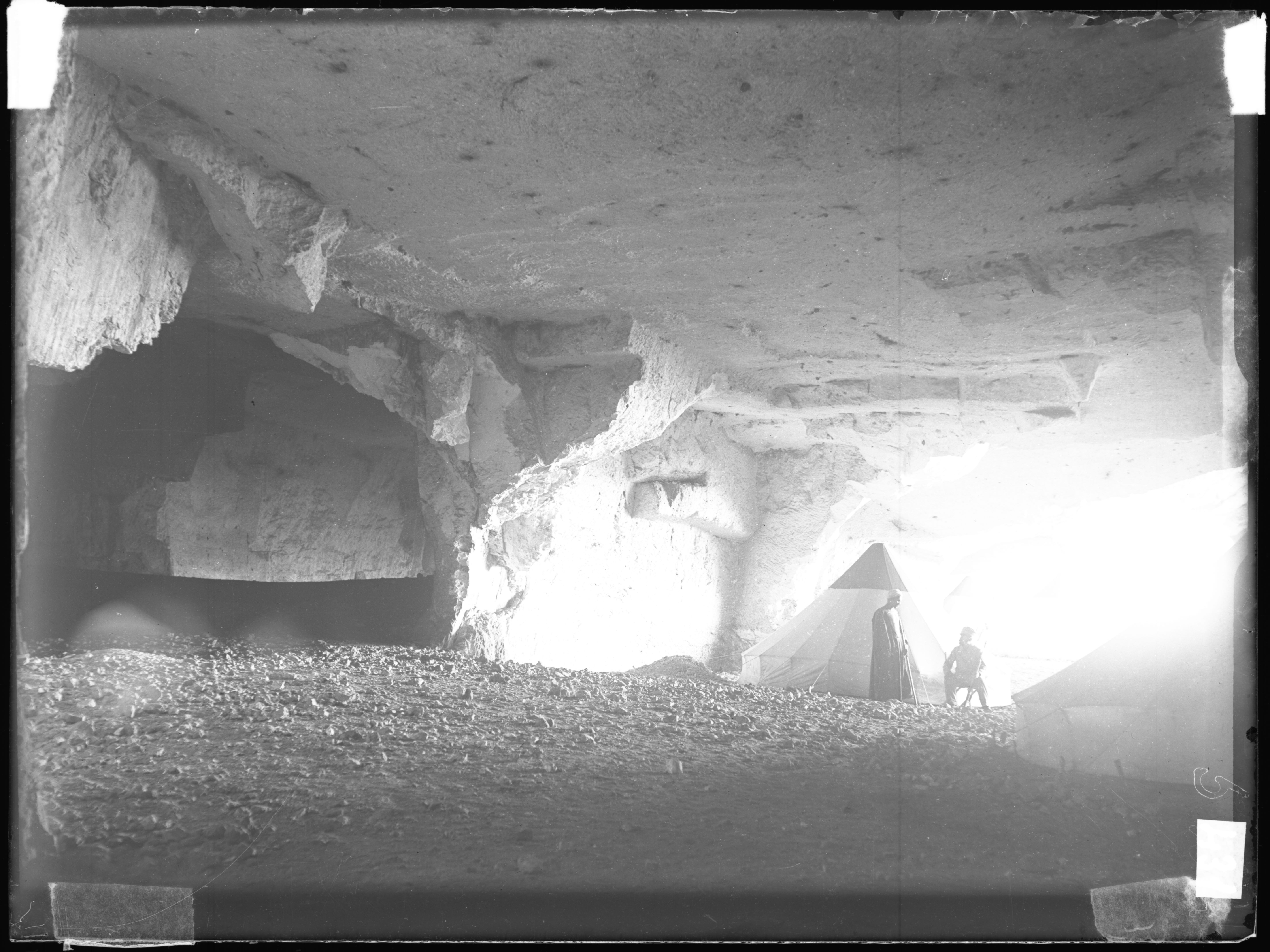
Camp of the Italian Archaeological Mission in the stone quarries at Qau el-Kebir. The person seated is Benvenuto Savina; the standing figure however is not recognisable. Schiaparelli excavations.
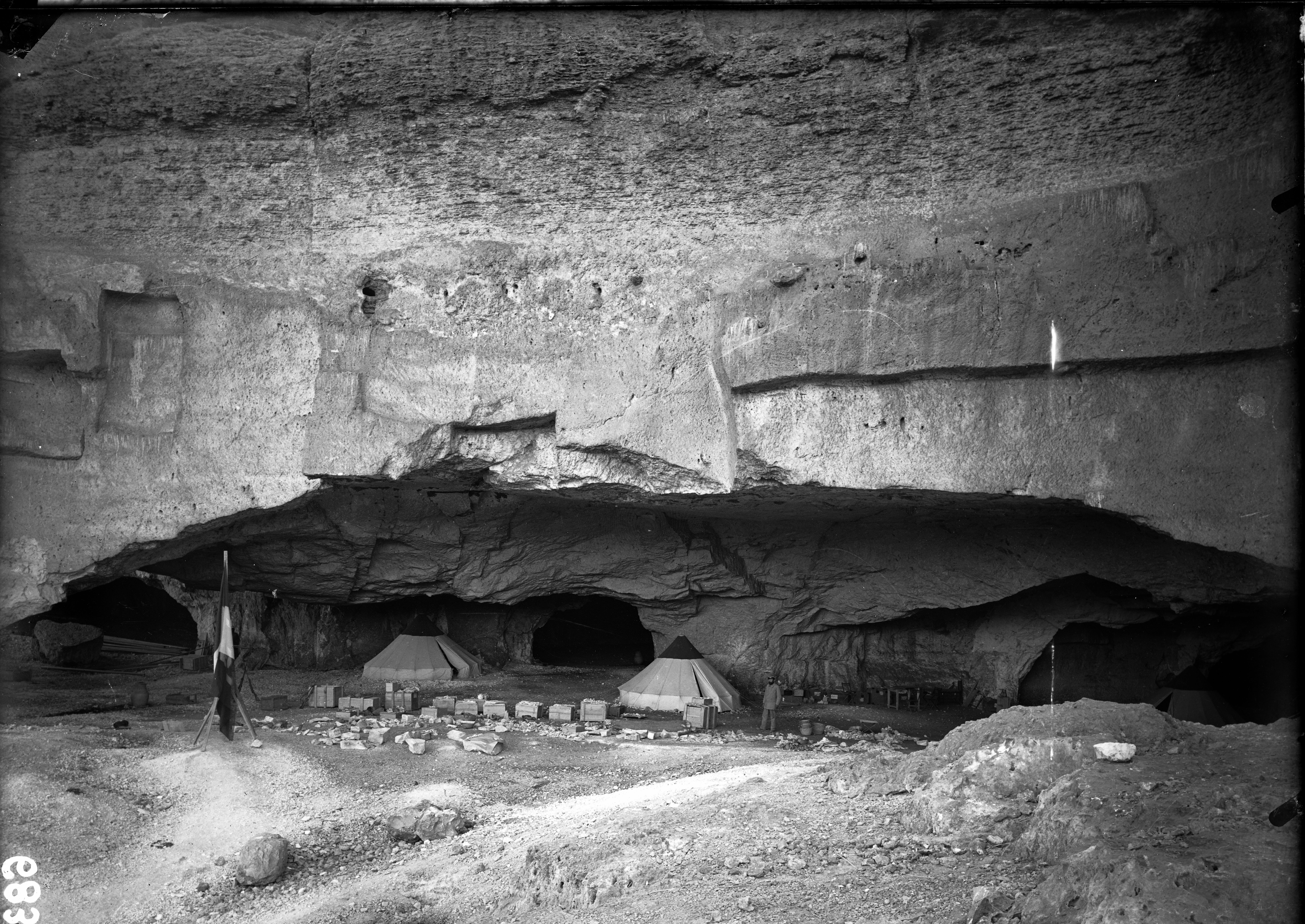
Photo 1/23

Camp of the Italian Archaeological Mission in the stone quarries at Qau el-Kebir. The person seated is Benvenuto Savina; the standing figure however is not recognisable. Schiaparelli excavations.

1905 - 1906
B00431
CC0
Camp of the Italian Archaeological Mission near the caves and stone quarries of Qau el-Kebir. The person pictured is Benvenuto Savina. Schiaparelli excavations.
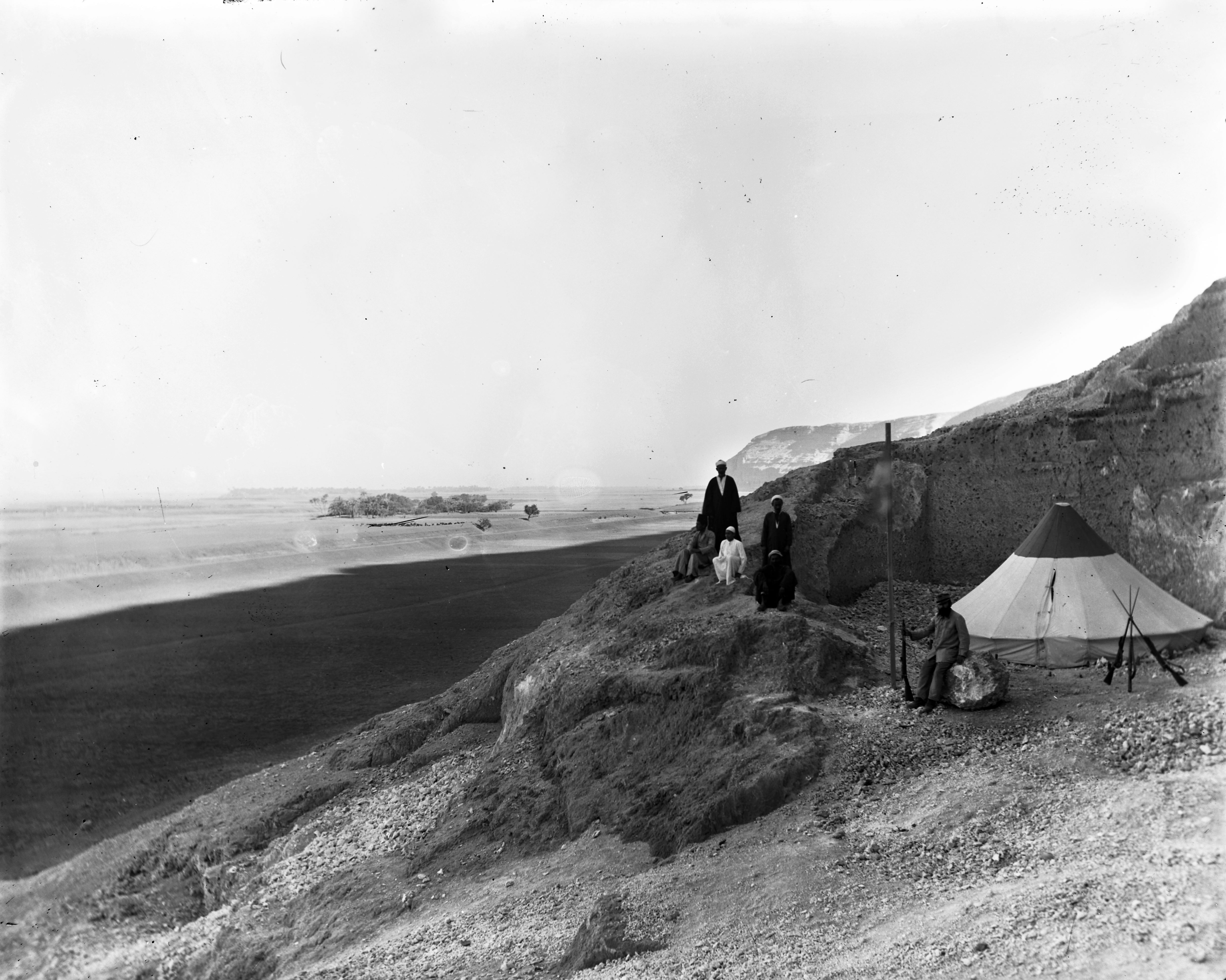
Photo 2/23

Camp of the Italian Archaeological Mission near the caves and stone quarries of Qau el-Kebir. The person pictured is Benvenuto Savina. Schiaparelli excavations.

1905 - 1906
C00683
CC0
Camp of the Italian Archaeological Mission near the caves of Qau el-Kebir. In the foreground we see Benvenuto Savina and a group of Egyptians; identifiable from the left we see the interpreter and guide Bolos Ghattas (seated), the cook Atallah (standing) with the young assistant Buhus (seated and dressed in light colours). The other two Egyptians are not recognisable. In the background a bridge on a dried-up canal can be seen, presumably the same pictured in B00984. Schiaparelli excavations.
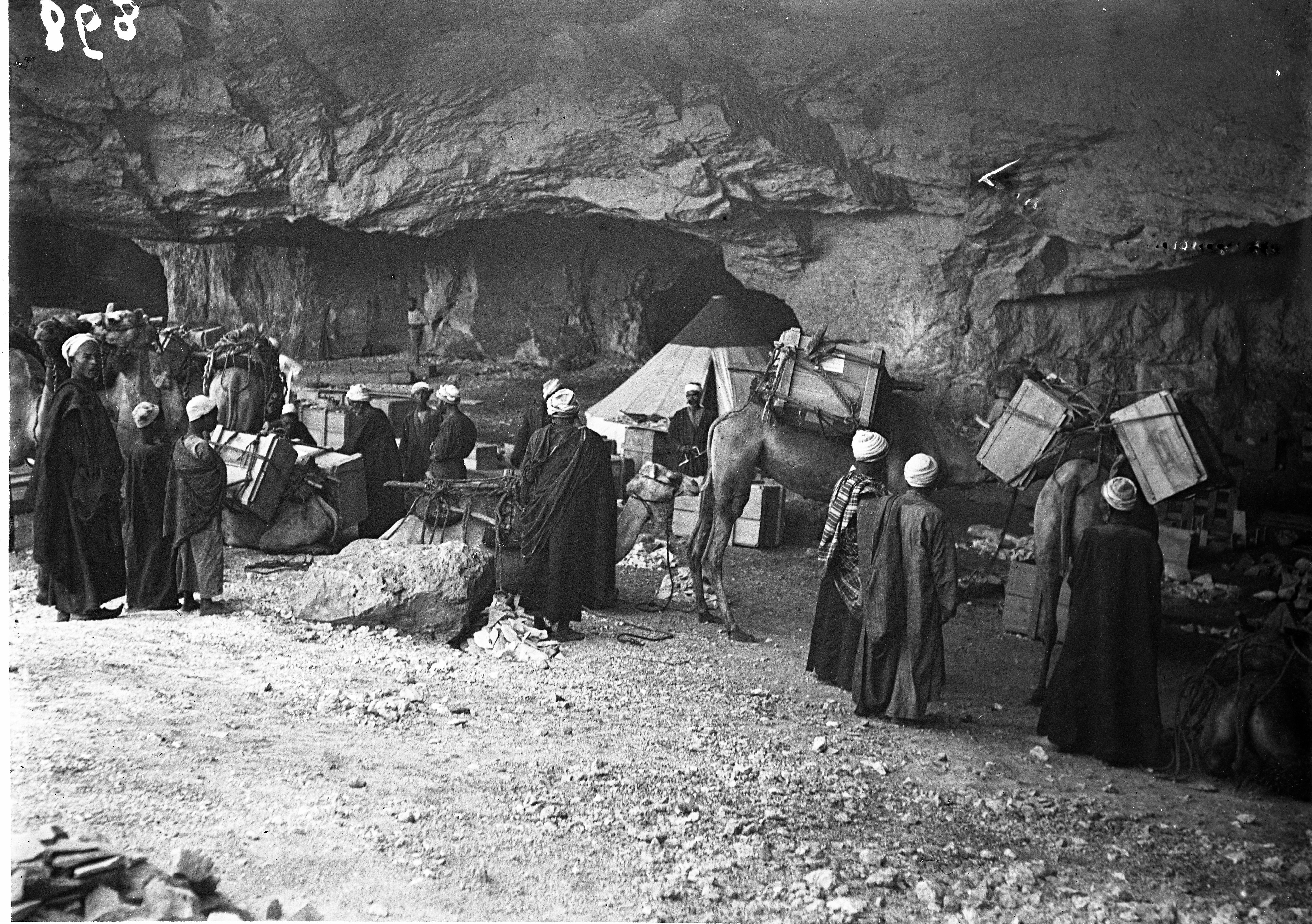
Photo 3/23

Camp of the Italian Archaeological Mission near the caves of Qau el-Kebir. In the foreground we see Benvenuto Savina and a group of Egyptians; identifiable from the left we see the interpreter and guide Bolos Ghattas (seated), the cook Atallah (standing) with the young assistant Buhus (seated and dressed in light colours). The other two Egyptians are not recognisable. In the background a bridge on a dried-up canal can be seen, presumably the same pictured in B00984. Schiaparelli excavations.

1905 - 1906
E00294
CC0
Camp of the Italian Archaeological Mission near the caves of Qau el-Kebir. In this shot, the camels are ready to depart. Visible in the middle, nearing the completion of a crate is the figure of the carpenter of the mission – Morkos, with a drill in his hand. In the background to the left, Benvenuto Savina is visible. The Egyptian workers are not identifiable. Schiaparelli excavations.
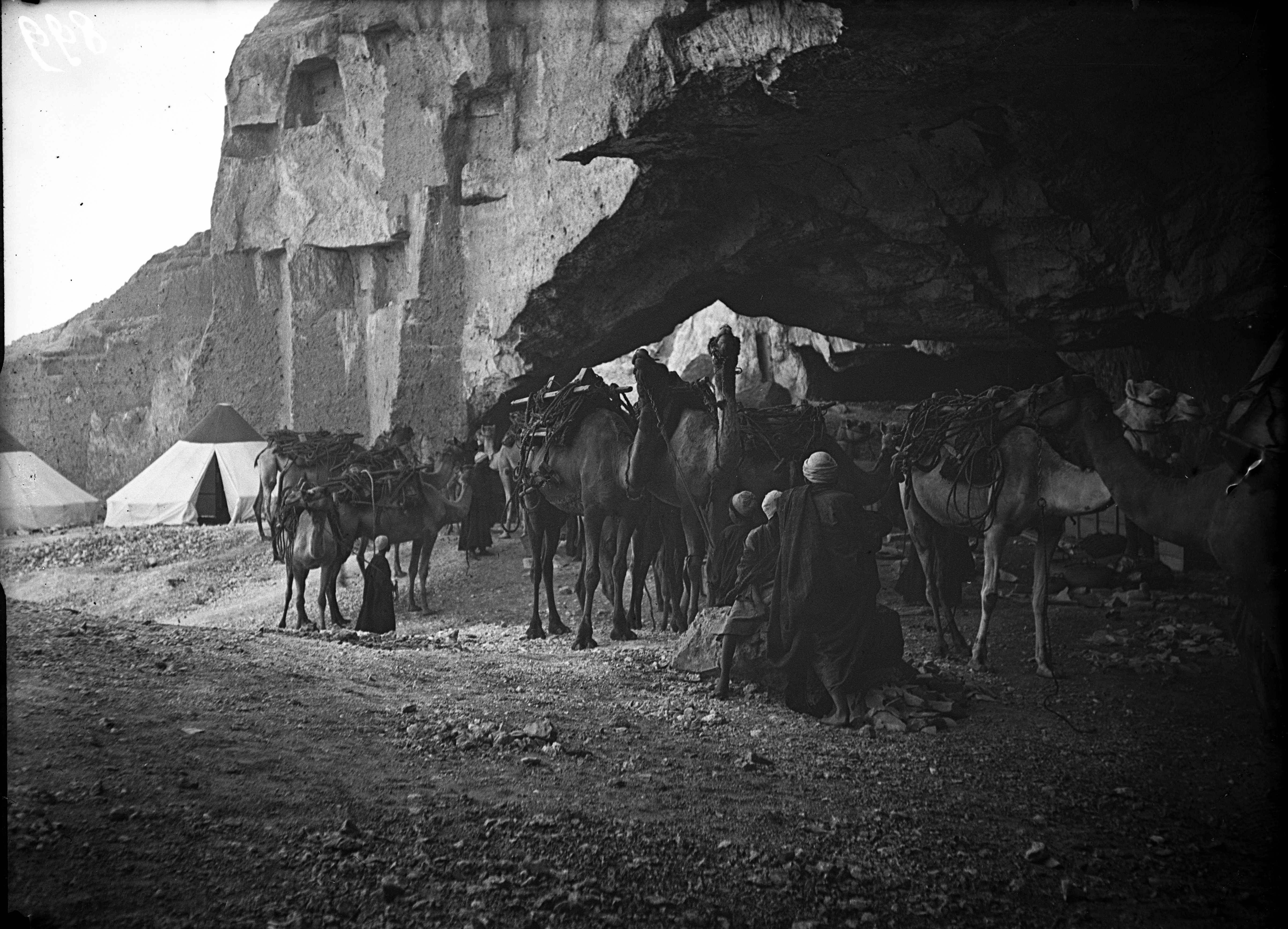
Photo 4/23

Camp of the Italian Archaeological Mission near the caves of Qau el-Kebir. In this shot, the camels are ready to depart. Visible in the middle, nearing the completion of a crate is the figure of the carpenter of the mission – Morkos, with a drill in his hand. In the background to the left, Benvenuto Savina is visible. The Egyptian workers are not identifiable. Schiaparelli excavations.

1905 - 1906
B00898
CC0
Camp of the Italian Archaeological Mission near the caves of Qau el-Kebir. Arrival of camels to begin transporting the cases towards the Nile. Schiaparelli excavations.
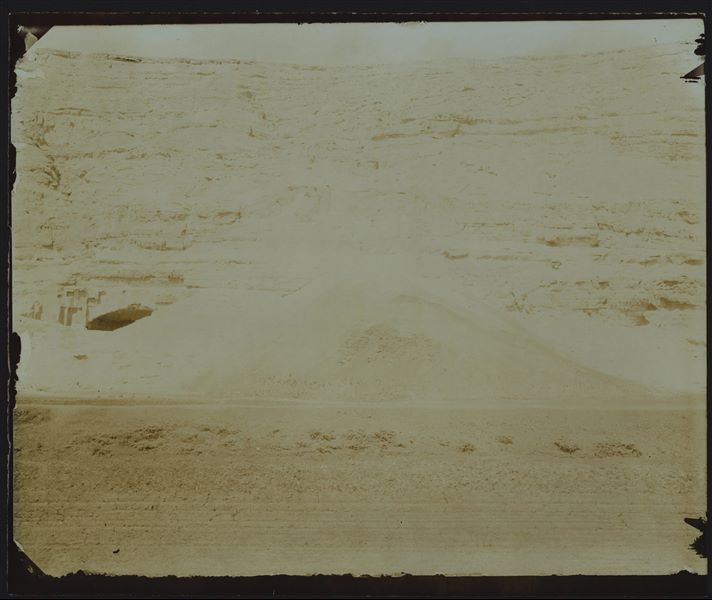
Photo 5/23

Camp of the Italian Archaeological Mission near the caves of Qau el-Kebir. Arrival of camels to begin transporting the cases towards the Nile. Schiaparelli excavations.

1905 - 1906
B00899
CC0
View of the cave in the mountain of Qau, photographed from the plain, used as a camp by the Italian Archaeological Mission. Two conical tents of the mission can be seen near the entrance. Schiaparelli excavations.
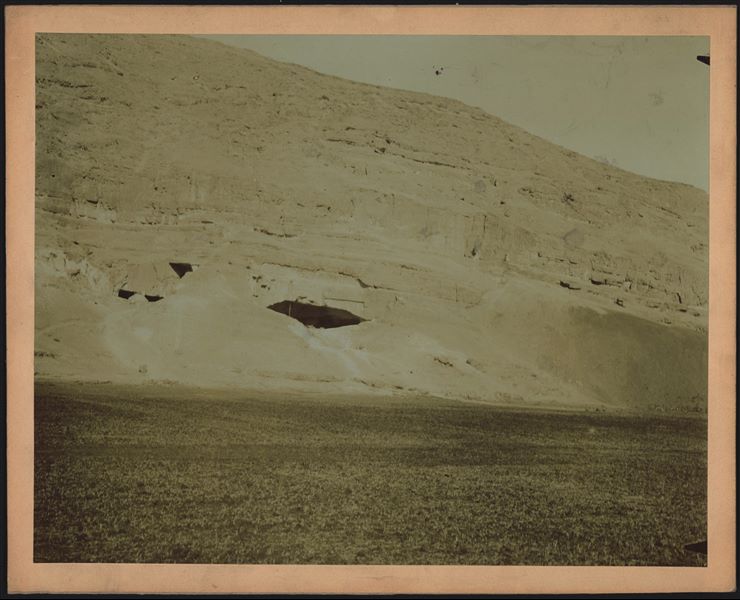
Photo 6/23

View of the cave in the mountain of Qau, photographed from the plain, used as a camp by the Italian Archaeological Mission. Two conical tents of the mission can be seen near the entrance. Schiaparelli excavations.

B6_5_3
View of the cave in the mountain of Qau, photographed from the plain, used as a camp for the Italian Archaeological Mission. In the centre, the flagpole is visible, while to the left; one of the mission's conical tents can be seen. Schiaparelli excavations.
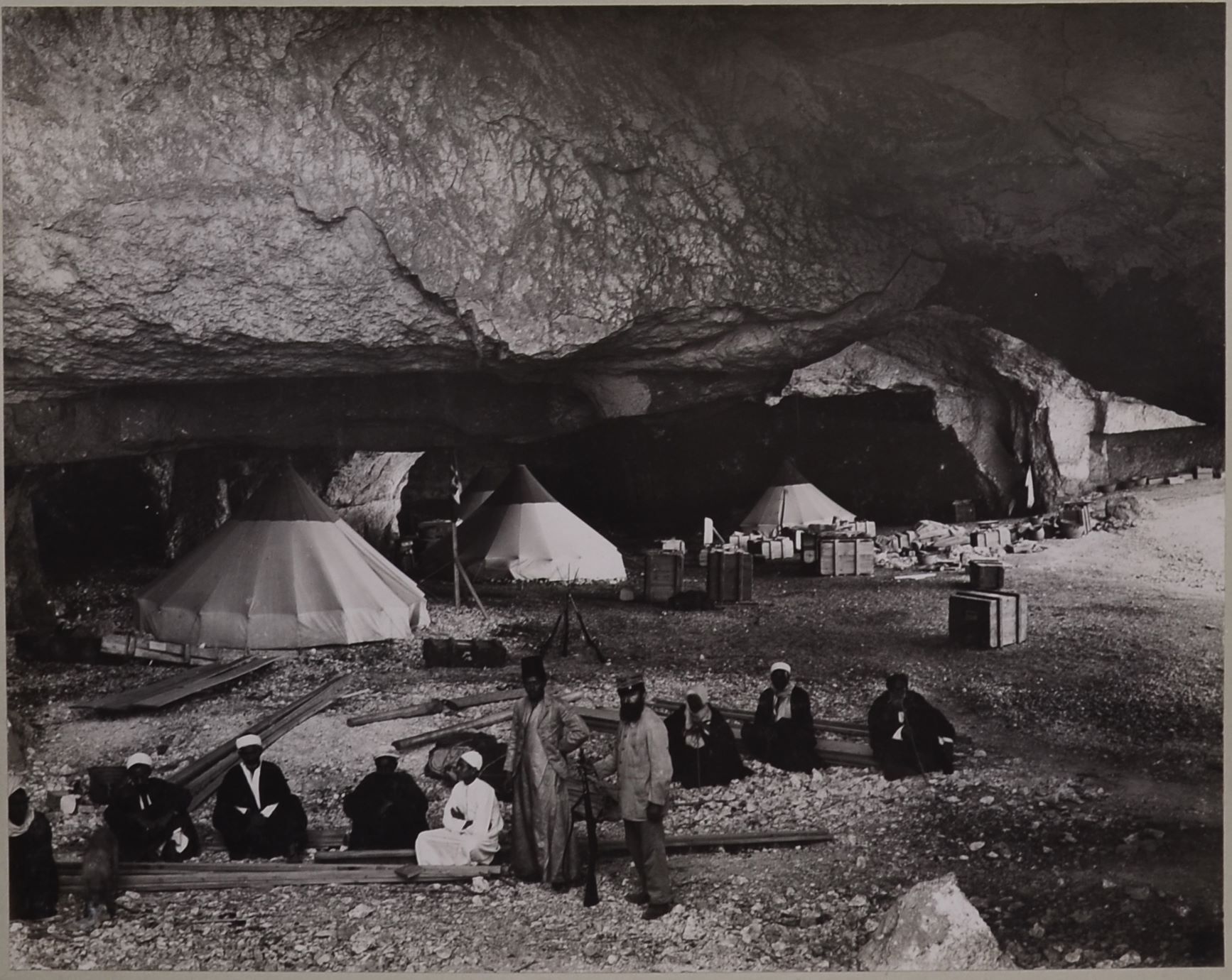
Photo 7/23

View of the cave in the mountain of Qau, photographed from the plain, used as a camp for the Italian Archaeological Mission. In the centre, the flagpole is visible, while to the left; one of the mission's conical tents can be seen. Schiaparelli excavations.

B6_5_9
Interior of one of the caves where the Italian Archaeological Mission camped during excavations in the necropoleis of Qau el-Kebir and Hammamiya. In the foreground there are some members of the mission, including the young assistant-cook Buhus dressed in white, the interpreter and guide Bolos Ghattas (in grey), and the mission's “jack of all trades”, Benvenuto Savina, the only one wearing European clothing and holding a rifle. The remaining characters are presumably the cook, Atallah, and the rais (heads of the workers).  In addition to the conical tents, crates for transporting the ancient finds and mission material can be seen in the camp. Photo album, Schiaparelli excavations.
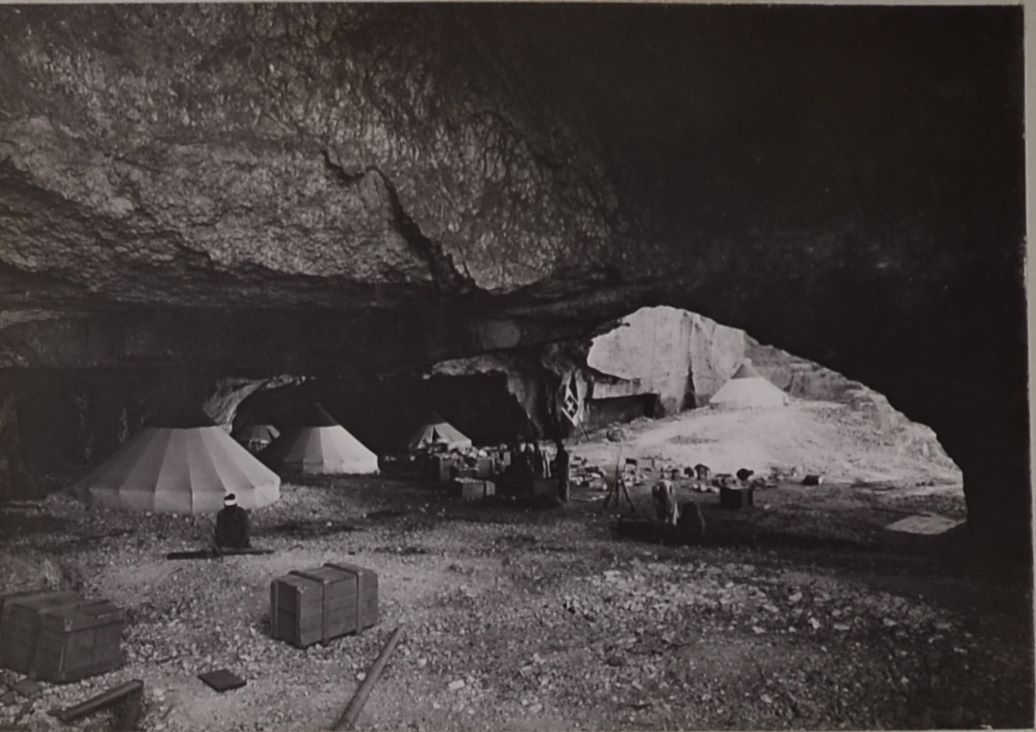
Photo 8/23

Interior of one of the caves where the Italian Archaeological Mission camped during excavations in the necropoleis of Qau el-Kebir and Hammamiya. In the foreground there are some members of the mission, including the young assistant-cook Buhus dressed in white, the interpreter and guide Bolos Ghattas (in grey), and the mission's “jack of all trades”, Benvenuto Savina, the only one wearing European clothing and holding a rifle. The remaining characters are presumably the cook, Atallah, and the rais (heads of the workers). In addition to the conical tents, crates for transporting the ancient finds and mission material can be seen in the camp. Photo album, Schiaparelli excavations.
Album_III_33
CC0
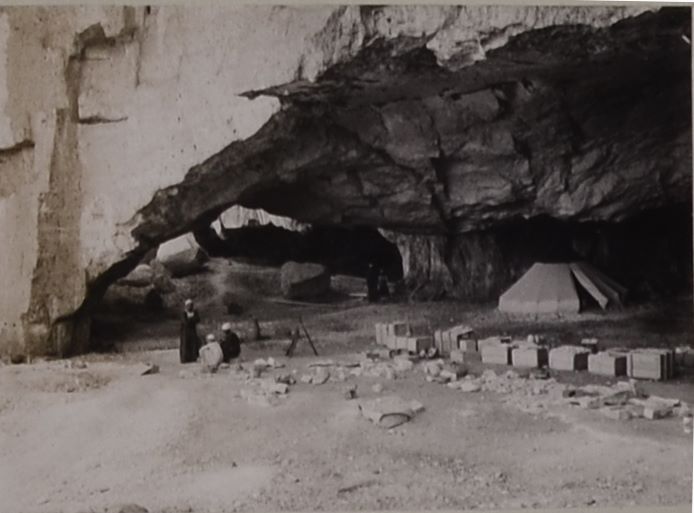
Interior of one of the caves where the Italian Archaeological Mission camped during excavations in the necropoleis of Qau el-Kebir and Hammamiya. The only identifiable individual is the figure in the centre wearing western clothing, undoubtedly Benvenuto Savina. In addition to the conical tents, crates for transporting the ancient finds and mission material can be seen in the camp. Photo album, Schiaparelli excavations.
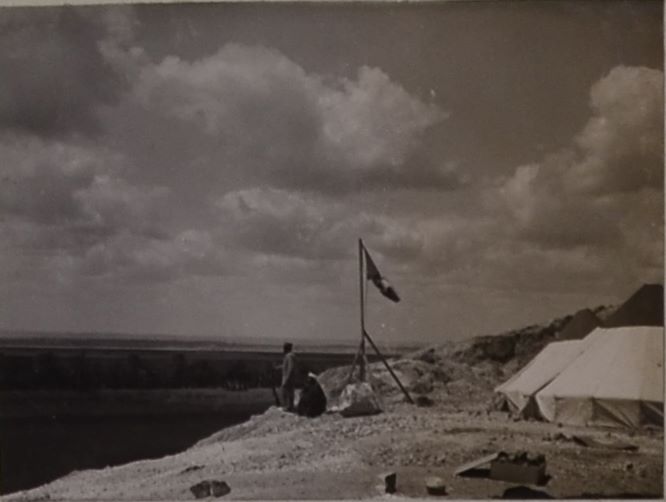
Photo 9/23

Interior of one of the caves where the Italian Archaeological Mission camped during excavations in the necropoleis of Qau el-Kebir and Hammamiya. The only identifiable individual is the figure in the centre wearing western clothing, undoubtedly Benvenuto Savina. In addition to the conical tents, crates for transporting the ancient finds and mission material can be seen in the camp. Photo album, Schiaparelli excavations.

Album_III_34
CC0
Interior of one of the caves where the Italian Archaeological Mission camped during excavations in the necropoleis of Qau el-Kebir and Hammamiya. The three visible figures are barely recognisable, perhaps the boy dressed in white, due to similarities with other photographs, could be the assistant-cook Buhus, thus suggesting that one of the other two remaining figures is in fact the cook, Atallah. In addition to the conical tents, crates for transporting the ancient finds and mission material can be seen in the camp. Photo album, Schiaparelli excavations.
Photo 10/23

Interior of one of the caves where the Italian Archaeological Mission camped during excavations in the necropoleis of Qau el-Kebir and Hammamiya. The three visible figures are barely recognisable, perhaps the boy dressed in white, due to similarities with other photographs, could be the assistant-cook Buhus, thus suggesting that one of the other two remaining figures is in fact the cook, Atallah. In addition to the conical tents, crates for transporting the ancient finds and mission material can be seen in the camp. Photo album, Schiaparelli excavations.

Album_III_35
CC0
Italian Archaeological Mission camp near the Qau el-Kebir caves. Benvenuto Savina can be spotted, holding a rifle. Photo album, Schiaparelli excavations.
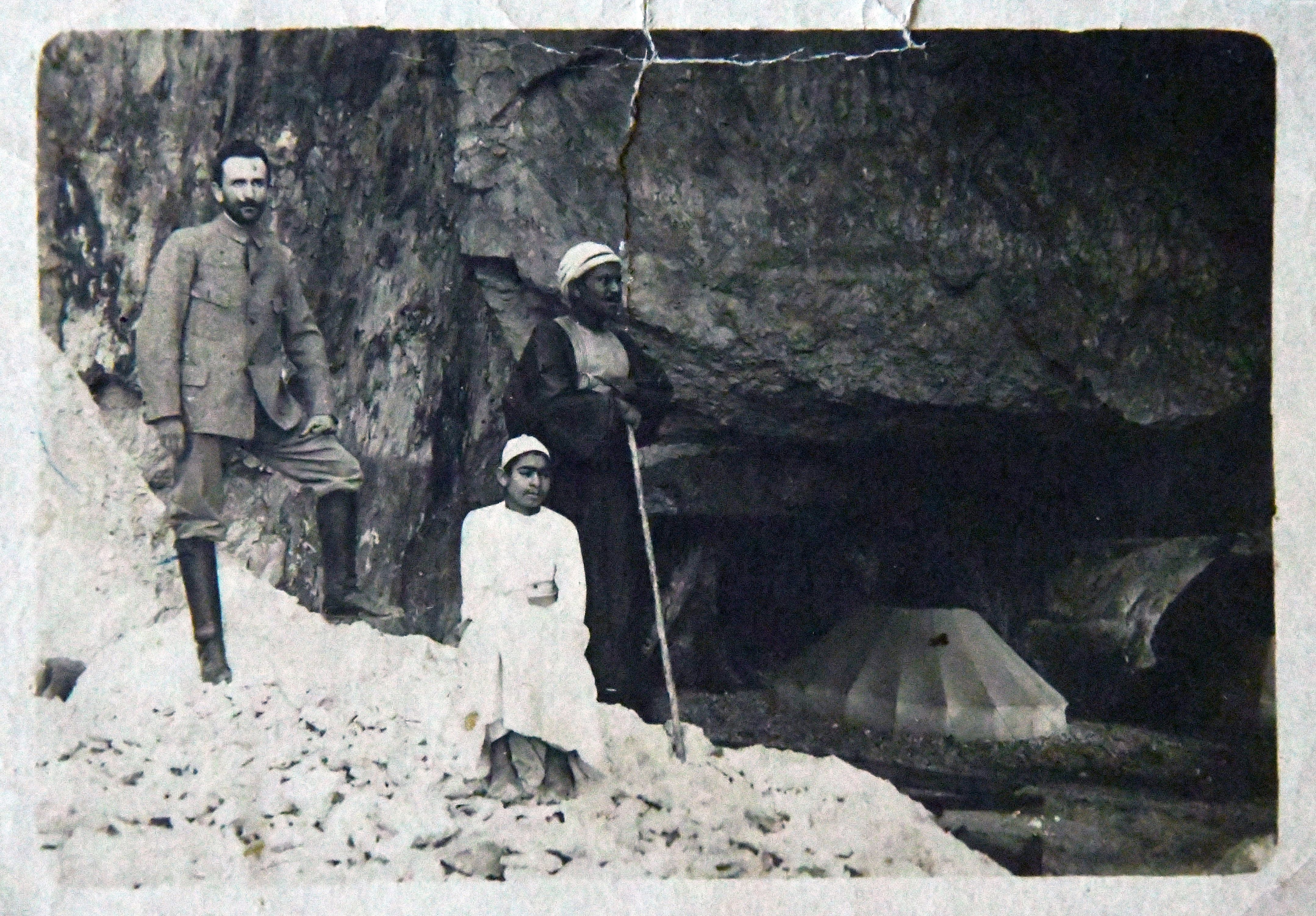
Photo 11/23

Italian Archaeological Mission camp near the Qau el-Kebir caves. Benvenuto Savina can be spotted, holding a rifle. Photo album, Schiaparelli excavations.

Album_III_36
CC0
Francesco Ballerini photographed together with Rais Kalifa (standing) and the young Buhus, in front of the cave that served as a campsite during the Italian Archaeological Mission’s excavations in 1905 and 1906 at Qau el-Kebir and Hammamiya. Angelo Sesana Archive
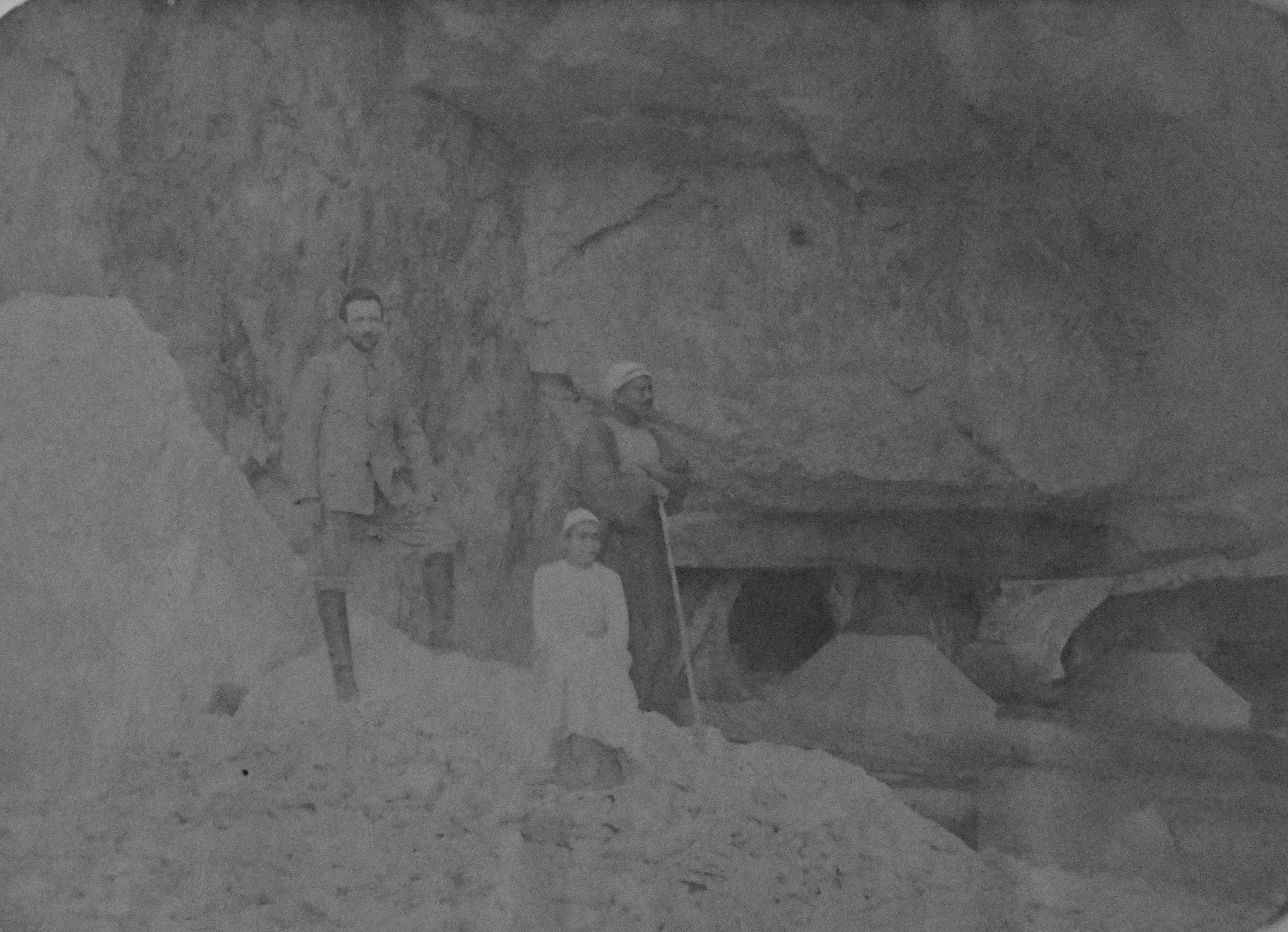
Photo 12/23

Francesco Ballerini photographed together with Rais Kalifa (standing) and the young Buhus, in front of the cave that served as a campsite during the Italian Archaeological Mission’s excavations in 1905 and 1906 at Qau el-Kebir and Hammamiya. Angelo Sesana Archive
1905
F_020
CC0
Francesco Ballerini photographed together with Rais Kalifa (standing) and the young Buhus, in front of the cave that served as a campsite during the Italian Archaeological Mission’s excavations in 1905 and 1906 at Qau el-Kebir and Hammamiya. Angelo Sesana Archive
Photo 13/23

Francesco Ballerini photographed together with Rais Kalifa (standing) and the young Buhus, in front of the cave that served as a campsite during the Italian Archaeological Mission’s excavations in 1905 and 1906 at Qau el-Kebir and Hammamiya. Angelo Sesana Archive

1905
F_021
CC0
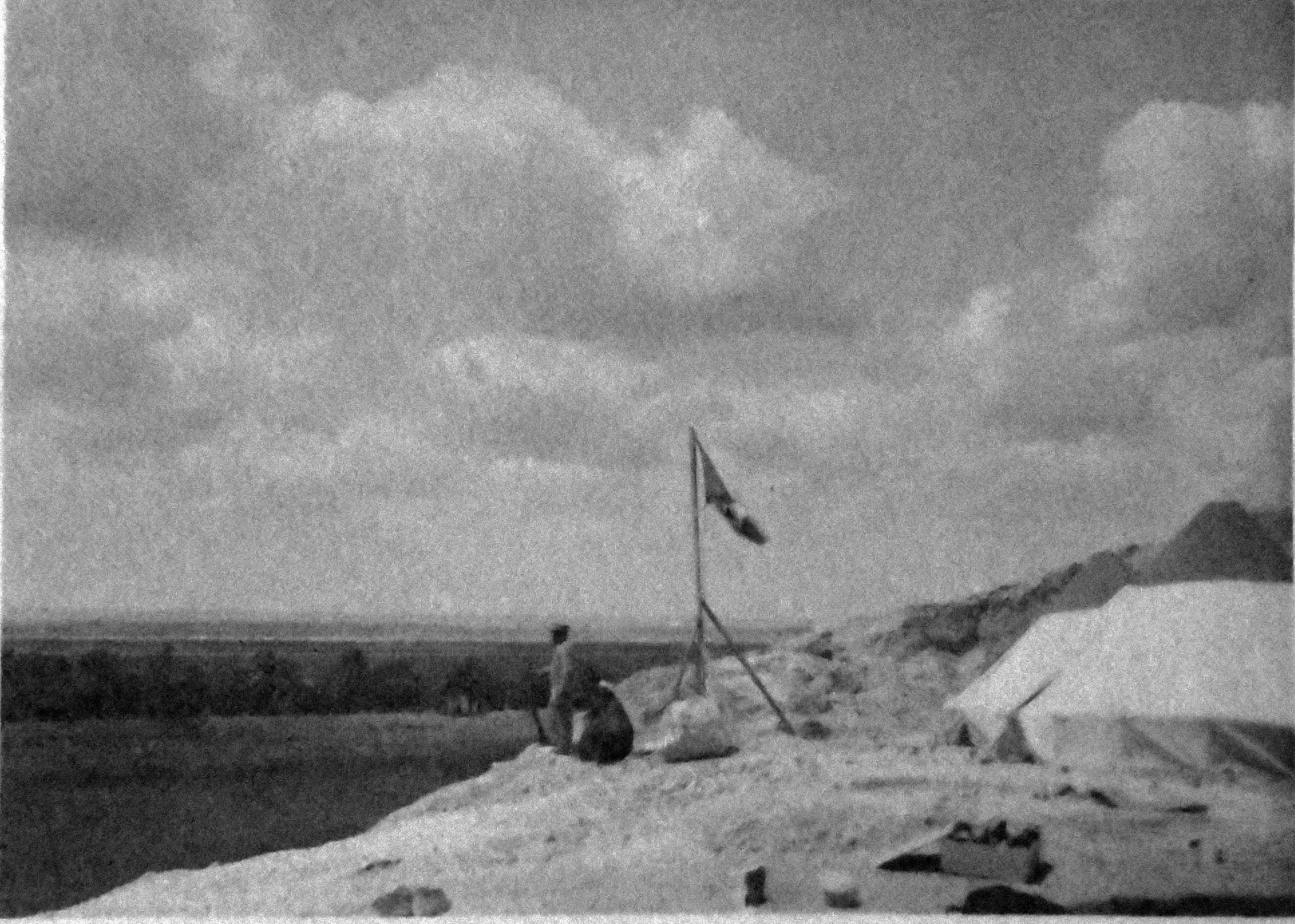
Photograph of part of the Italian Archaeological Mission’s camp during excavations at Qau el-Kebir and Hammamiya in 1905 and 1906. Identifiable next to the pole with the Italian flag is Benvenuto Savina, the mission's “jack of all trades”. Angelo Sesana Archive.
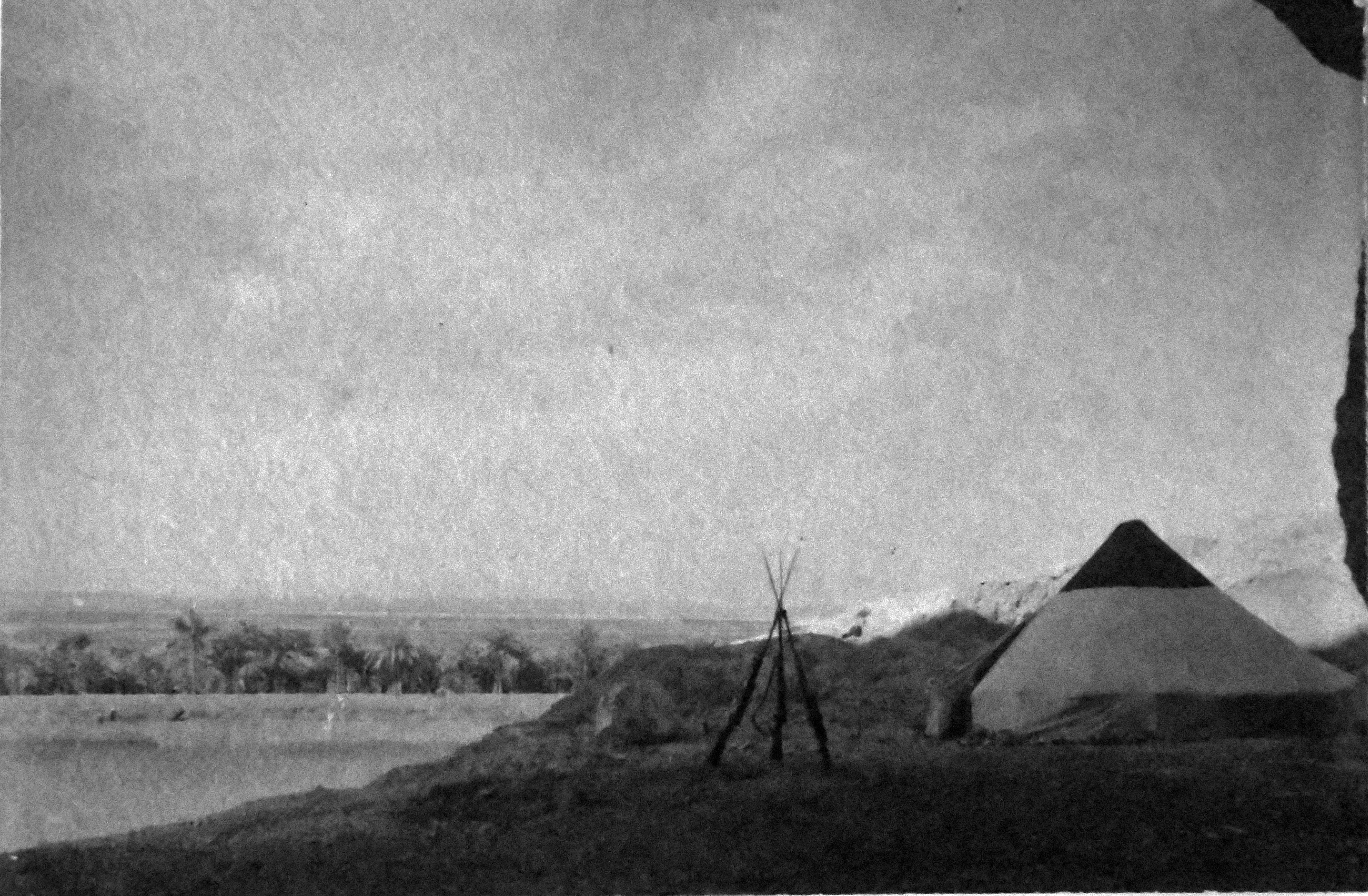
Photo 14/23

Photograph of part of the Italian Archaeological Mission’s camp during excavations at Qau el-Kebir and Hammamiya in 1905 and 1906. Identifiable next to the pole with the Italian flag is Benvenuto Savina, the mission's “jack of all trades”. Angelo Sesana Archive.

1905
F_022
CC0
Italian Archaeological Mission’s camp near Qau el-Kebir. Photograph taken from the cave used as a base camp for the excavations. In the centre-foreground, the rifles supplied to the mission by the Italian Army are visible. Angelo Sesana Archive.
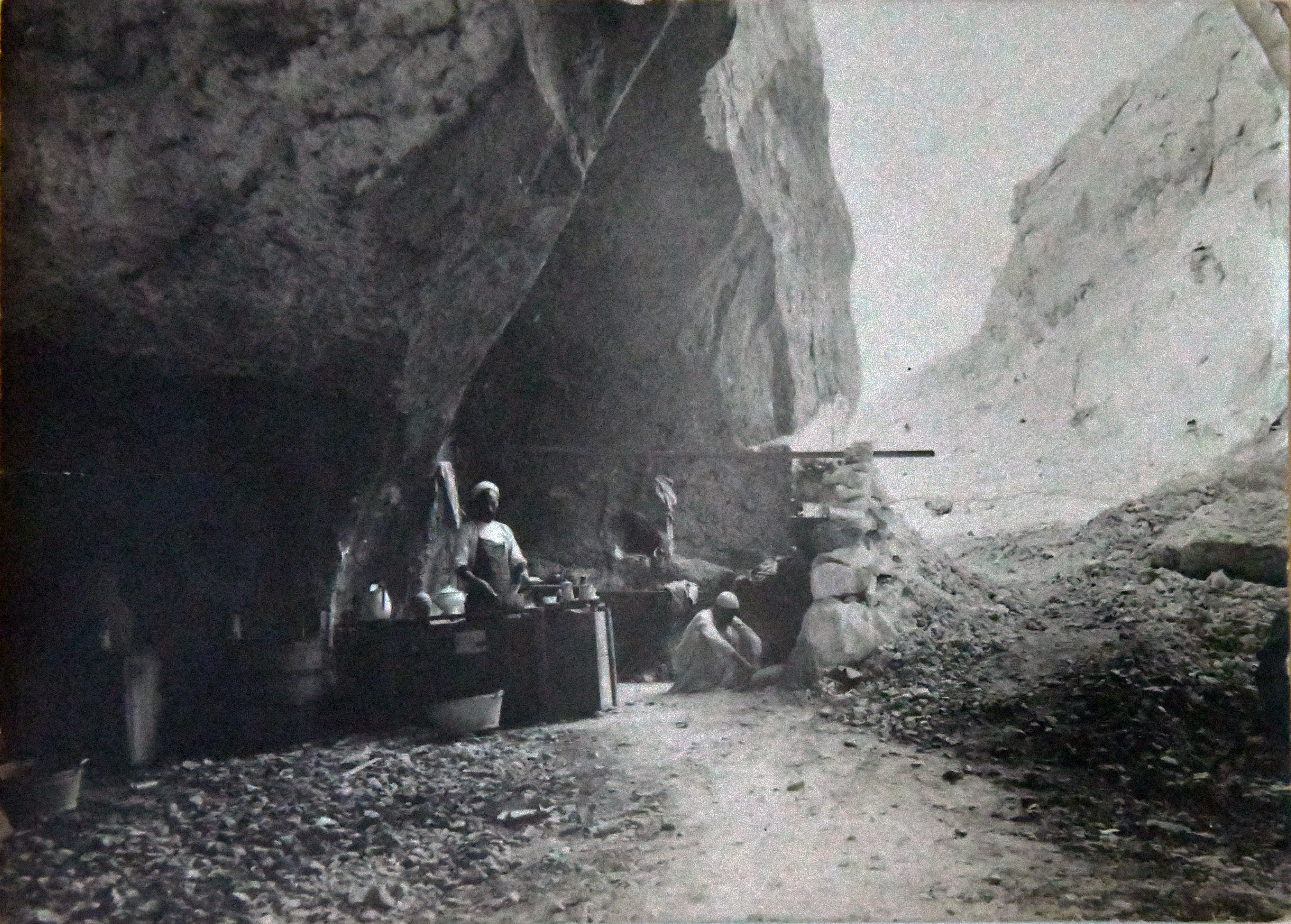
Photo 15/23

Italian Archaeological Mission’s camp near Qau el-Kebir. Photograph taken from the cave used as a base camp for the excavations. In the centre-foreground, the rifles supplied to the mission by the Italian Army are visible. Angelo Sesana Archive.

1905
F_023
CC0
Photograph of the Italian Archaeological Mission’s kitchen in the cave of Qau el-Kebir, where the camp was located. Here, the cook Atallah is preparing some food. Young Buhus, the assistant cook is also present, it appears that he is trying to light the fire. (Original caption: Mission’s kitchen). Angelo Sesana Archive.
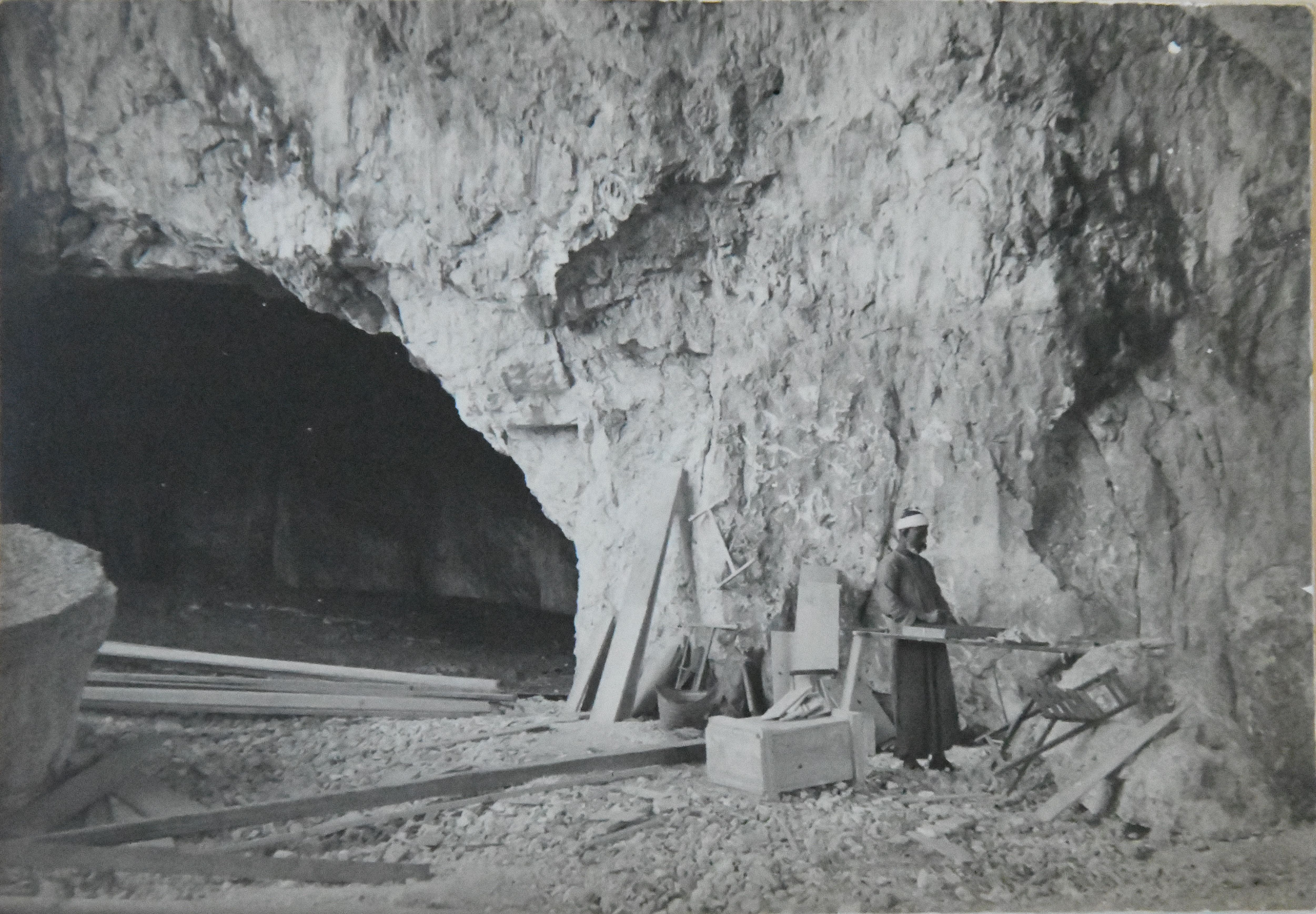
Photo 16/23

Photograph of the Italian Archaeological Mission’s kitchen in the cave of Qau el-Kebir, where the camp was located. Here, the cook Atallah is preparing some food. Young Buhus, the assistant cook is also present, it appears that he is trying to light the fire. (Original caption: Mission’s kitchen). Angelo Sesana Archive.

1905
F_024
CC0
Italian Archaeological Mission’s camp in Qau el-Kebir. The photograph shows the carpenter Morkos making crates for the transportation of the materials. Photo taken towards the end of the mission. Angelo Sesana Archive.
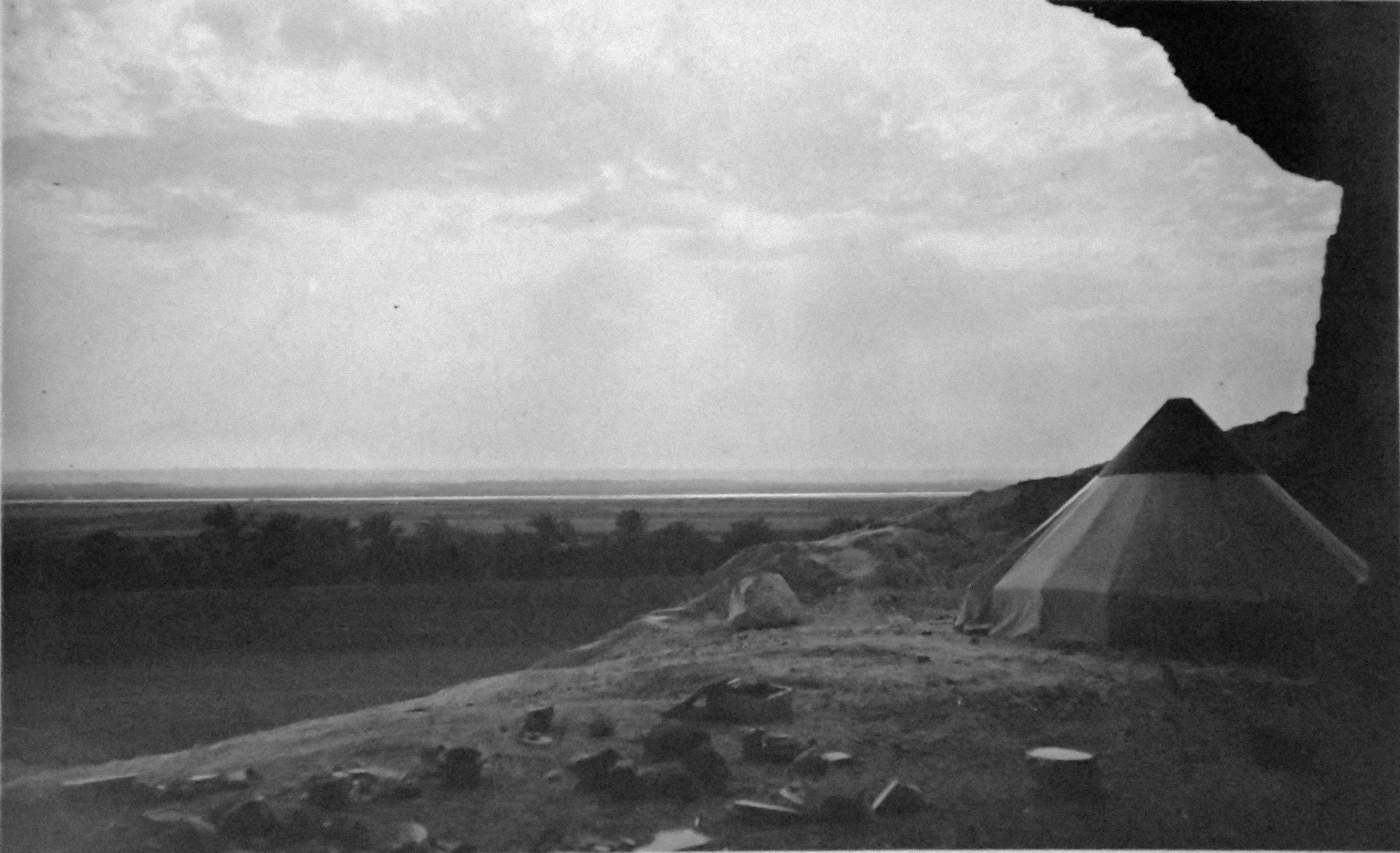
Photo 17/23

Italian Archaeological Mission’s camp in Qau el-Kebir. The photograph shows the carpenter Morkos making crates for the transportation of the materials. Photo taken towards the end of the mission. Angelo Sesana Archive.

1905
F_037
CC0
Italian Archaeological Mission’s camp in Qau el-Kebir. The photograph shows the landscape that could be viewed from the cave. In the foreground, one of the mission's conical tents. Angelo Sesana Archive.
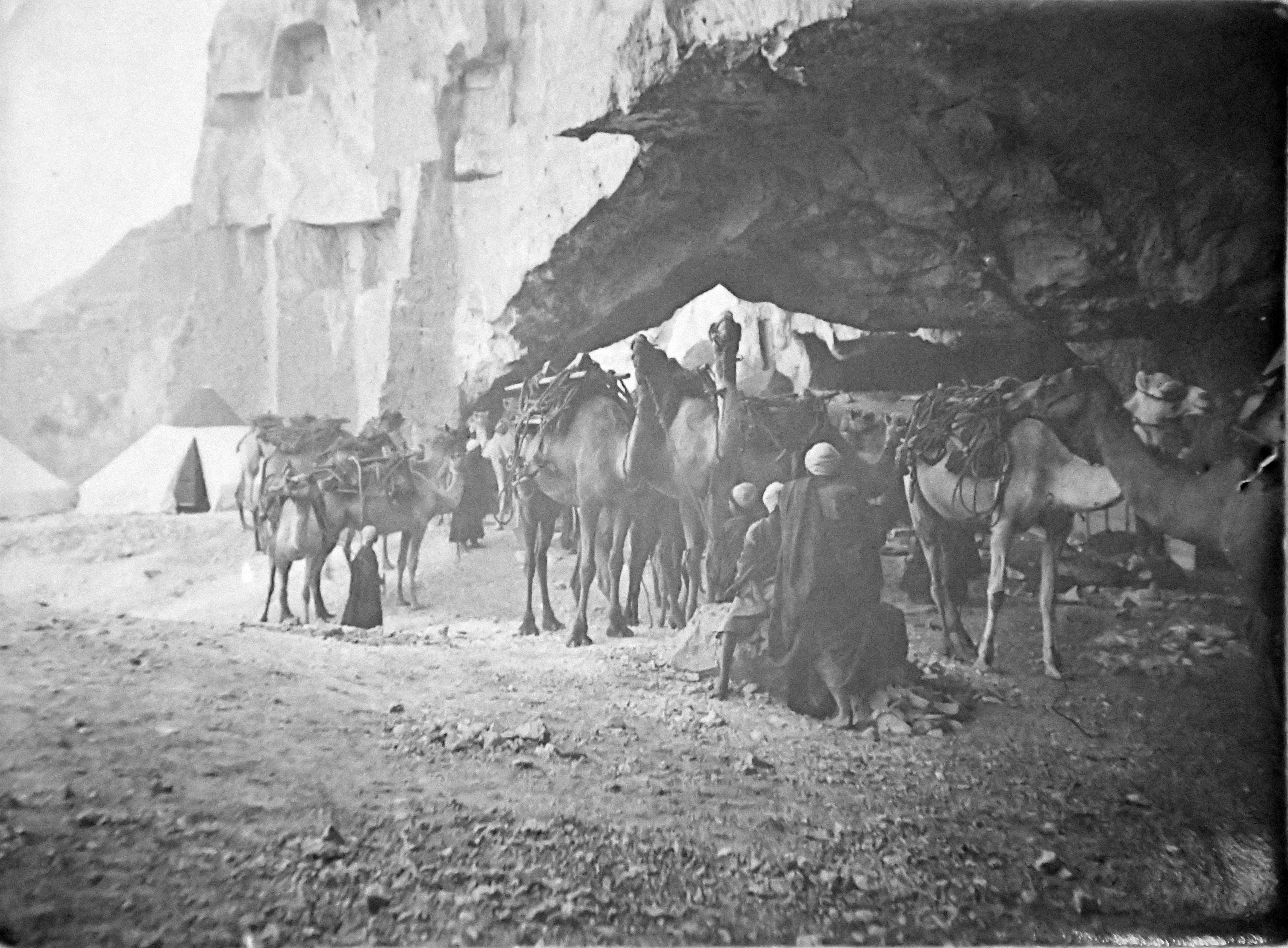
Photo 18/23

Italian Archaeological Mission’s camp in Qau el-Kebir. The photograph shows the landscape that could be viewed from the cave. In the foreground, one of the mission's conical tents. Angelo Sesana Archive.

1905
F_038
CC0
Italian Archaeological Mission’s camp in Qau el-Kebir. The photograph shows the final excavation stages and getting the crates ready for their transport. Angelo Sesana Archive.
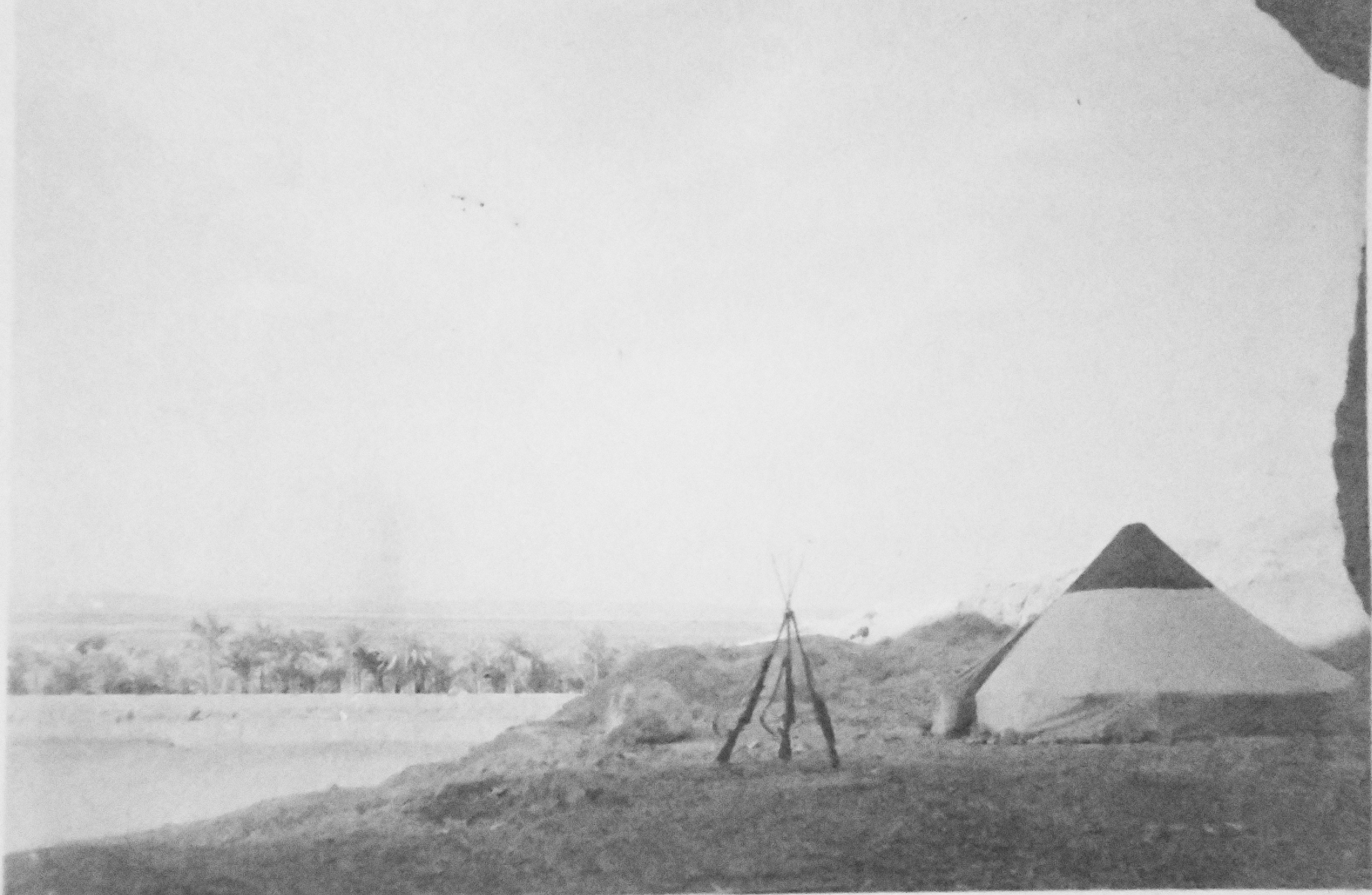
Photo 19/23

Italian Archaeological Mission’s camp in Qau el-Kebir. The photograph shows the final excavation stages and getting the crates ready for their transport. Angelo Sesana Archive.

1905
F_039
CC0
View of the landscape from the Italian mission’s camp at Qau el-Kebir, where a conical tent and three guns are visible. Angelo Sesana Archive.
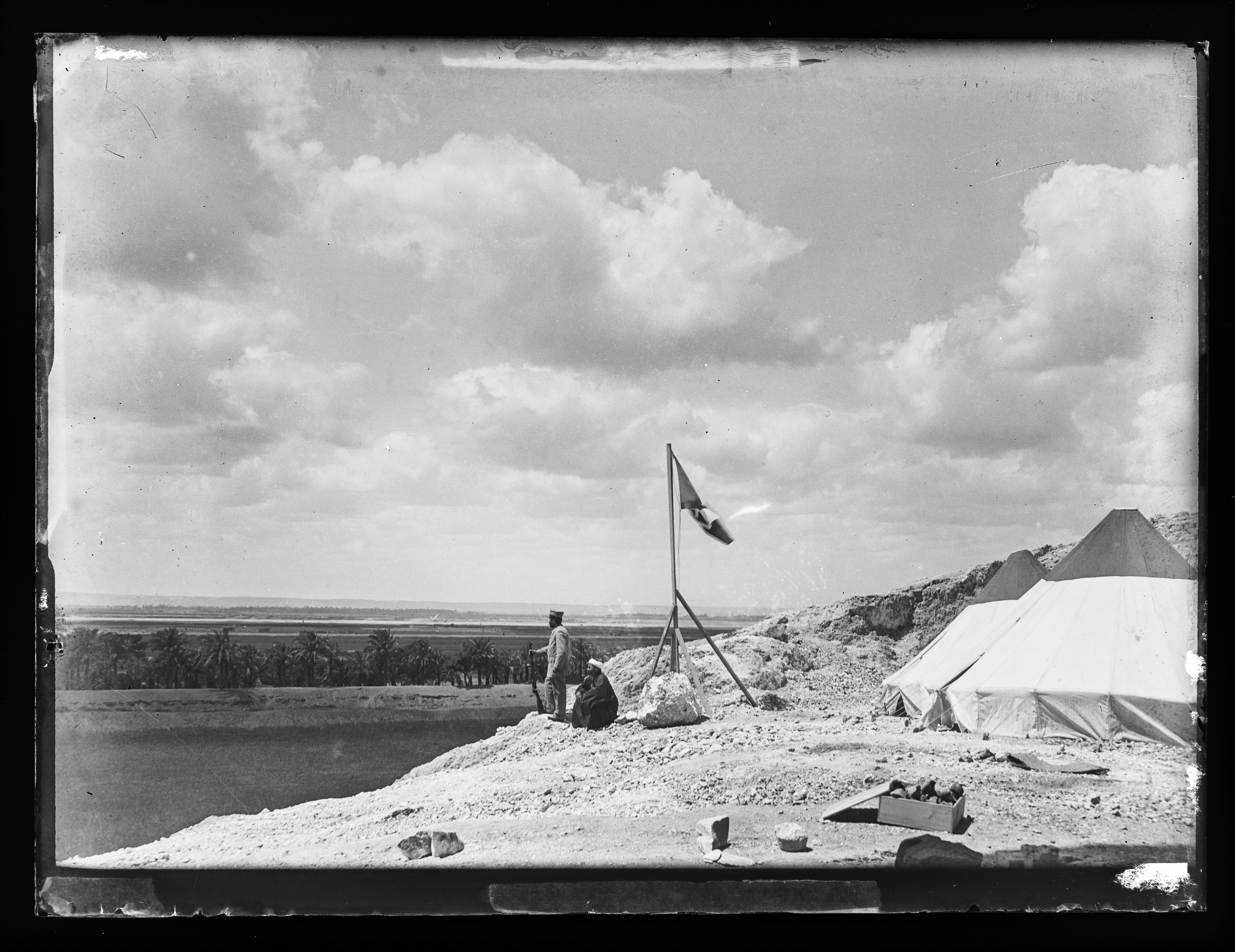
Photo 20/23

View of the landscape from the Italian mission’s camp at Qau el-Kebir, where a conical tent and three guns are visible. Angelo Sesana Archive.

1905
F_095
CC0
 The Italian Archaeological Mission’s camp, with its typical conical-shaped tents, near Qau el-Kebir. Near the Italian flag, a seated Egyptian and Benvenuto Savina look towards the horizon. In the foreground there is a box with archaeological finds. Schiaparelli excavations.
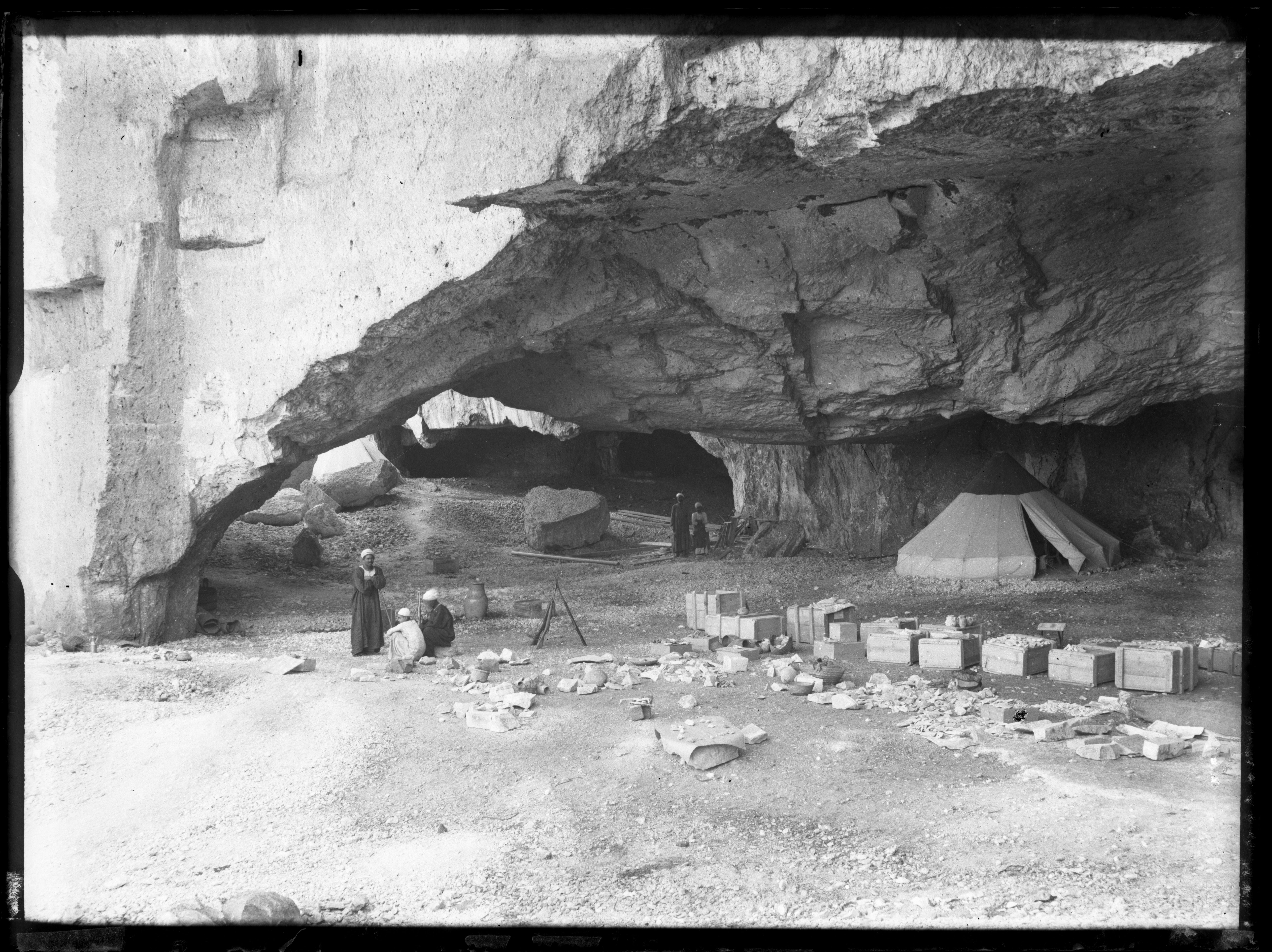
Photo 21/23

 The Italian Archaeological Mission’s camp, with its typical conical-shaped tents, near Qau el-Kebir. Near the Italian flag, a seated Egyptian and Benvenuto Savina look towards the horizon. In the foreground there is a box with archaeological finds. Schiaparelli excavations.

1905 - 1906
 
FMMA1191
CC0
 The Italian Archaeological Mission’s camp in the stone quarries near Qau el-Kebir. Two groups of Egyptian workers are depicted resting or posing (in the background, the carpenter Morkos and an assistant). In the background on the right, near the wall, there is one of the Mission's tents, while in the foreground there are crates containing various archaeological finds. Schiaparelli excavations.
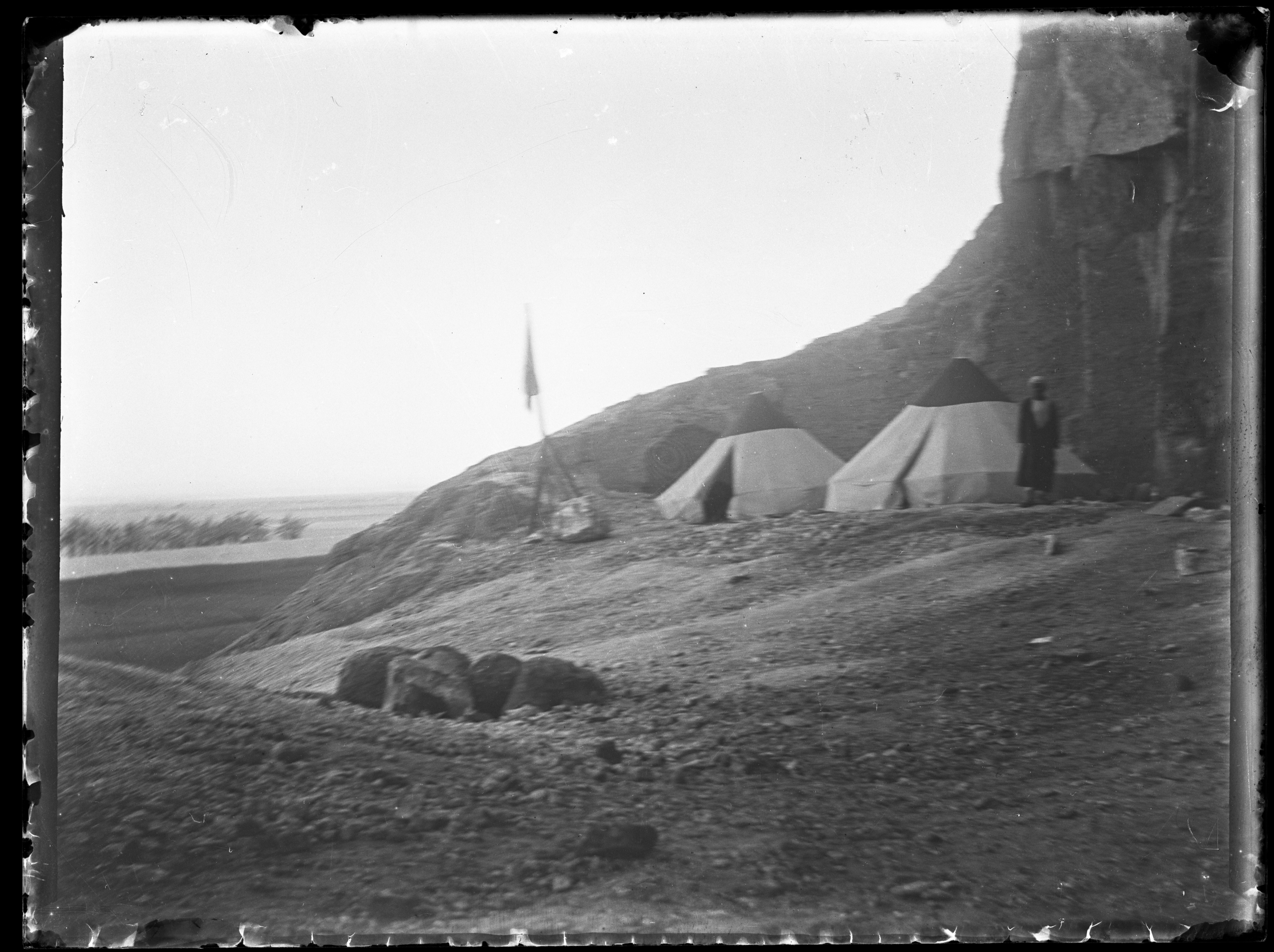
Photo 22/23

 The Italian Archaeological Mission’s camp in the stone quarries near Qau el-Kebir. Two groups of Egyptian workers are depicted resting or posing (in the background, the carpenter Morkos and an assistant). In the background on the right, near the wall, there is one of the Mission's tents, while in the foreground there are crates containing various archaeological finds. Schiaparelli excavations.

1905 - 1906
 
MAFM_0093
CC0
 The Italian Archaeological Mission’s camp near the caves of Qau el-Kebir. Next to the tents and the flag, the cook Atallah can be seen standing. Schiaparelli excavations.
Photo 23/23

 The Italian Archaeological Mission’s camp near the caves of Qau el-Kebir. Next to the tents and the flag, the cook Atallah can be seen standing. Schiaparelli excavations.

1905 - 1906
 
MAFM_0118
CC0
B00431
C00683
E00294
B00898
B00899
B6_5_3
B6_5_9
Album_III_33
Album_III_34
Album_III_35
Album_III_36
F_020
F_021
F_022
F_023
F_024
F_037
F_038
F_039
F_095
FMMA1191
MAFM_0093
MAFM_0118

Other galleries of "Caves" related to your search

Quarries
Quarries
Graffiti and Graeco-roman paintings
Museo Egizio

Via Accademia delle Scienze 6,
10123 Turin

+39 011 5617776

info@museoegizio.it 

Mon: 9:00 a.m. - 2:00 p.m.

Tue - Sun: 9.00 a.m. - 6.30 p.m.

  • About
  • Digitization project
  • How to use the Archive
  • © MUSEO EGIZIO, Turin 2025
  • Privacy and cookies
  • Accessibility
  • Contacts
  • Developed by 3x10¹⁰ S.r.l.
Condividi
Scarica