
Archivio fotografico

  • About
  • Digitization project
  • How to use the Archive
  • Browse the archive
ENG
  • English
  • Italiano
Search
Search by year
Browse the archive
  • Alexandria
  • Heliopolis
  • Cairo
  • Giza
  • Saqqara
  • Ashmunein
  • Asyut and Deir el-Gebrawi
  • Qau el-Kebir and Hammamiya
  • Abydos
  • Dendera
  • Theban region
  • Gebelein
  • Edfu
  • Kom Ombo
  • Aswan
  • Nubia
  • Miscellanea
Alexandria
  • Cleopatra's needle
  • Landscape
  • Pompey's pillar
Heliopolis
  • Channel
  • Kom
  • Landscape and unidentified areas
  • Latif's house and garden
  • Temenos and nearby areas
  • Temple area
  • Temple of Mnevis
Cairo
  • Egyptian Museum, Cairo
  • Islamic Cairo
Giza
  • Eastern necropolis
  • Evaristo Breccia at the end of the excavation
  • Landscape and unknown mastabas
  • Pyramids
  • Rock-cut tombs
  • Sphynx and funerary temple of Khafre
  • Western necropolis
Saqqara
  • Pyramid of Djoser and nearby areas
  • Tombs of nobles
Ashmunein
  • Excavation area
  • Minia
Asyut and Deir el-Gebrawi
  • Deir el-Gebrawi
  • Landscape
  • Rock-cut tombs of Asyut
Qau el-Kebir and Hammamiya
  • Caves
  • Landscape
  • Predynastic necropolis of Hammamiya
  • Rock-cut tombs of Hammamiya
  • Rock-cut tombs of Qau el-Kebir
  • Transport of antiquities
Abydos
  • Temple of Ramses II
  • Temple of Seti I
Dendera
  • Temple of Hathor
Theban region
  • Colossi of Memnon
  • Deir el-Bahari
  • Deir el-Medina
  • Khokha
  • Luxor temple
  • Medinet Habu
  • Old Chicago House (now dismantled)
  • Qurnet Murai
  • Ramesseum area
  • Rock.cut sanctuary of Ptah and Meretseger
  • Sheikh Abd el-Qurna
  • Temple Complex of Amon in Karnak
  • Temple of Pharaoh Seti I at Qurna
  • Valley of the Kings
  • Valley of the Queens
  • Workmen's huts
Gebelein
  • Campsite, Giulio Farina Excavations
  • Human remains
  • Northern hill
  • Other finds
  • Southern hill
  • Transport of antiquities
Edfu
  • Temple of Horus
Kom Ombo
  • Temple of Sobek and Haroeris
Aswan
  • First Cataract
  • Landscape
  • Qubbet el-Hawa
  • Stone quarry
  • Temple of Philae
Nubia
  • Kiosk of Qertassi
  • Rock-cut chapel of Ellesiya
  • Second cataract
  • Temple of Dendur
  • Temple of Gerf Hussein
  • Temple of Kalabsha
  • Temple of Maharraqa
  • Temple of Taffeh
  • Temples of Abu Simbel
Miscellanea
  • Beni Hasan
  • Dahshur
  • Egyptian landscape
  • Elkab
  • Esna
  • Fayum
  • Gebel el-Silsila
  • Madamud
  • Memphis
About
  • General introduction
  • Team
  • Partners
  • Contact
Digitization project
  • History of the Archive
  • Digitization
  • Map of the excavations
  • 19th century pictures
How to use the Archive
  • What is accessible to whom?
  • How to use the archive
  • Policy on access and use

Archivio fotografico

  • About
  • Digitization project
  • How to use the Archive
  • Browse the archive
Search
Back to search
  • Home
  • Archive
  • Theban region
  • Temple Complex of Amon in Karnak
  • 19th century pictures
Collezione

19th century pictures

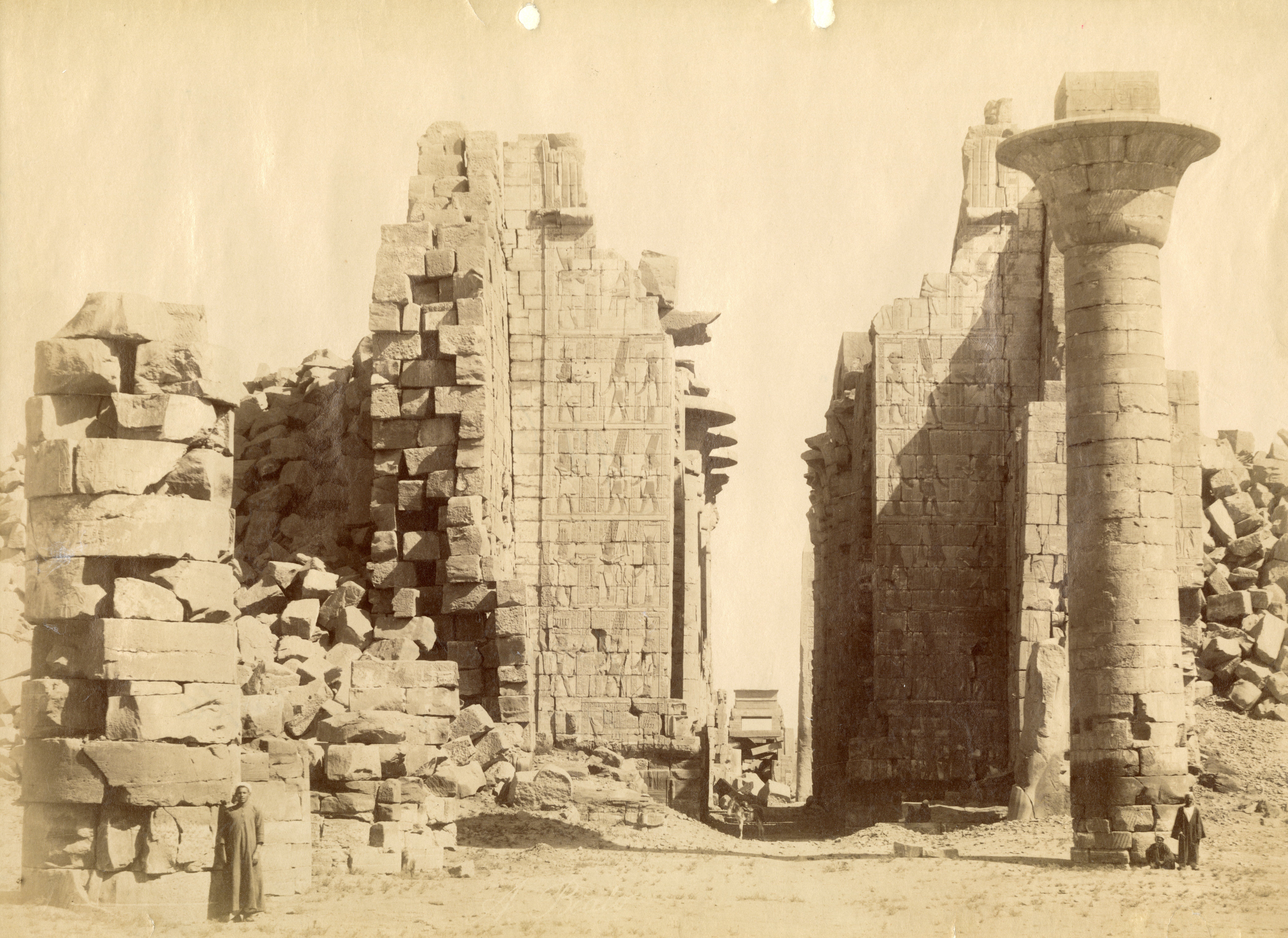
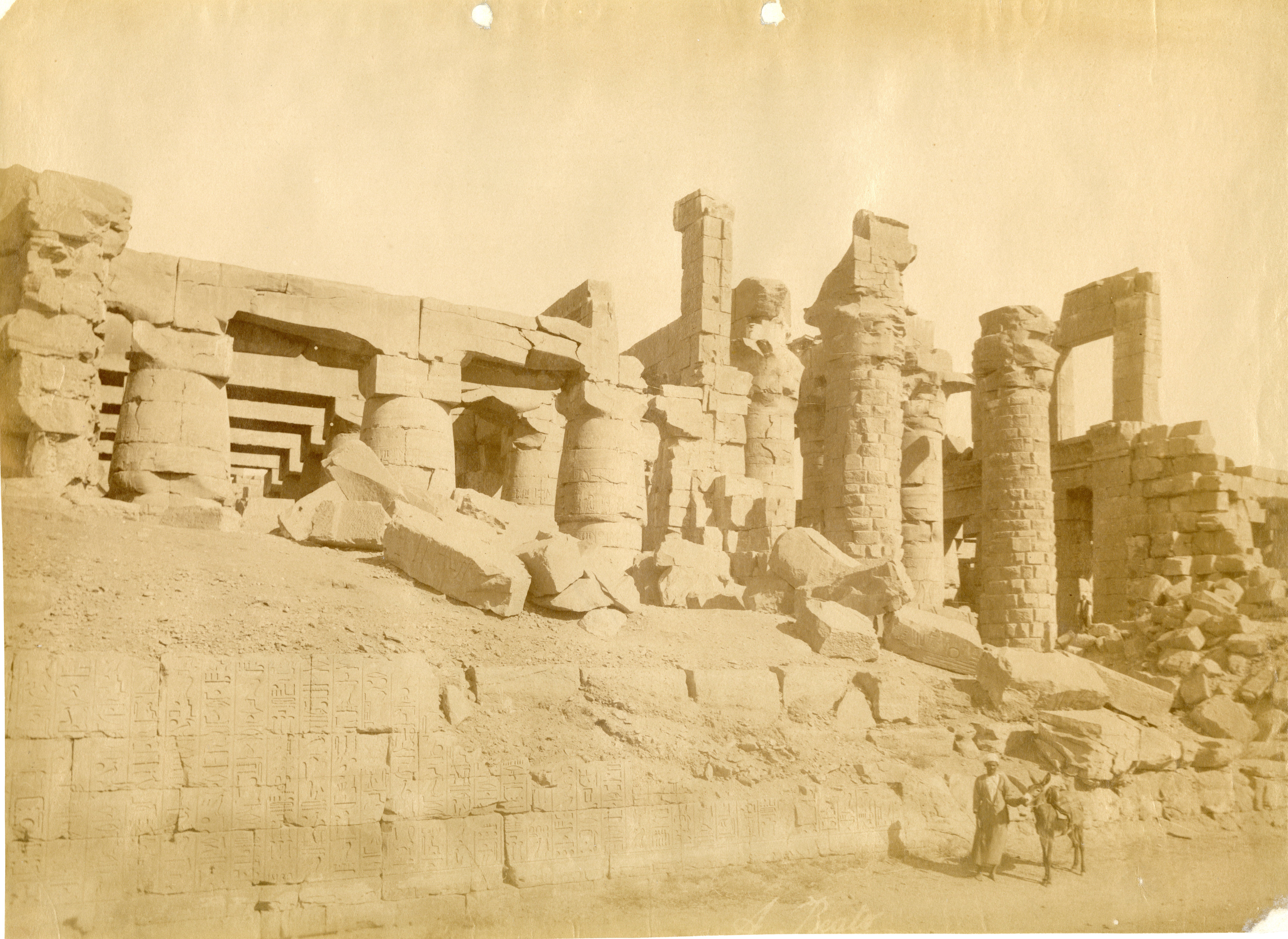
The photograph depicts the entrance to the Great Hypostyle Hall, built by Pharaoh Seti I, dof the Karnak Temple complex, viewed from the courtyard in front. The remaining column from the south-eastern corner of the kiosk of Taharqa (ruler of the 25th dynasty) stands out. Some locals (seated and standing) and a donkey give an idea of the colossal size of the complex. The author's signature is visible at the bottom centre.   
Download
Photo 1/24

The photograph depicts the entrance to the Great Hypostyle Hall, built by Pharaoh Seti I, dof the Karnak Temple complex, viewed from the courtyard in front. The remaining column from the south-eastern corner of the kiosk of Taharqa (ruler of the 25th dynasty) stands out. Some locals (seated and standing) and a donkey give an idea of the colossal size of the complex. The author's signature is visible at the bottom centre.   

1870 - 1888
A. Beato
INV04_008
Positive/ Albumen paper
26x36,4
CC0
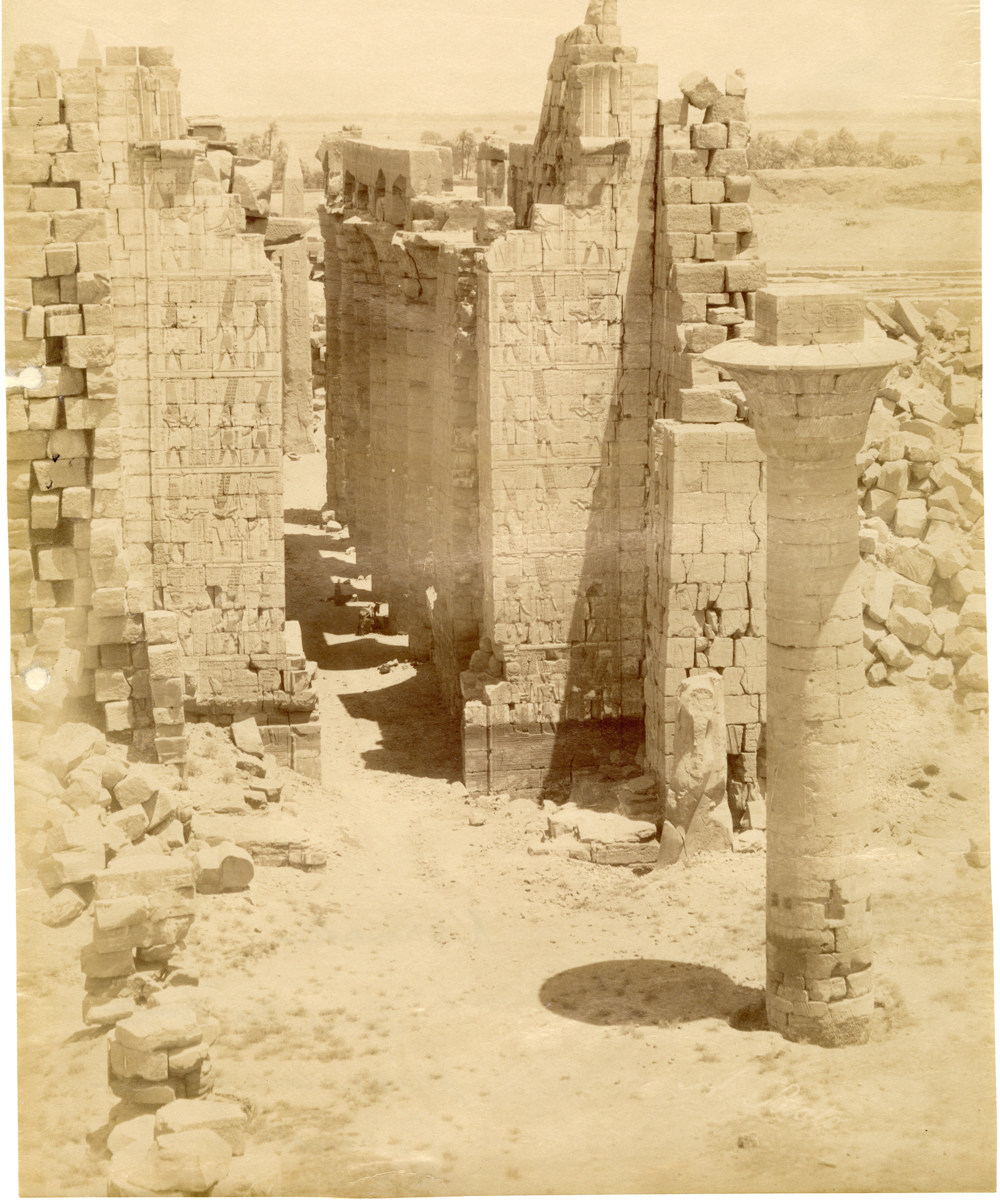
The first courtyard of the Karnak Temple Complex of is photographed here from the first pylon, through which the temple is entered. The remaining column of the kiosk of Pharaoh Taharqa (25th dynasty, called the “Ethiopian Dynasty") and the central corridor of the Great Hypostyle Hall, built by Pharaoh Seti I can be seen. In the background, the two obelisks, which are still standing are visible; those of Pharaoh Tuthmosis I (centre) and Queen Hatshepsut (of which only the tip, on the left, is visible). The author's signature (although very light and almost illegible) is at the bottom right.
Download
Photo 2/24

The first courtyard of the Karnak Temple Complex of is photographed here from the first pylon, through which the temple is entered. The remaining column of the kiosk of Pharaoh Taharqa (25th dynasty, called the “Ethiopian Dynasty") and the central corridor of the Great Hypostyle Hall, built by Pharaoh Seti I can be seen. In the background, the two obelisks, which are still standing are visible; those of Pharaoh Tuthmosis I (centre) and Queen Hatshepsut (of which only the tip, on the left, is visible). The author's signature (although very light and almost illegible) is at the bottom right.

1870 - 1888
A. Beato
INV14_010
Positive/ Albumen paper
35,9x25,9
CC0
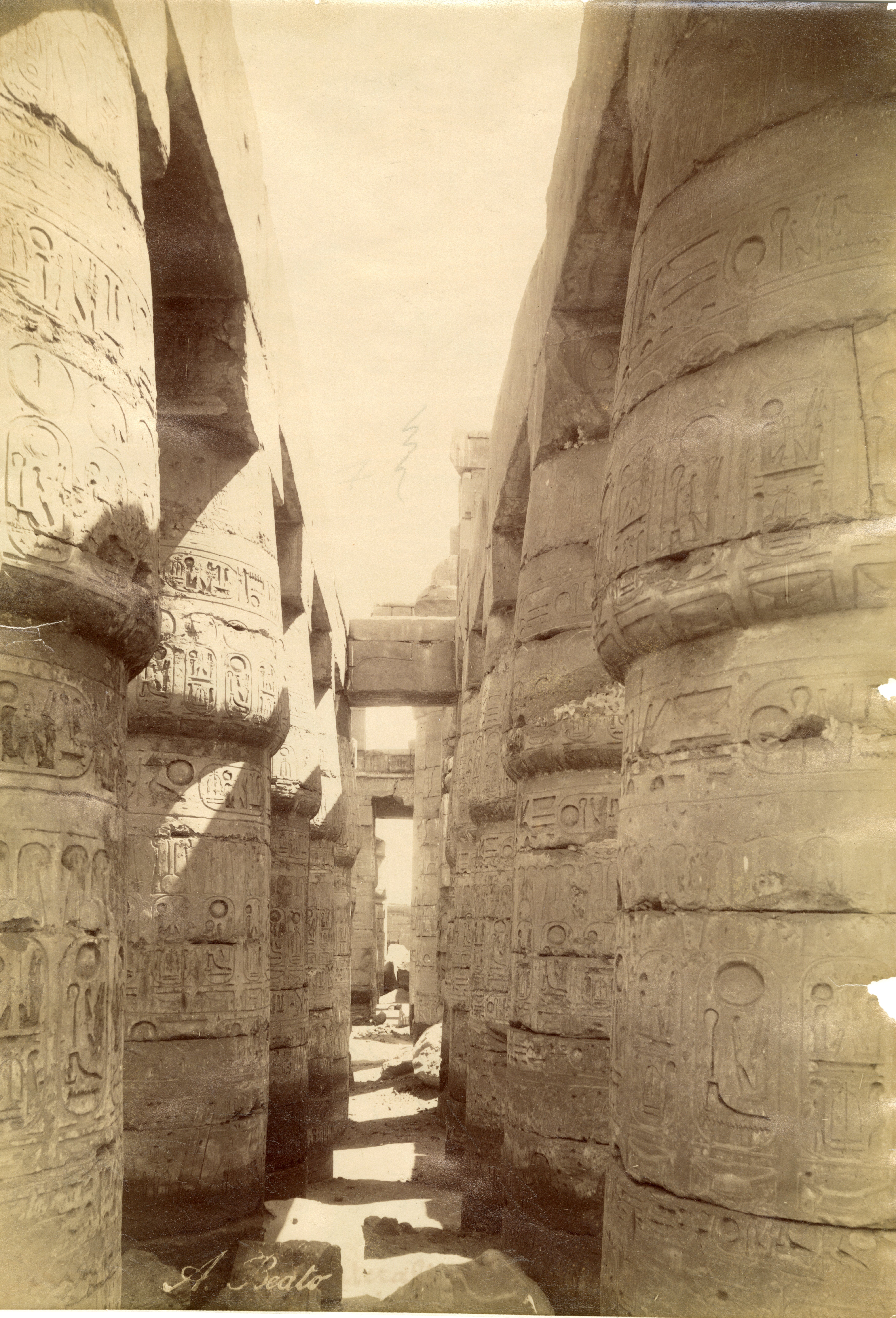
The photograph depicts a lateral intercolumniation within the Great Hypostyle Hall of the Karnak Temple Complex, built by Pharaoh Seti I in the 19th dynasty. The author's signature is at the bottom.
Download
Photo 3/24

The photograph depicts a lateral intercolumniation within the Great Hypostyle Hall of the Karnak Temple Complex, built by Pharaoh Seti I in the 19th dynasty. The author's signature is at the bottom.

1870 - 1888
A. Beato
INV02_005
Positive/ Albumen paper
36,5x25,8
CC0
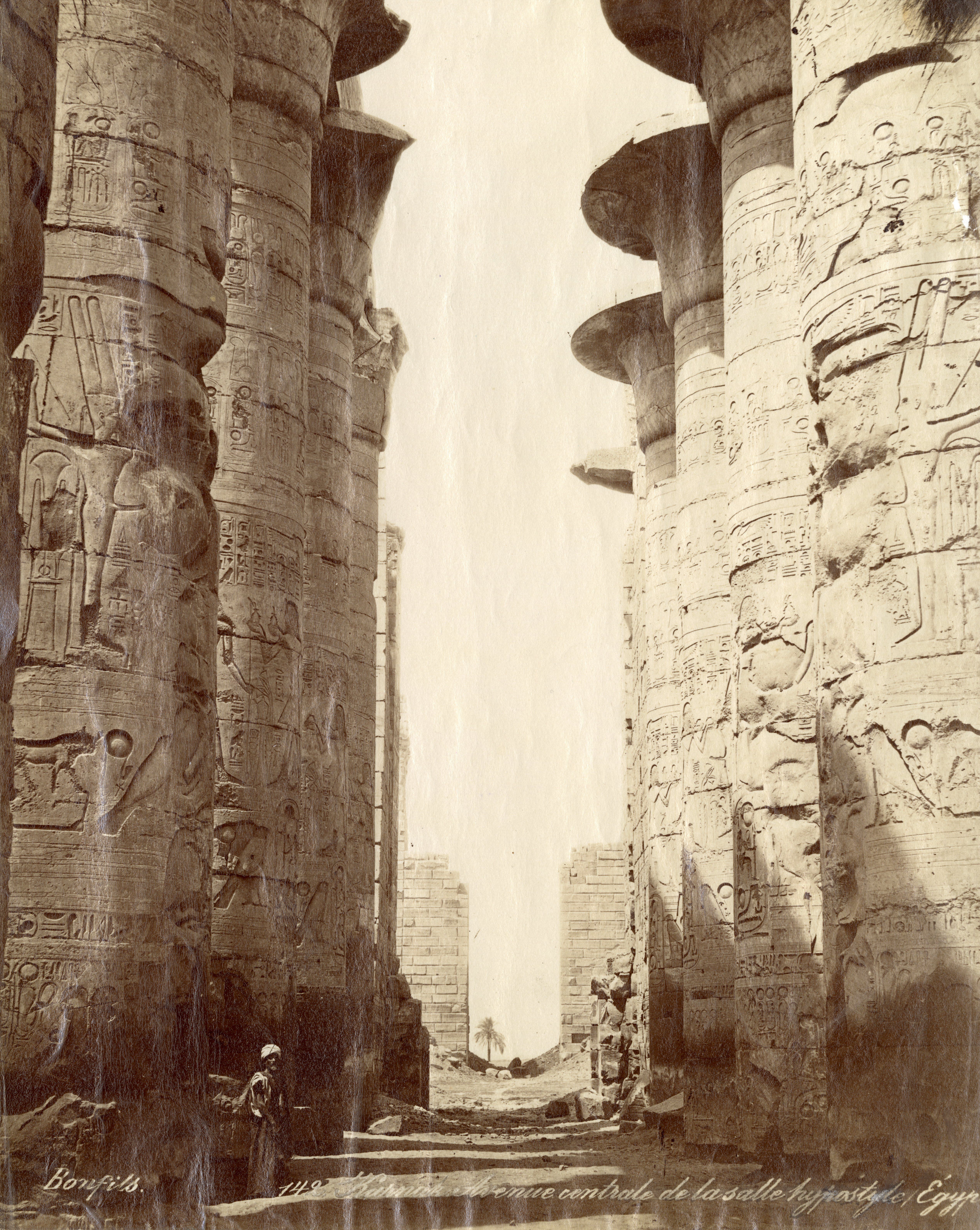
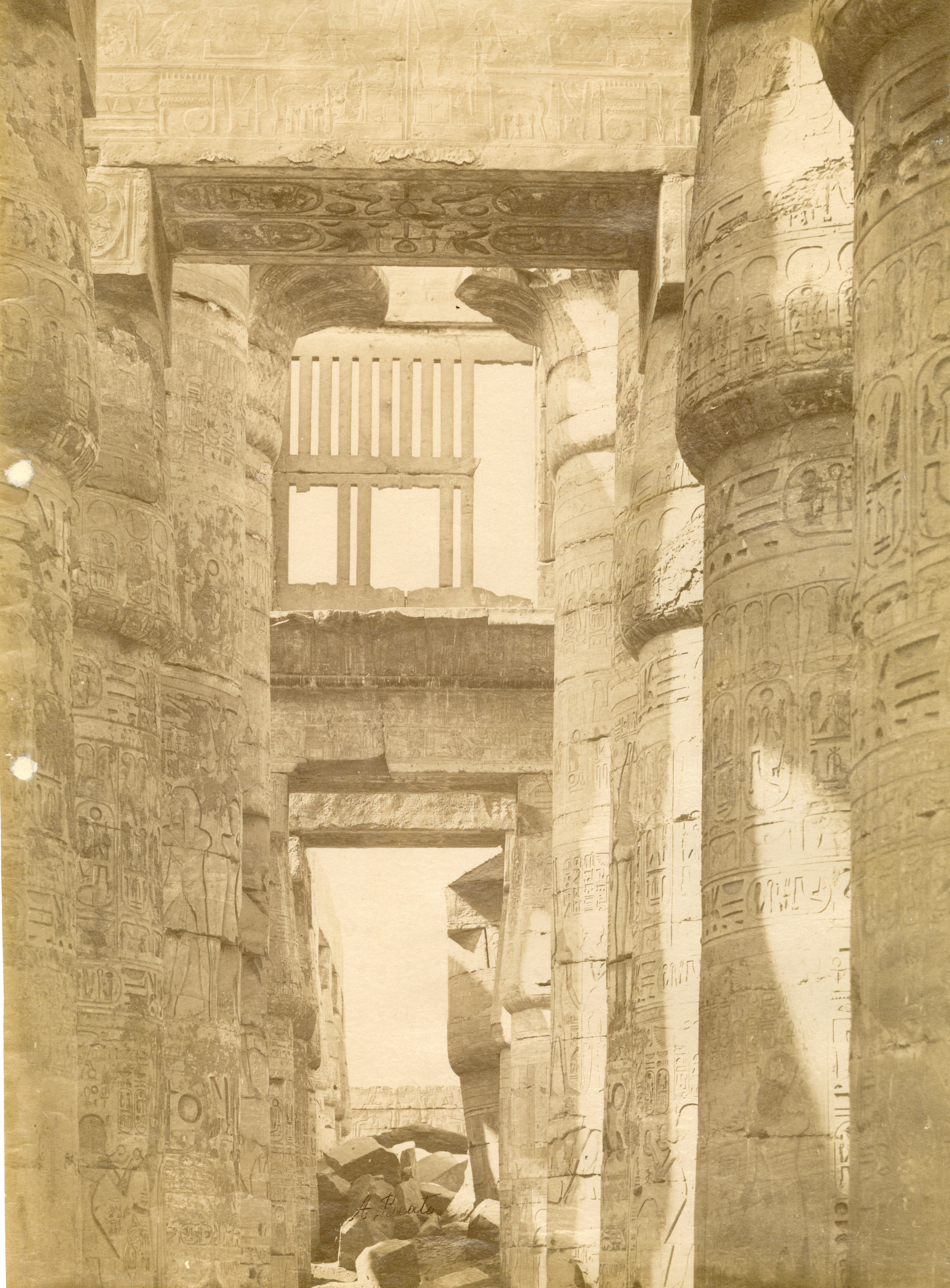
The image shows a view of the central corridor of the Great Hypostyle Hall, built by Pharaoh Seti I, in the Karnak Temple Complex. A man in Egyptian clothing is looking towards the camera. The author's signature can be found at the bottom left.
Download
Photo 4/24

The image shows a view of the central corridor of the Great Hypostyle Hall, built by Pharaoh Seti I, in the Karnak Temple Complex. A man in Egyptian clothing is looking towards the camera. The author's signature can be found at the bottom left.

F. Bonfils
INV05_007
Positive/ Albumen paper
28x21,9
CC0
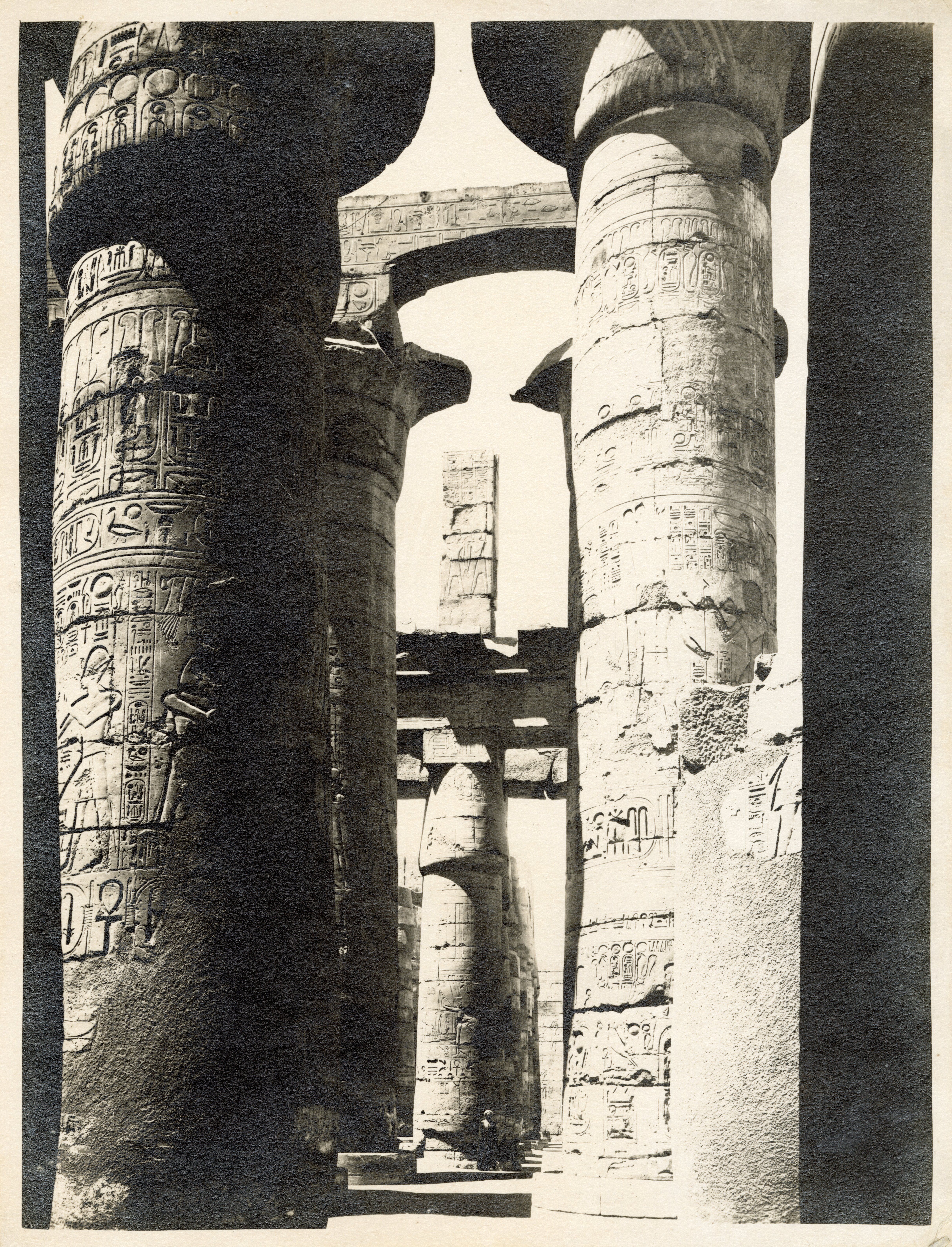
Inside the Great Hypostyle Hall of the Karnak Temple Complex, built by Pharaoh Seti I and completed by his son and successor Ramesses II. Note, at the bottom centre where the author's signature is, some blocks obstructing the passage, as they have not yet been removed.
Download
Photo 5/24

Inside the Great Hypostyle Hall of the Karnak Temple Complex, built by Pharaoh Seti I and completed by his son and successor Ramesses II. Note, at the bottom centre where the author's signature is, some blocks obstructing the passage, as they have not yet been removed.

1870 - 1888
A. Beato
INV14_007
Positive/ Albumen paper
35,8x26,2
CC0
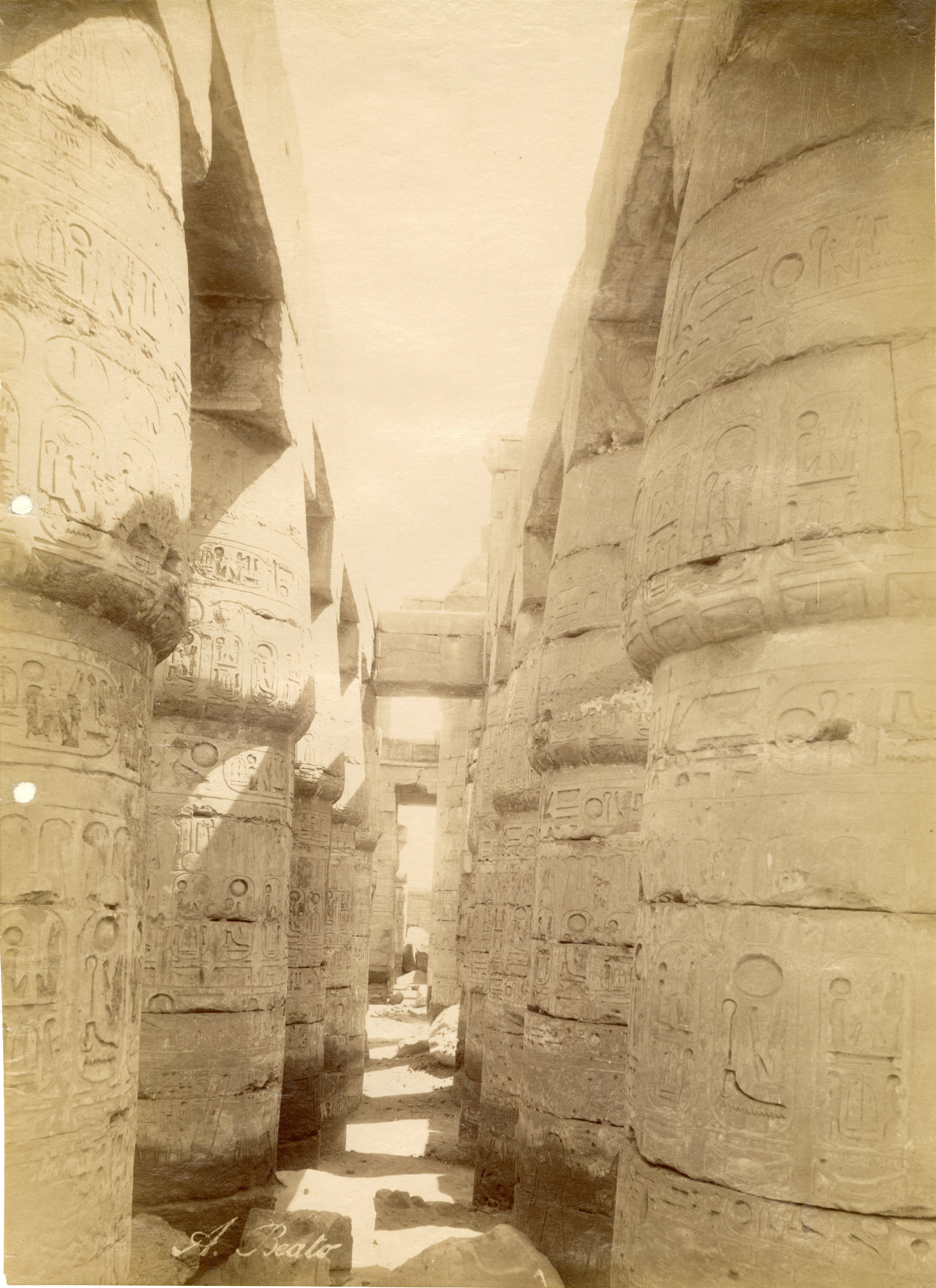
The photograph shows an interior view of the Great Hypostyle Hall, built by Pharaoh Seti I in the Karnak Temple Complex.
Download
Photo 6/24

The photograph shows an interior view of the Great Hypostyle Hall, built by Pharaoh Seti I in the Karnak Temple Complex.

INV16_003
Positive/ Salted paper
27,2x20,7
CC0
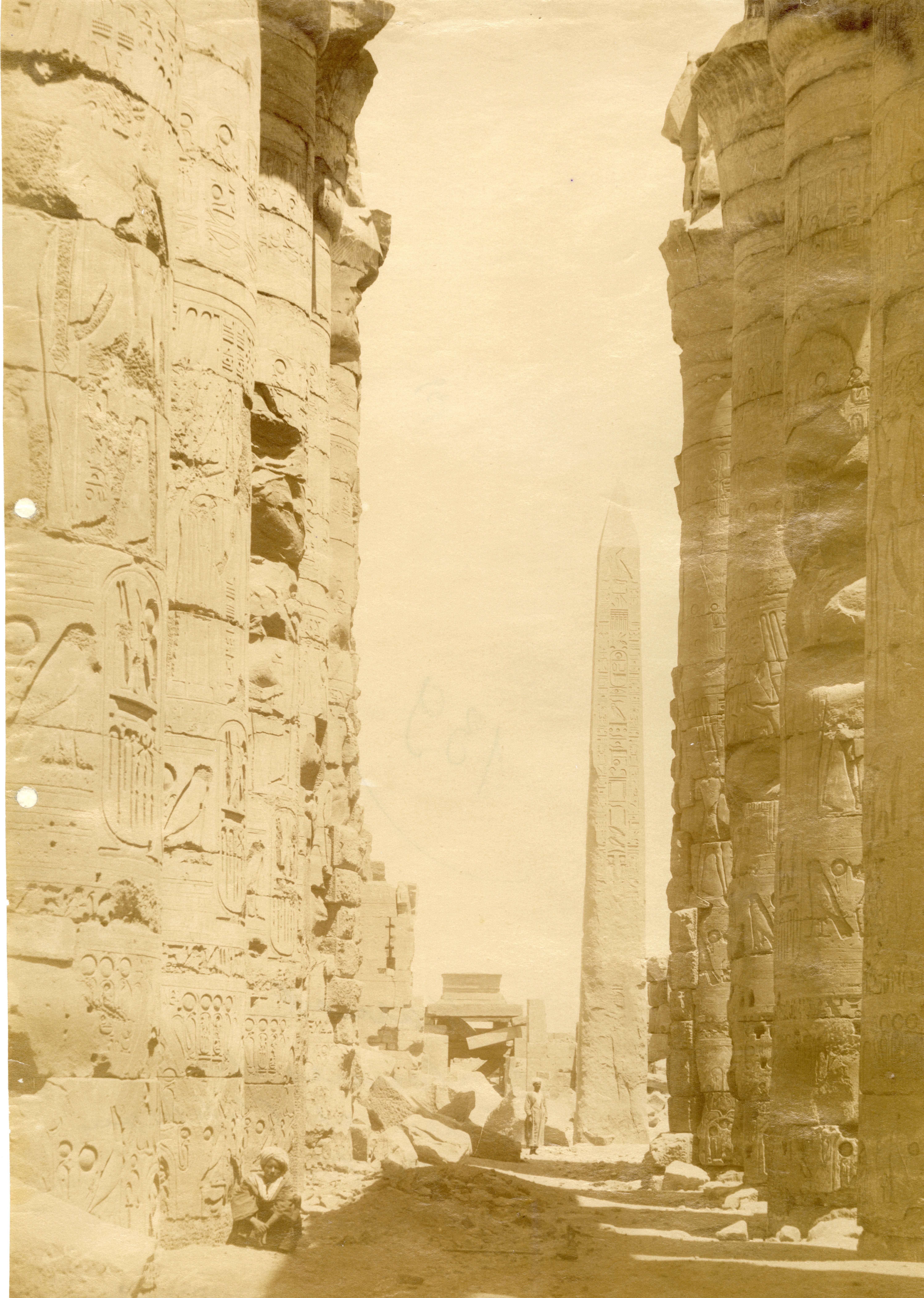
The photograph shows a part of the of the colonnade inside the Great Hypostyle Hall of the Karnak Temple Complex, built by Pharaoh Seti I and completed by his son Ramesses II. Note that the ground level still covers the columns' bases. The author's signature can be found at the bottom.
Download
Photo 7/24

The photograph shows a part of the of the colonnade inside the Great Hypostyle Hall of the Karnak Temple Complex, built by Pharaoh Seti I and completed by his son Ramesses II. Note that the ground level still covers the columns' bases. The author's signature can be found at the bottom.

1870 - 1888
A. Beato
INV16_009
Positive/ Albumen paper
36,1x26,1
CC0
The picture shows a view of the central corridor of the Great Hypostyle Hall commissioned by Pharaoh Seti I in the Karnak Temple Complex, ending with the third pylon. In the forecourt between the third and fourth pylons, the surviving obelisk of Pharaoh Tuthmosis I is visible. The photo can be attributed to Beato.
Download
Photo 8/24

The picture shows a view of the central corridor of the Great Hypostyle Hall commissioned by Pharaoh Seti I in the Karnak Temple Complex, ending with the third pylon. In the forecourt between the third and fourth pylons, the surviving obelisk of Pharaoh Tuthmosis I is visible. The photo can be attributed to Beato.

1870 - 1888
A. Beato?
INV17_004
Positive/ Albumen paper
35,9x26,1
CC0
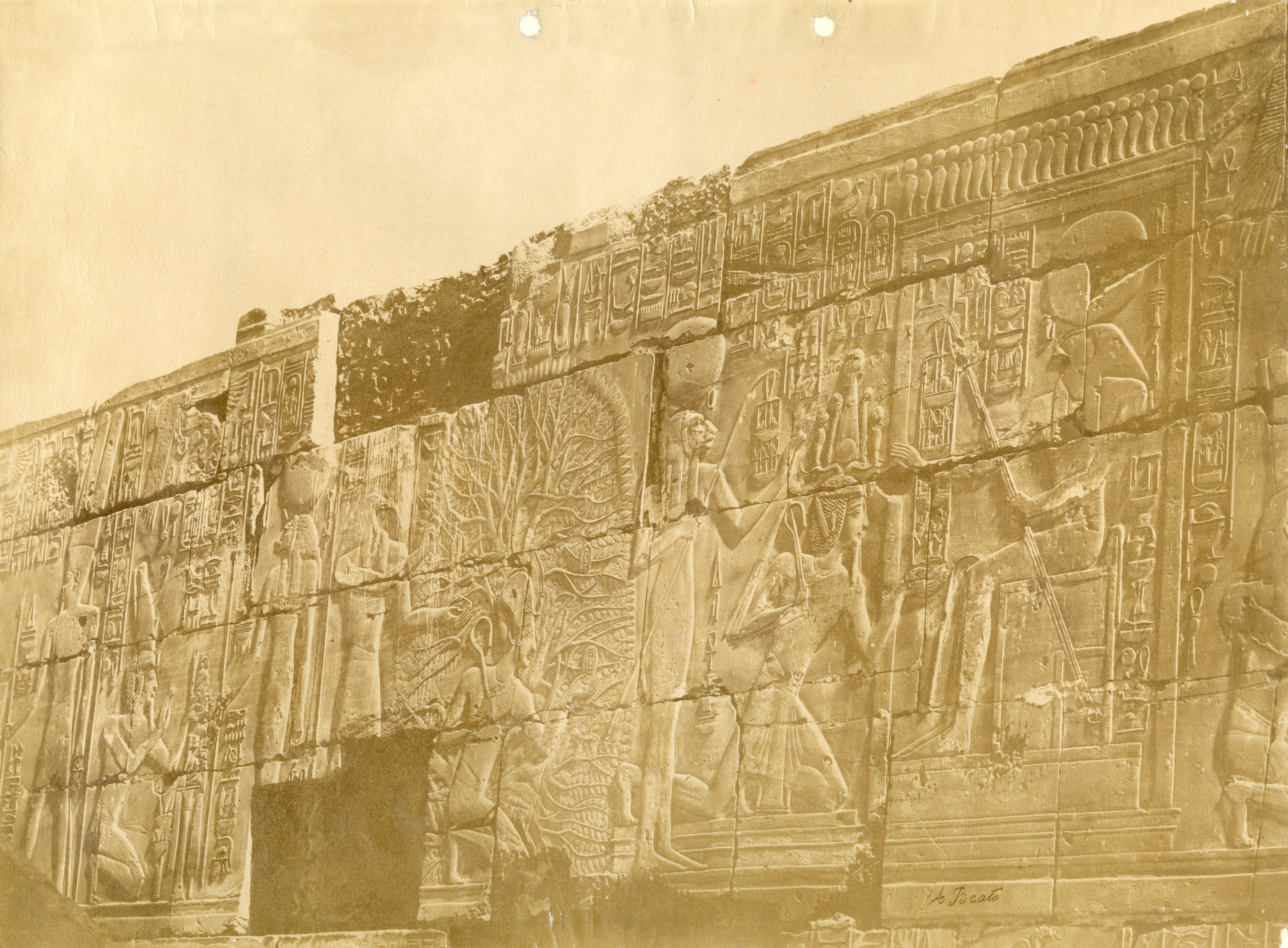
The photograph depicts sacred images carved on the internal perimeter walls of the Ramesside Great Hypostyle Hall in the Karnak Temple Complex (north wall, east side).  In the centre, Pharaoh Seti I, inside an ished tree writes his royal name on a leaf, together with the god Thoth. On the right, the pharaoh receives his “regnal years” from the gods Amun-Re and Weret-Hekau. The author's signature is visible at the bottom right.
Download
Photo 9/24

The photograph depicts sacred images carved on the internal perimeter walls of the Ramesside Great Hypostyle Hall in the Karnak Temple Complex (north wall, east side). In the centre, Pharaoh Seti I, inside an ished tree writes his royal name on a leaf, together with the god Thoth. On the right, the pharaoh receives his “regnal years” from the gods Amun-Re and Weret-Hekau. The author's signature is visible at the bottom right.
1870 - 1888
A. Beato
INV18_006
Positive/ Albumen paper
26,2x35,8
CC0
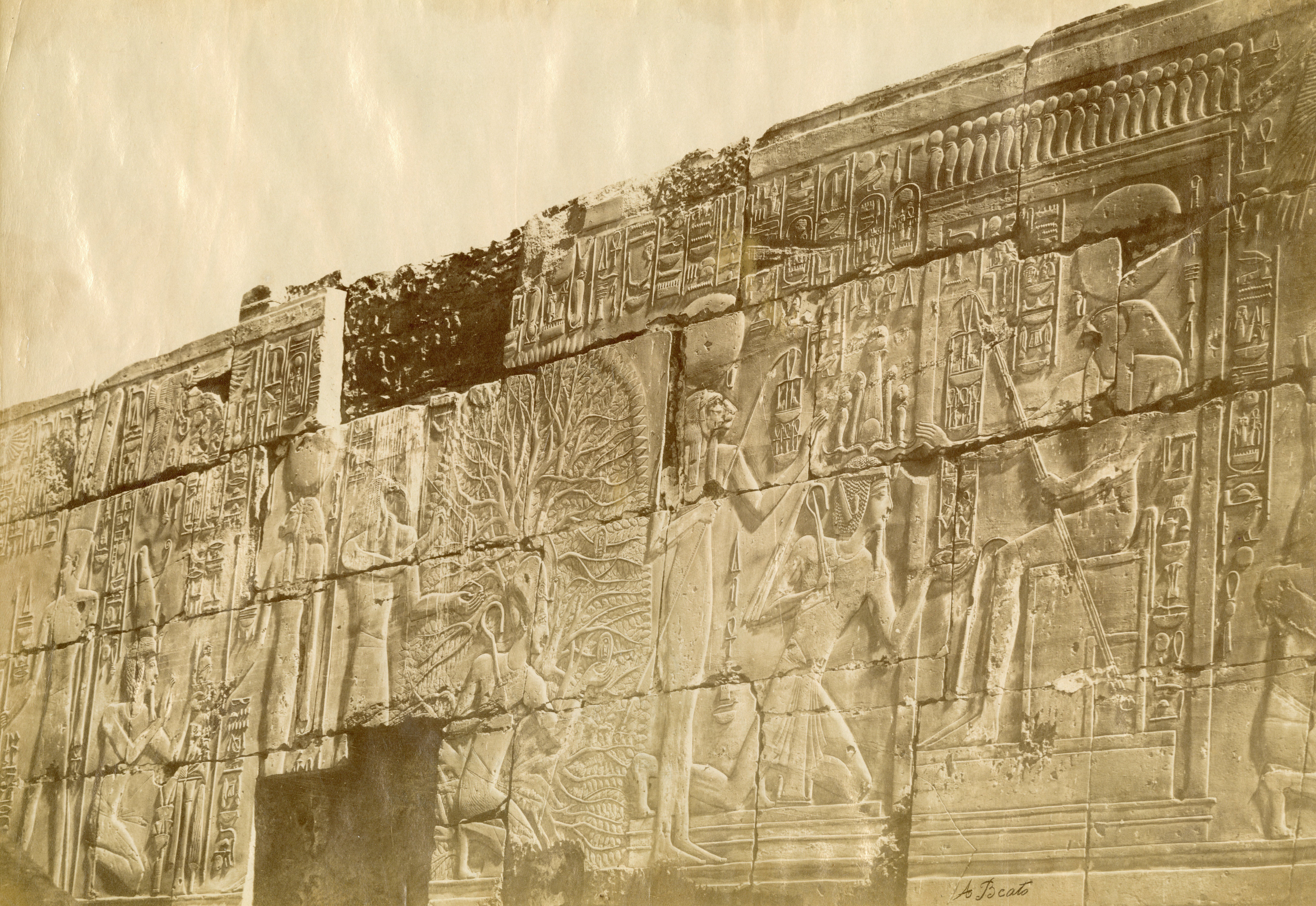
The photograph depicts sacred images carved on the internal perimeter walls of the Ramesside Great Hypostyle Hall in the Karnak Temple Complex (north wall, east side).  In the centre, Pharaoh Seti I, inside an ished tree writes his royal name on a leaf, together with the god Thoth. On the right, the pharaoh receives his “regnal years” from the gods Amun-Re and Weret-Hekau. The author's signature is visible at the bottom right.
Download
Photo 10/24

The photograph depicts sacred images carved on the internal perimeter walls of the Ramesside Great Hypostyle Hall in the Karnak Temple Complex (north wall, east side). In the centre, Pharaoh Seti I, inside an ished tree writes his royal name on a leaf, together with the god Thoth. On the right, the pharaoh receives his “regnal years” from the gods Amun-Re and Weret-Hekau. The author's signature is visible at the bottom right.

1870 - 1888
A. Beato
INV19_009
Positive/ Albumen paper
24,4x35,2
CC0
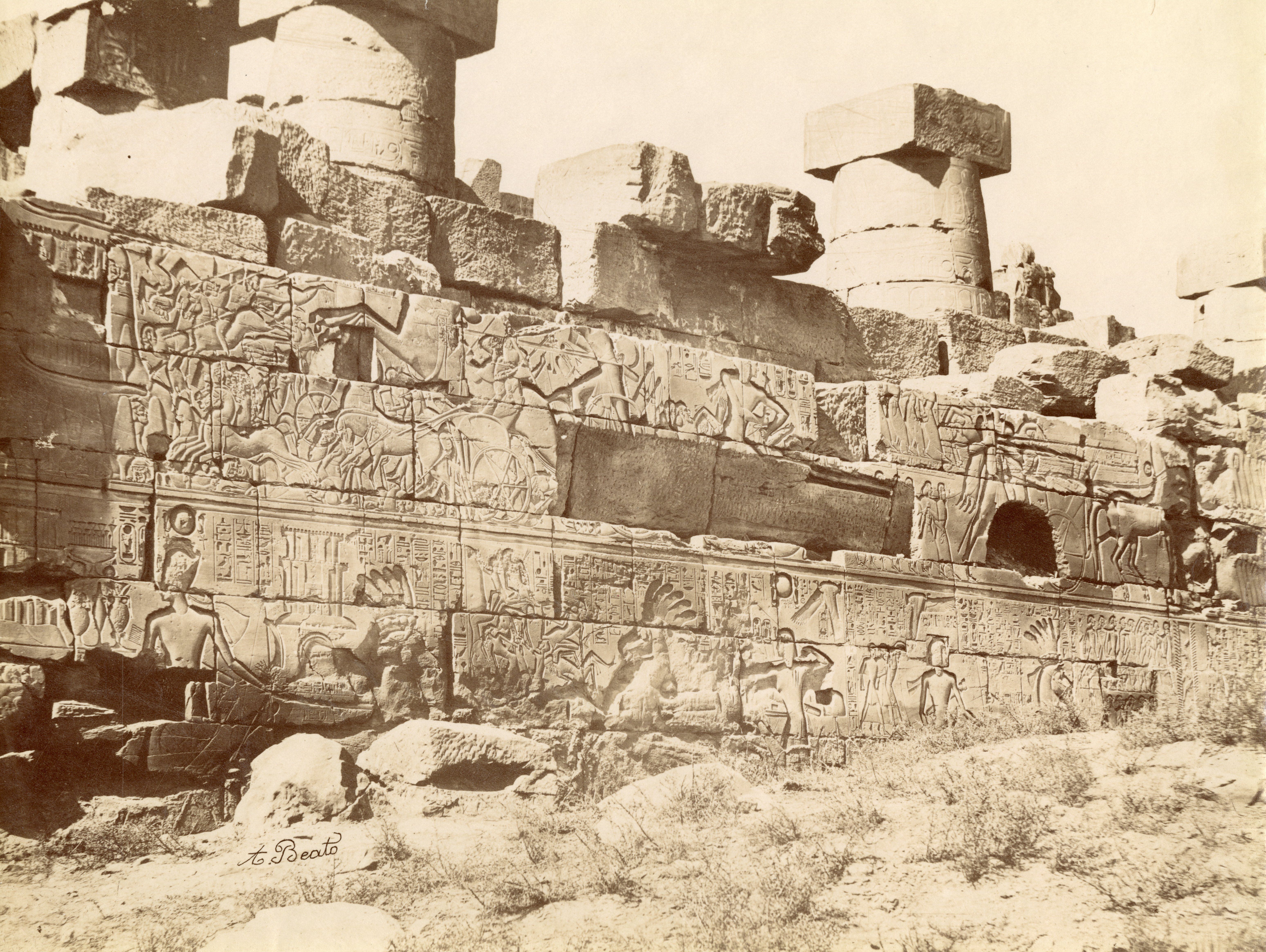
The photograph shows the bas-reliefs on the outer wall (north side, east section) of the Great Hypostyle Hall in the Karnak Temple Complex. Showing battle scenes of Pharaoh Seti I against the Yenoam  (first register from the top) and Shasu populations (second register from the top), who were slaughtered with the pharaoh's war chariot during his Syrio-Palestine campaigns. The photograph documents the ground level in the second half of the 19th century, which was a few metres higher than the original level. Part of the wall is in fact, still underground. At the bottom, the author's signature is visible.
Download
Photo 11/24

The photograph shows the bas-reliefs on the outer wall (north side, east section) of the Great Hypostyle Hall in the Karnak Temple Complex. Showing battle scenes of Pharaoh Seti I against the Yenoam (first register from the top) and Shasu populations (second register from the top), who were slaughtered with the pharaoh's war chariot during his Syrio-Palestine campaigns. The photograph documents the ground level in the second half of the 19th century, which was a few metres higher than the original level. Part of the wall is in fact, still underground. At the bottom, the author's signature is visible.

1870 - 1888
A. Beato
INV03_011
Positive/ Albumen paper
20,6x26,4
CC0
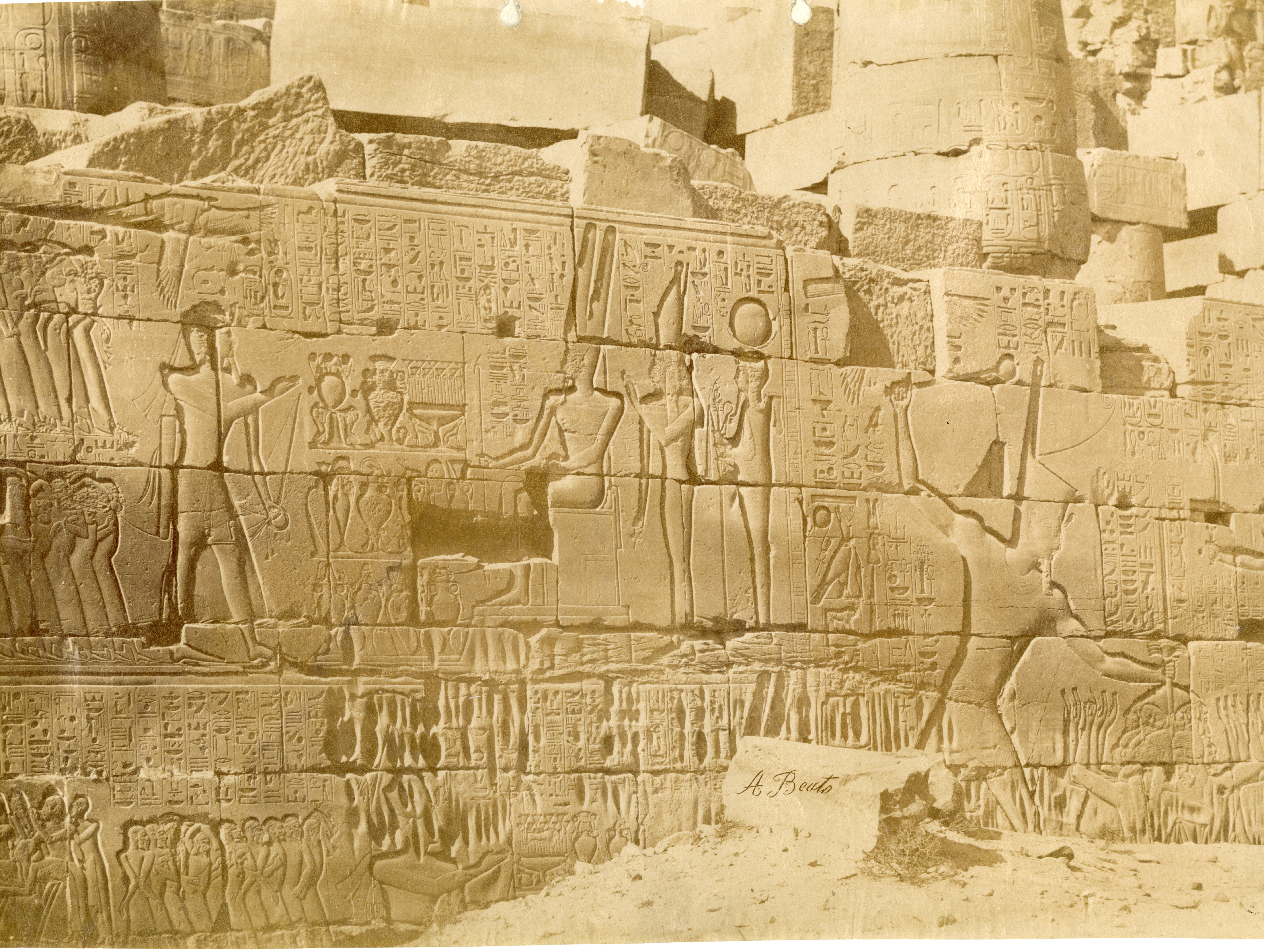
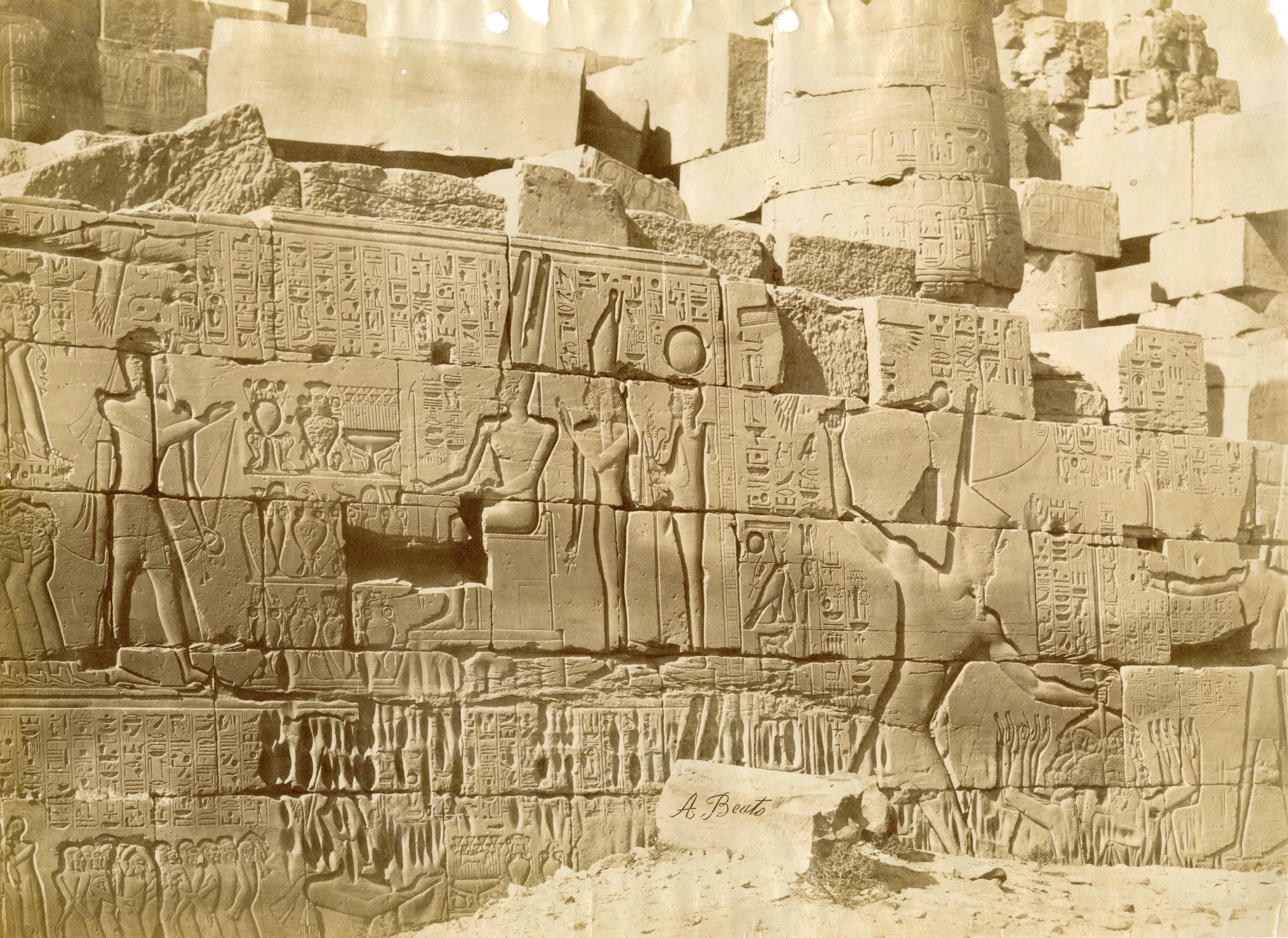
View of part of the northern outer wall of the Great Hypostyle Hall of the Karnak Temple Complex, built by Pharaoh Seti I. The pharaoh is depicted during his military campaigns (right) and he is dedicating the victory over his enemies to Amun (top left). The author's signature is visible at the bottom centre.
Download
Photo 12/24

View of part of the northern outer wall of the Great Hypostyle Hall of the Karnak Temple Complex, built by Pharaoh Seti I. The pharaoh is depicted during his military campaigns (right) and he is dedicating the victory over his enemies to Amun (top left). The author's signature is visible at the bottom centre.

1870 - 1888
A. Beato
INV17_003
Positive/ Albumen paper
26,1x35,8
CC0
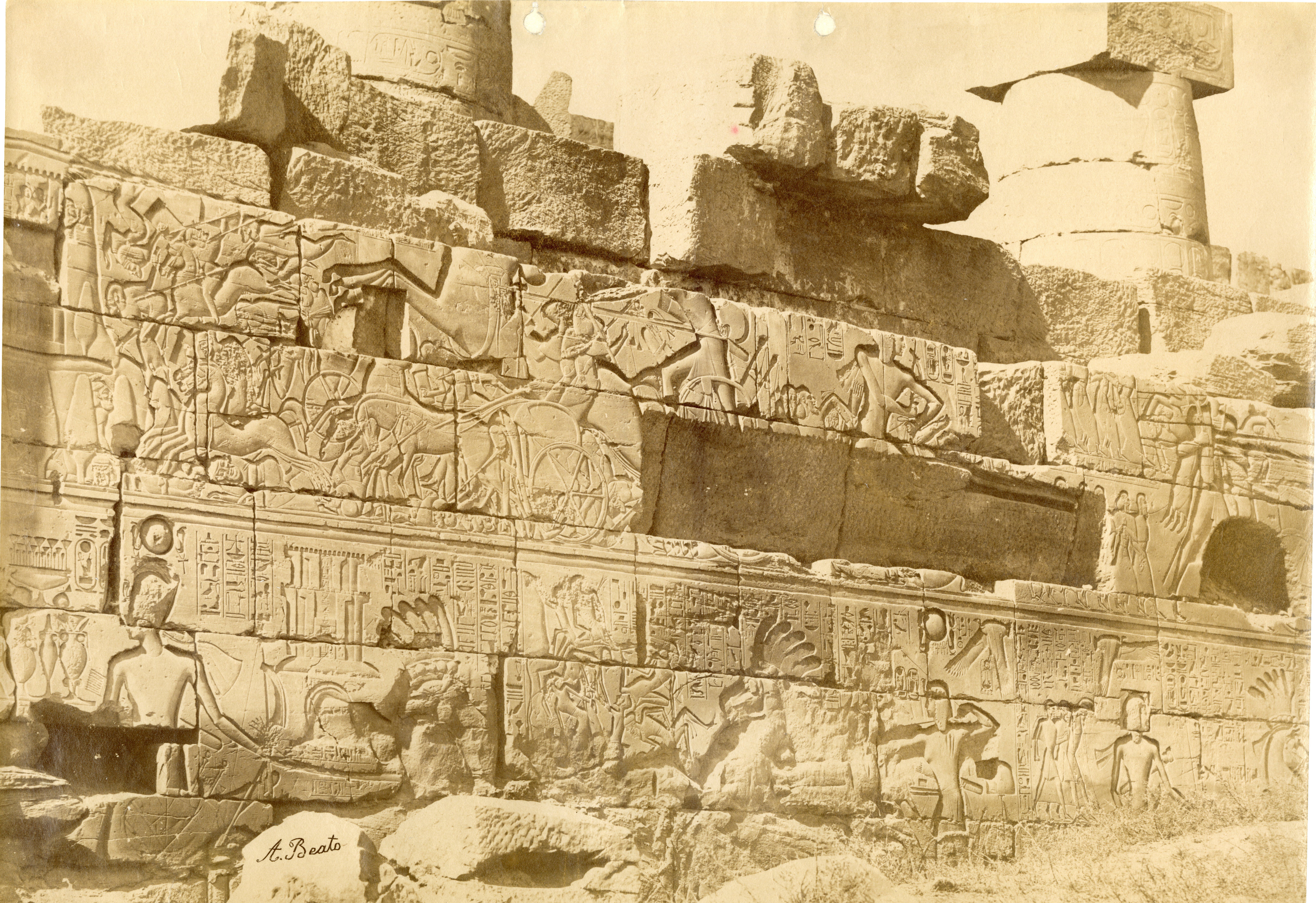
View of a portion of the northern outer wall of the Great Hypostyle Hall of the Karnak Temple Complex. Pharaoh Seti I is depicted during his military campaigns (right) and he is dedicating the victory over his enemies to Amun (top left). The author's signature is visible at the bottom.
Download
Photo 13/24

View of a portion of the northern outer wall of the Great Hypostyle Hall of the Karnak Temple Complex. Pharaoh Seti I is depicted during his military campaigns (right) and he is dedicating the victory over his enemies to Amun (top left). The author's signature is visible at the bottom.

1870 - 1888
A. Beato
INV19_011
Positive/ Albumen paper
26,2x35,8
CC0
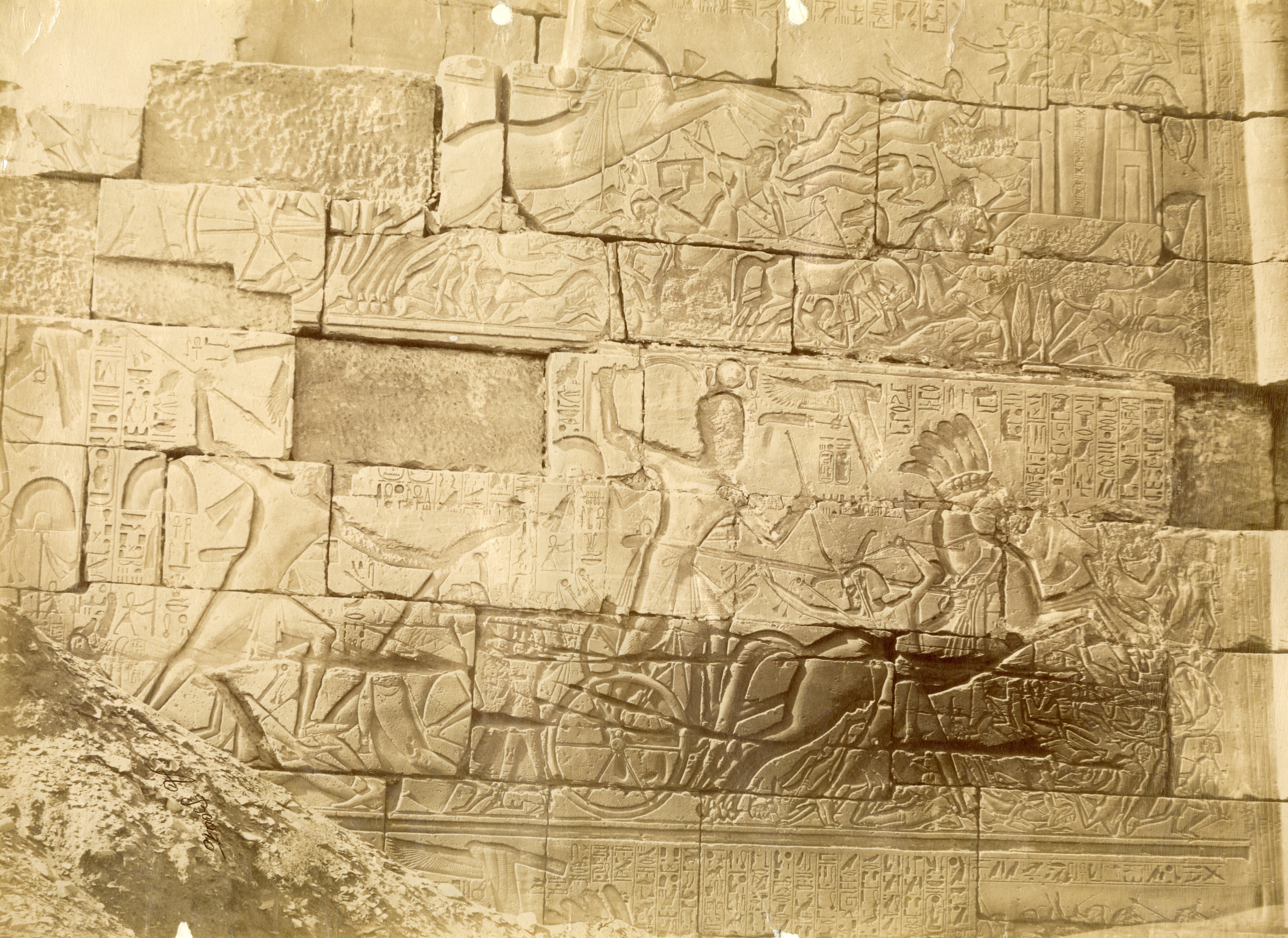
The photograph depicts a detail of the decoration of the outer wall, north side, of the Ramesside Great Hypostyle Hall in the Karnak Temple Complex. It shows Pharaoh Seti I in various stages of battle against the Syrio-Palestinians. Note that the ground level still covered part of the wall. The author's signature is clearly visible at the bottom left.
Download
Photo 14/24

The photograph depicts a detail of the decoration of the outer wall, north side, of the Ramesside Great Hypostyle Hall in the Karnak Temple Complex. It shows Pharaoh Seti I in various stages of battle against the Syrio-Palestinians. Note that the ground level still covered part of the wall. The author's signature is clearly visible at the bottom left.

1870 - 1888
A. Beato
INV17_005
Positive/ Albumen paper
26,2x36,1
CC0
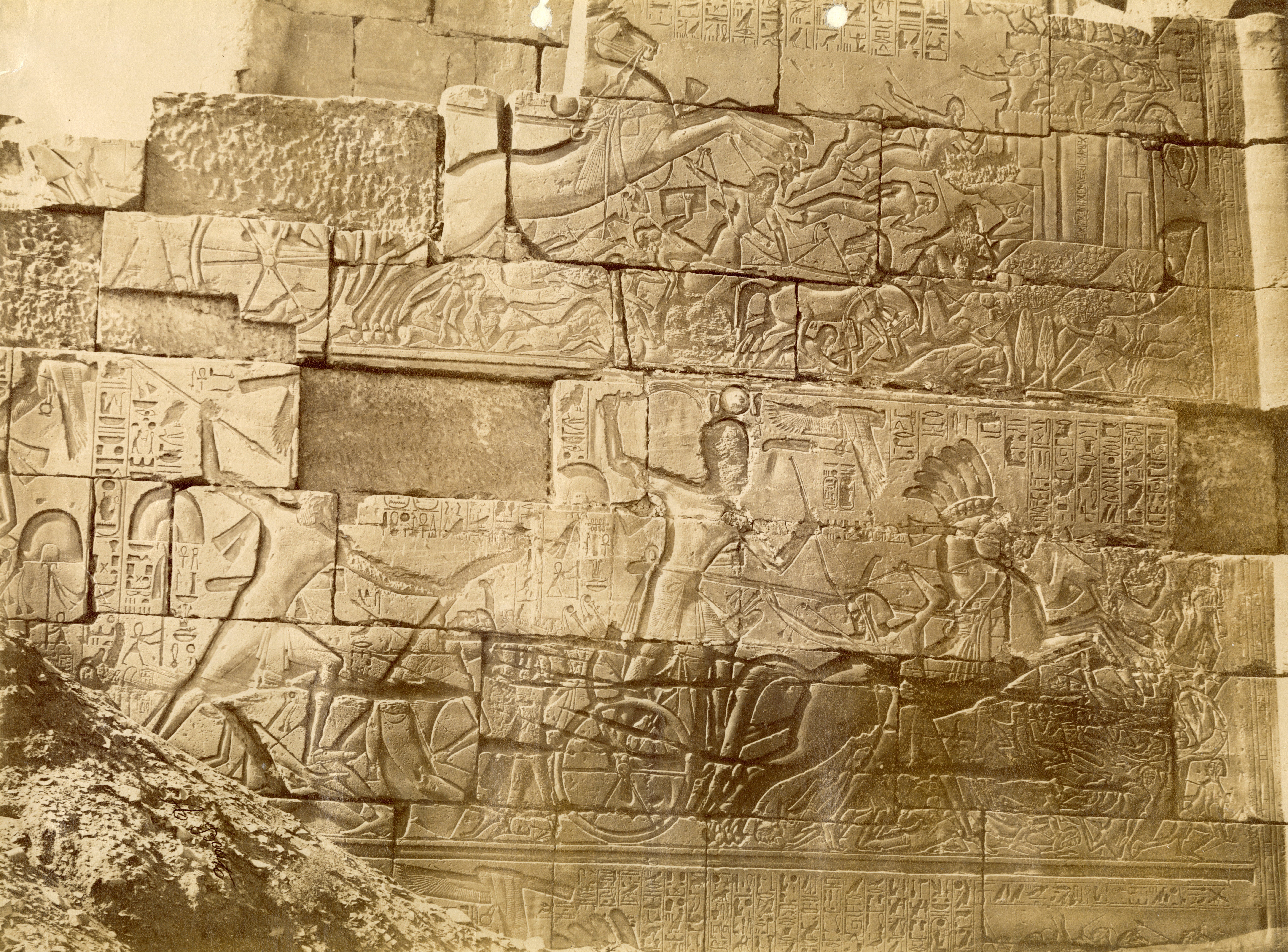
The image depicts some battle scenes of Pharaoh Seti I on the outer wall, north side, of the Great Hypostyle Hall in the Karnak Temple Complex. The author's signature is visible at the bottom left.
Download
Photo 15/24

The image depicts some battle scenes of Pharaoh Seti I on the outer wall, north side, of the Great Hypostyle Hall in the Karnak Temple Complex. The author's signature is visible at the bottom left.
1870 - 1888
A. Beato
INV17_006
Positive/ Albumen paper
25,5x35,5
CC0
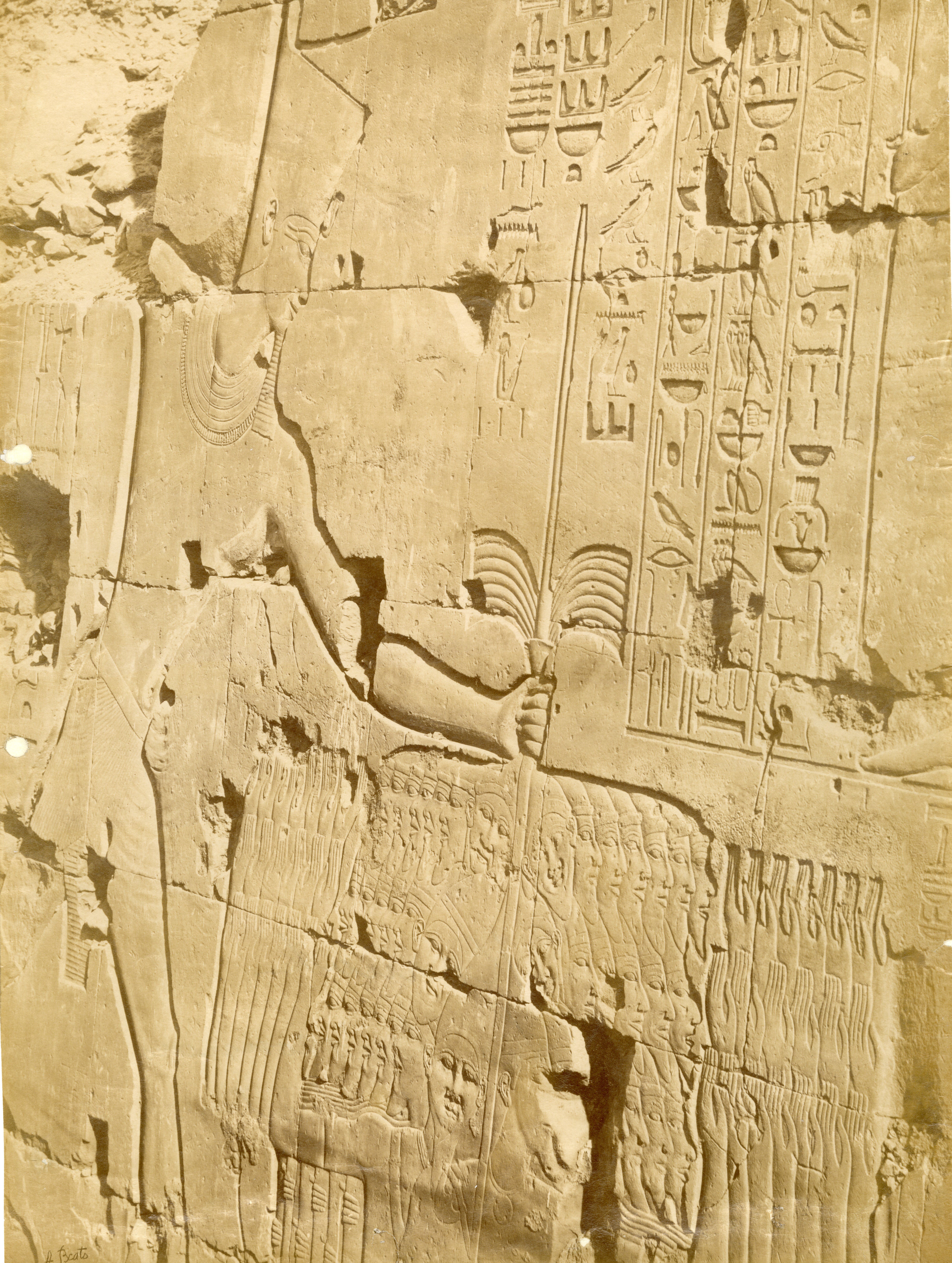
The image depicts some battle scenes of Pharaoh Seti I on the outer wall, north side, of the Great Hypostyle Hall in the Karnak Temple Complex. The author's signature is visible at the bottom left.
Download
Photo 16/24

The image depicts some battle scenes of Pharaoh Seti I on the outer wall, north side, of the Great Hypostyle Hall in the Karnak Temple Complex. The author's signature is visible at the bottom left.

1870 - 1888
A. Beato
INV17_008
Positive/ Albumen paper
26x39,5
CC0
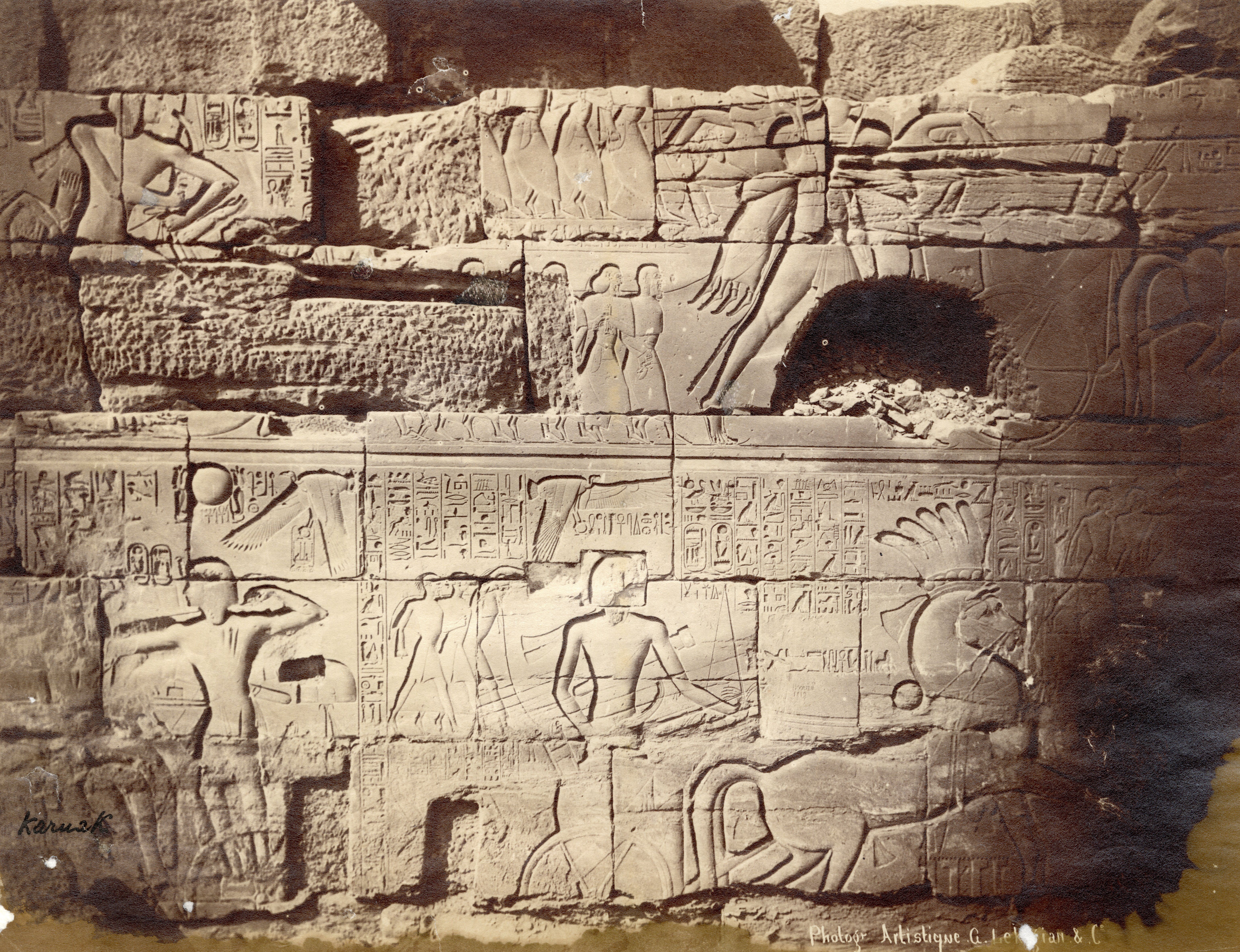
Detail of the decoration on the north outer wall of the Great Ramesside Hypostyle Hall from the Karnak Temple Complex. Pharaoh Seti I is depicted in the act of smiting his enemies - the Retenu (defeated during his Palestinian campaign). The signature of the author is at the bottom left.
Download
Photo 17/24

Detail of the decoration on the north outer wall of the Great Ramesside Hypostyle Hall from the Karnak Temple Complex. Pharaoh Seti I is depicted in the act of smiting his enemies - the Retenu (defeated during his Palestinian campaign). The signature of the author is at the bottom left.

1870 - 1888
A. Beato
INV18_009
Positive/ Albumen paper
35,3x26
CC0
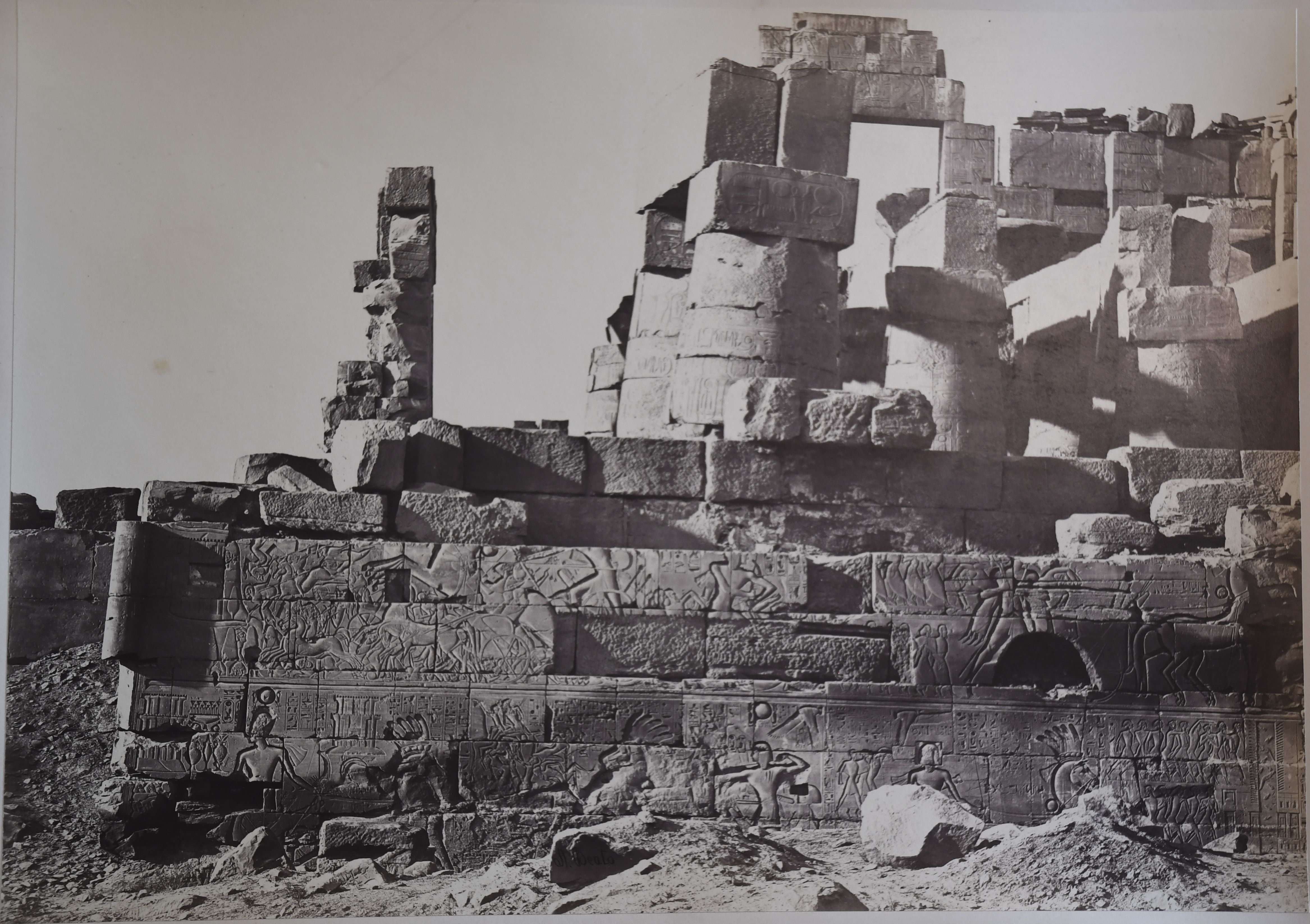
The photograph shows a detail of the external wall’s decoration, north side, of the Great Hypostyle Hall built by Pharaoh Seti I in the Temple of Amun at Karnak, showing battle scenes against the Syrio-Palestinians. The author's signature is at the bottom right.
Download
Photo 18/24

The photograph shows a detail of the external wall’s decoration, north side, of the Great Hypostyle Hall built by Pharaoh Seti I in the Temple of Amun at Karnak, showing battle scenes against the Syrio-Palestinians. The author's signature is at the bottom right.

1860 - 1890
G. Lekegian
INV22_011
Positive/ Albumen paper
20,3x26,3
CC0
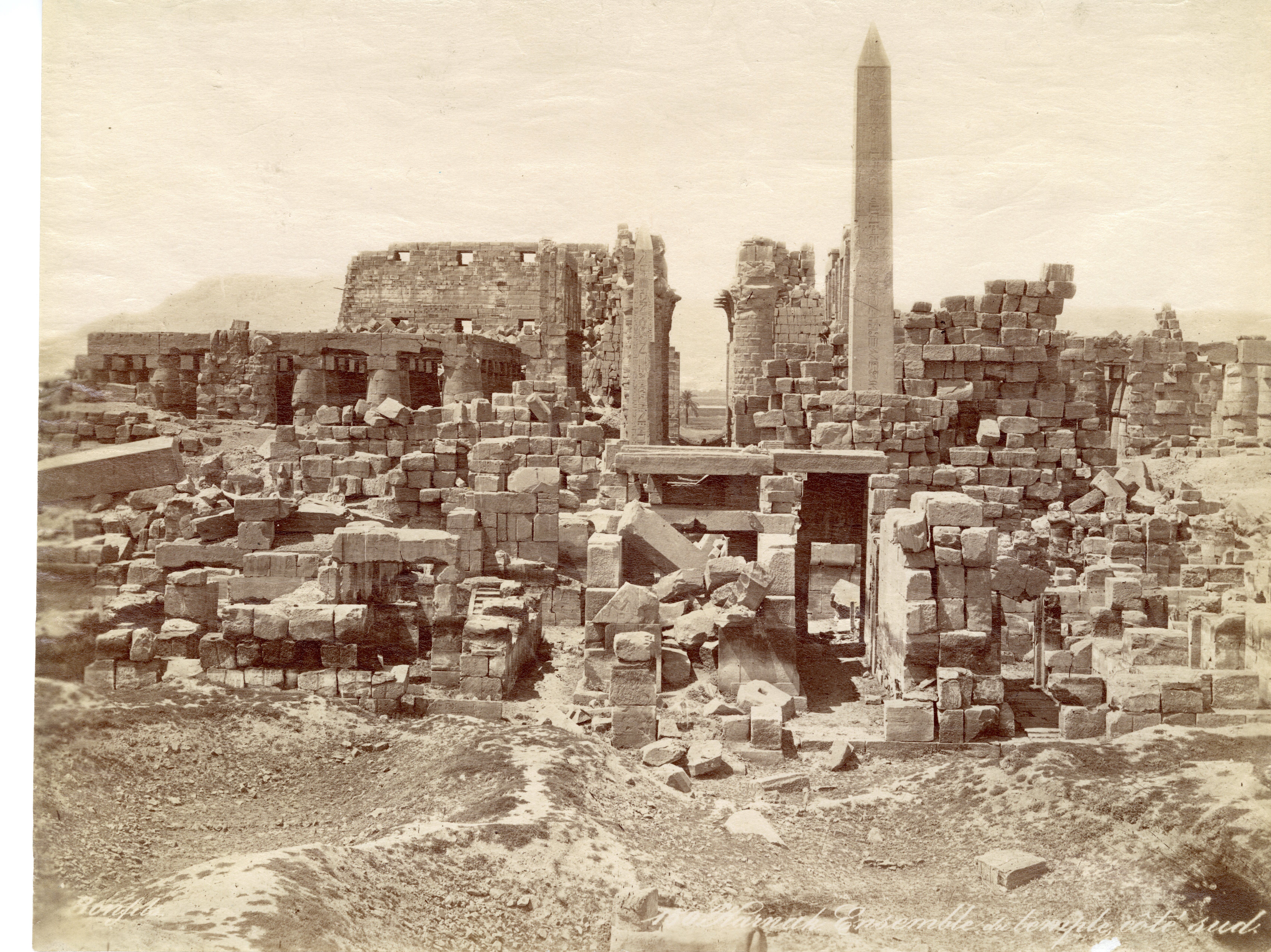
Northern exterior wall of the Great Hypostyle Hall in the Karnak Temple Complex. Pharaoh Seti I is depicted during his campaigns in Syria-Palestine. The ground level still covers the lower part of the wall. The author's signature is visible at the bottom.
Download
Photo 19/24

Northern exterior wall of the Great Hypostyle Hall in the Karnak Temple Complex. Pharaoh Seti I is depicted during his campaigns in Syria-Palestine. The ground level still covers the lower part of the wall. The author's signature is visible at the bottom.

Album2_066
Positive/ Albumen paper
36.5x26
CC0
The photograph represents a view of the western wing of the Karnak Temple Complex, taken from the central courtyard where the Middle Kingdom temple was founded. Among the rubble stand the obelisks of Hatshepsut (right) and Tuthmosis I (left); the structures in the foreground correspond to the chapels of Hatshepsut and the sanctuary for the sacred boat of Philip Arrhidaeus. In the background, the columns of the Great Hypostyle Hall built by Seti I stand out. The author's signature (partially blurred) is at the bottom left.
Download
Photo 20/24

The photograph represents a view of the western wing of the Karnak Temple Complex, taken from the central courtyard where the Middle Kingdom temple was founded. Among the rubble stand the obelisks of Hatshepsut (right) and Tuthmosis I (left); the structures in the foreground correspond to the chapels of Hatshepsut and the sanctuary for the sacred boat of Philip Arrhidaeus. In the background, the columns of the Great Hypostyle Hall built by Seti I stand out. The author's signature (partially blurred) is at the bottom left.

F. Bonfils
INV05_009
Positive/ Albumen paper
21,7x28,2
CC0
View of the south-western, external wall of the Great Hypostyle Hall built by Seti I in the Karnak Temple Complex, with one figure in the foreground and another at the height of the colonnade (in the background on the right). The ground level still covers part of the wall. The author's signature (partially cut off) is legible at the bottom.
Download
Photo 21/24

View of the south-western, external wall of the Great Hypostyle Hall built by Seti I in the Karnak Temple Complex, with one figure in the foreground and another at the height of the colonnade (in the background on the right). The ground level still covers part of the wall. The author's signature (partially cut off) is legible at the bottom.

1870 - 1888
A. Beato
INV18_008
Positive/ Albumen paper
26,2x35,6
CC0
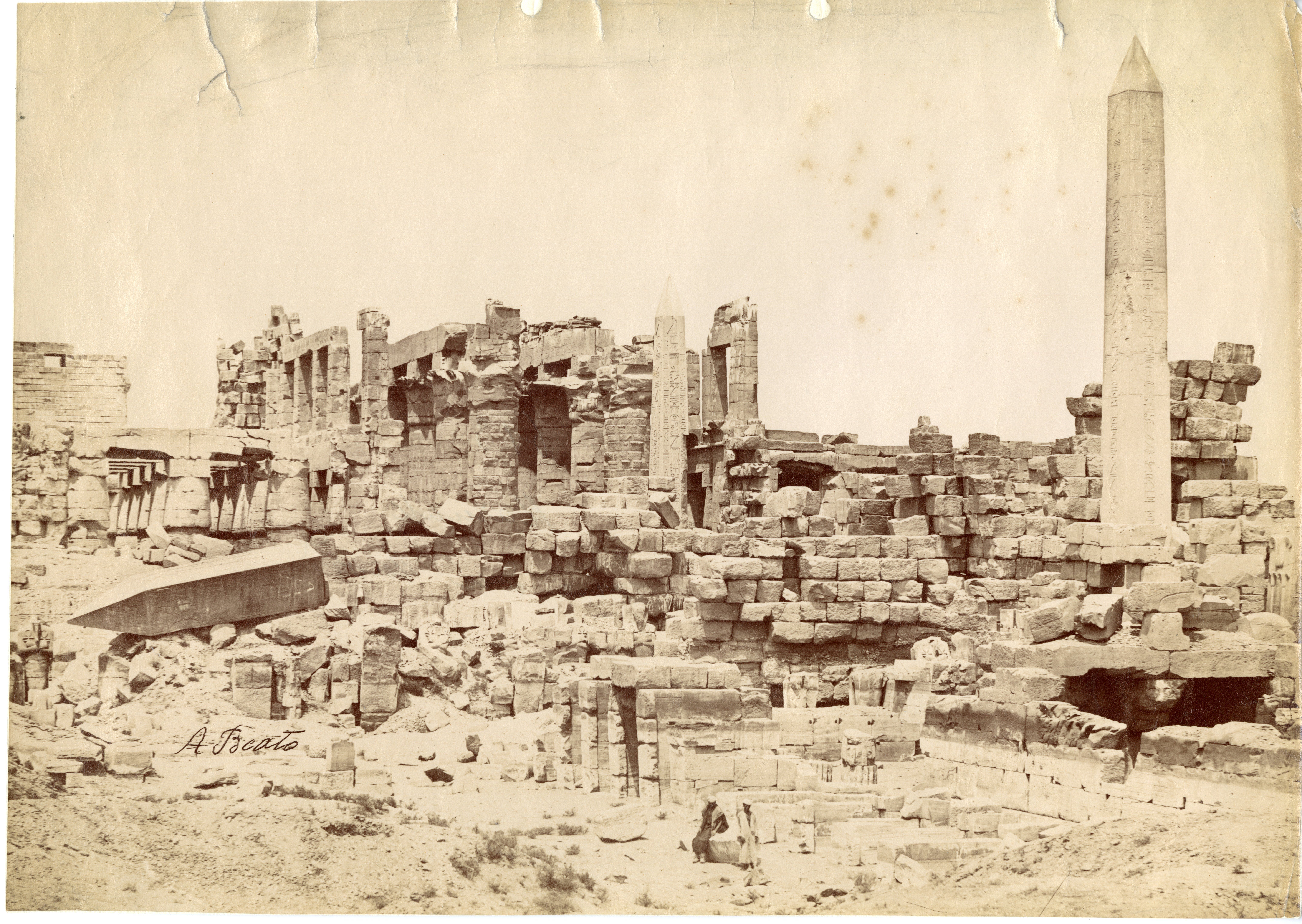
The photograph shows an eastern  view of the colonnaded Wadjet Hall built by Pharaoh Tuthmosis I in the Karnak Temple Complex. The still standing obelisks of Hatshepsut (north, on the right), the tip of he collapsed one (south, on the left) and that of Tuthmosis I (centre) are also visible. In the background, the western ruins of the Great Hypostyle Hall of Seti I can be seen. Two egyptians seated on a boulder in front of the temple, pose for the photographer, whose signature is legible on the left.
Download
Photo 22/24

The photograph shows an eastern view of the colonnaded Wadjet Hall built by Pharaoh Tuthmosis I in the Karnak Temple Complex. The still standing obelisks of Hatshepsut (north, on the right), the tip of he collapsed one (south, on the left) and that of Tuthmosis I (centre) are also visible. In the background, the western ruins of the Great Hypostyle Hall of Seti I can be seen. Two egyptians seated on a boulder in front of the temple, pose for the photographer, whose signature is legible on the left.

1870 - 1888
A. Beato
INV04_011
Positive/ Albumen paper
25,4x35,6
CC0
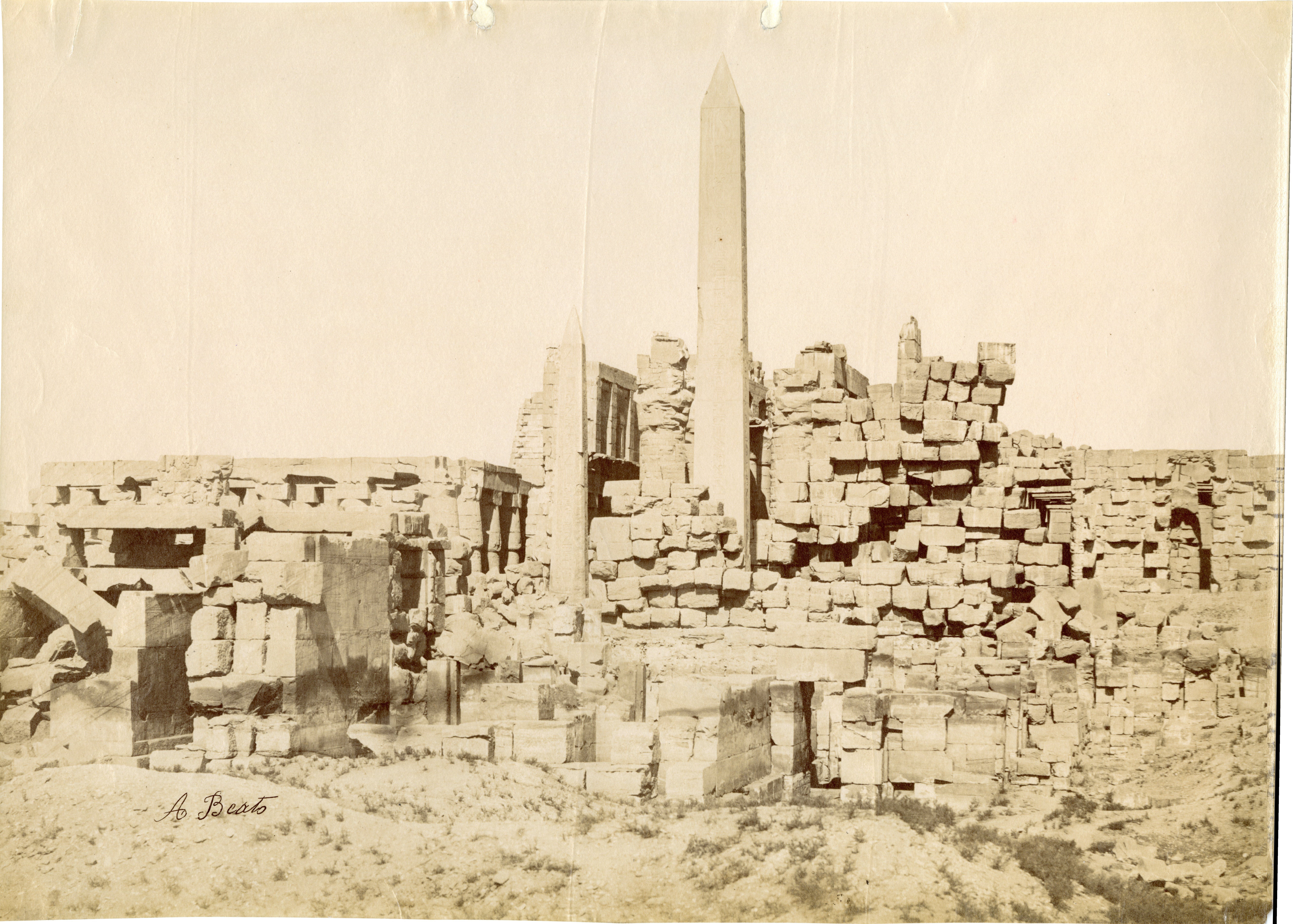
View of the western wing of the Karnak Temple Complex, from the central courtyard on which the Middle Kingdom temple was founded. Among the rubble stand the obelisks of Hatshepsut (centre) and Tuthmosis I (left), and behind them the impressive Great Hypostyle Hall of Pharaoh Seti I. The structures in the foreground correspond to the chapels of Hatshepsut and the sanctuary for the sacred boat of Pharaoh Philip Arrhidaeus (left), Alexander the Great's half-brother and his successor. The author's signature is visible at the bottom left.
Download
Photo 23/24

View of the western wing of the Karnak Temple Complex, from the central courtyard on which the Middle Kingdom temple was founded. Among the rubble stand the obelisks of Hatshepsut (centre) and Tuthmosis I (left), and behind them the impressive Great Hypostyle Hall of Pharaoh Seti I. The structures in the foreground correspond to the chapels of Hatshepsut and the sanctuary for the sacred boat of Pharaoh Philip Arrhidaeus (left), Alexander the Great's half-brother and his successor. The author's signature is visible at the bottom left.

1870 - 1888
A. Beato
INV16_002
Positive/ Albumen paper
25,5x35,7
CC0
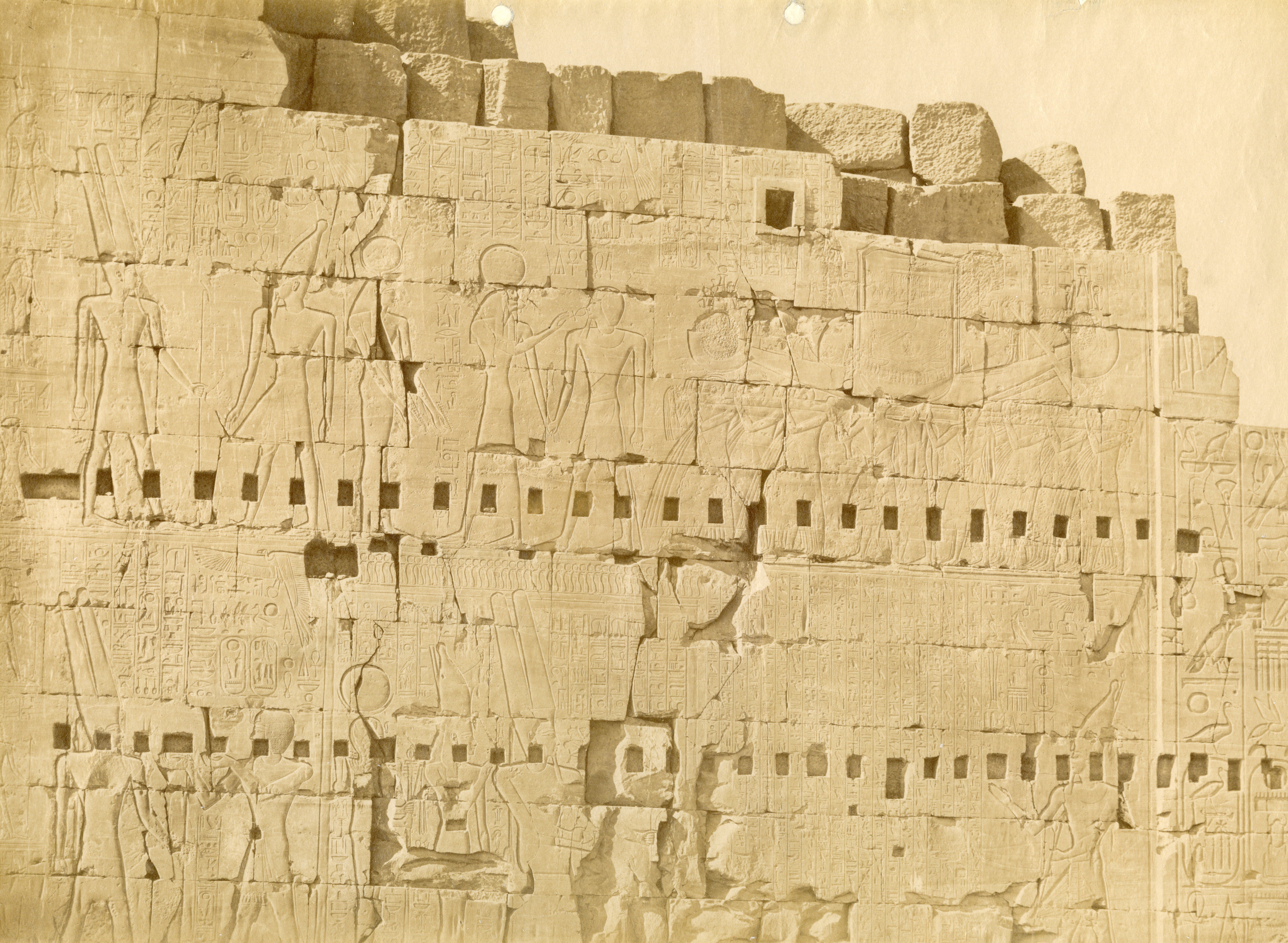
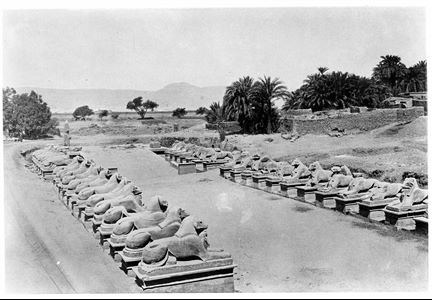
Detail of the inscriptions on the northern façade, east side, of the eighth pylon in the Karnak Temple Complex. The reliefs show pharaohs Tuthmosis I and Seti I (upper register), Tuthmosis II and Seti I (lower register) performing rituals and praying to the gods, including Amun. Queen Hatshepsut was depicted but then later replaced with the name of Tuthmosis II.
Download
Photo 24/24

Detail of the inscriptions on the northern façade, east side, of the eighth pylon in the Karnak Temple Complex. The reliefs show pharaohs Tuthmosis I and Seti I (upper register), Tuthmosis II and Seti I (lower register) performing rituals and praying to the gods, including Amun. Queen Hatshepsut was depicted but then later replaced with the name of Tuthmosis II.

1870 - 1888
A. Beato?
INV16_010
Positive/ Albumen paper
25,9x36
CC0
INV04_008
INV14_010
INV02_005
INV05_007
INV14_007
INV16_003
INV16_009
INV17_004
INV18_006
INV19_009
INV03_011
INV17_003
INV19_011
INV17_005
INV17_006
INV17_008
INV18_009
INV22_011
Album2_066
INV05_009
INV18_008
INV04_011
INV16_002
INV16_010

Other galleries of "Temple Complex of Amon in Karnak" related to your search

Temple of Amun
Temple of Amun
Museo Egizio

Via Accademia delle Scienze 6,
10123 Turin

+39 011 5617776

info@museoegizio.it 

Mon: 9:00 a.m. - 2:00 p.m.

Tue - Sun: 9.00 a.m. - 6.30 p.m.

  • About
  • Digitization project
  • How to use the Archive
  • © MUSEO EGIZIO, Turin 2025
  • Privacy and cookies
  • Accessibility
  • Contacts
  • Developed by 3x10¹⁰ S.r.l.
Condividi
Scarica