
Archivio fotografico

  • About
  • Digitization project
  • How to use the Archive
  • Browse the archive
ENG
  • English
  • Italiano
Search
Search by year
Browse the archive
  • Alexandria
  • Heliopolis
  • Cairo
  • Giza
  • Saqqara
  • Ashmunein
  • Asyut and Deir el-Gebrawi
  • Qau el-Kebir and Hammamiya
  • Abydos
  • Dendera
  • Theban region
  • Gebelein
  • Edfu
  • Kom Ombo
  • Aswan
  • Nubia
  • Miscellanea
Alexandria
  • Cleopatra's needle
  • Landscape
  • Pompey's pillar
Heliopolis
  • Channel
  • Kom
  • Landscape and unidentified areas
  • Latif's house and garden
  • Temenos and nearby areas
  • Temple area
  • Temple of Mnevis
Cairo
  • Egyptian Museum, Cairo
  • Islamic Cairo
Giza
  • Eastern necropolis
  • Evaristo Breccia at the end of the excavation
  • Landscape and unknown mastabas
  • Pyramids
  • Rock-cut tombs
  • Sphynx and funerary temple of Khafre
  • Western necropolis
Saqqara
  • Pyramid of Djoser and nearby areas
  • Tombs of nobles
Ashmunein
  • Excavation area
  • Minia
Asyut and Deir el-Gebrawi
  • Deir el-Gebrawi
  • Landscape
  • Rock-cut tombs of Asyut
Qau el-Kebir and Hammamiya
  • Caves
  • Landscape
  • Predynastic necropolis of Hammamiya
  • Rock-cut tombs of Hammamiya
  • Rock-cut tombs of Qau el-Kebir
  • Transport of antiquities
Abydos
  • Temple of Ramses II
  • Temple of Seti I
Dendera
  • Temple of Hathor
Theban region
  • Colossi of Memnon
  • Deir el-Bahari
  • Deir el-Medina
  • Khokha
  • Luxor temple
  • Medinet Habu
  • Old Chicago House (now dismantled)
  • Qurnet Murai
  • Ramesseum area
  • Rock.cut sanctuary of Ptah and Meretseger
  • Sheikh Abd el-Qurna
  • Temple Complex of Amon in Karnak
  • Temple of Pharaoh Seti I at Qurna
  • Valley of the Kings
  • Valley of the Queens
  • Workmen's huts
Gebelein
  • Campsite, Giulio Farina Excavations
  • Human remains
  • Northern hill
  • Other finds
  • Southern hill
  • Transport of antiquities
Edfu
  • Temple of Horus
Kom Ombo
  • Temple of Sobek and Haroeris
Aswan
  • First Cataract
  • Landscape
  • Qubbet el-Hawa
  • Stone quarry
  • Temple of Philae
Nubia
  • Kiosk of Qertassi
  • Rock-cut chapel of Ellesiya
  • Second cataract
  • Temple of Dendur
  • Temple of Gerf Hussein
  • Temple of Kalabsha
  • Temple of Maharraqa
  • Temple of Taffeh
  • Temples of Abu Simbel
Miscellanea
  • Beni Hasan
  • Dahshur
  • Egyptian landscape
  • Elkab
  • Esna
  • Fayum
  • Gebel el-Silsila
  • Madamud
  • Memphis
About
  • General introduction
  • Team
  • Partners
  • Contact
Digitization project
  • History of the Archive
  • Digitization
  • Map of the excavations
  • 19th century pictures
How to use the Archive
  • What is accessible to whom?
  • How to use the archive
  • Policy on access and use

Archivio fotografico

  • About
  • Digitization project
  • How to use the Archive
  • Browse the archive
Search
Back to search
  • Home
  • Archive
  • Theban region
  • Temple Complex of Amon in Karnak
  • 19th century pictures
Collezione

19th century pictures

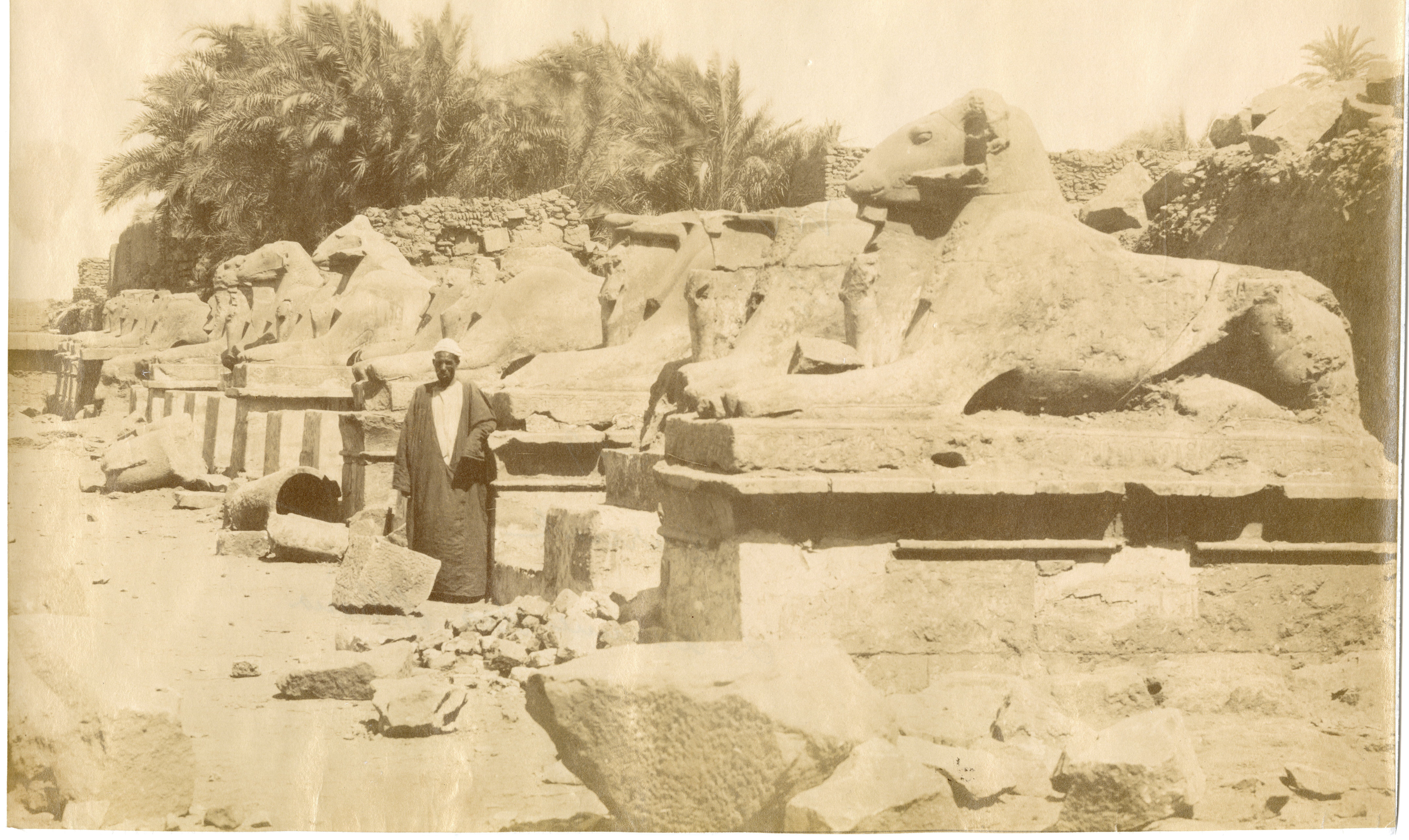
The photograph shows the northern side of the Avenue of (ram-headed) Sphinxes at Karnak, in front of the entrance to the Karnak Temple Complex. A local inhabitant poses in front of the camera. The photograph could most probably be attributed to Antonio Beato.
Download
Photo 1/9

The photograph shows the northern side of the Avenue of (ram-headed) Sphinxes at Karnak, in front of the entrance to the Karnak Temple Complex. A local inhabitant poses in front of the camera. The photograph could most probably be attributed to Antonio Beato.

1870 - 1888
A. Beato?
INV03_001
Positive/ Albumen paper
25,6x36,7
CC0
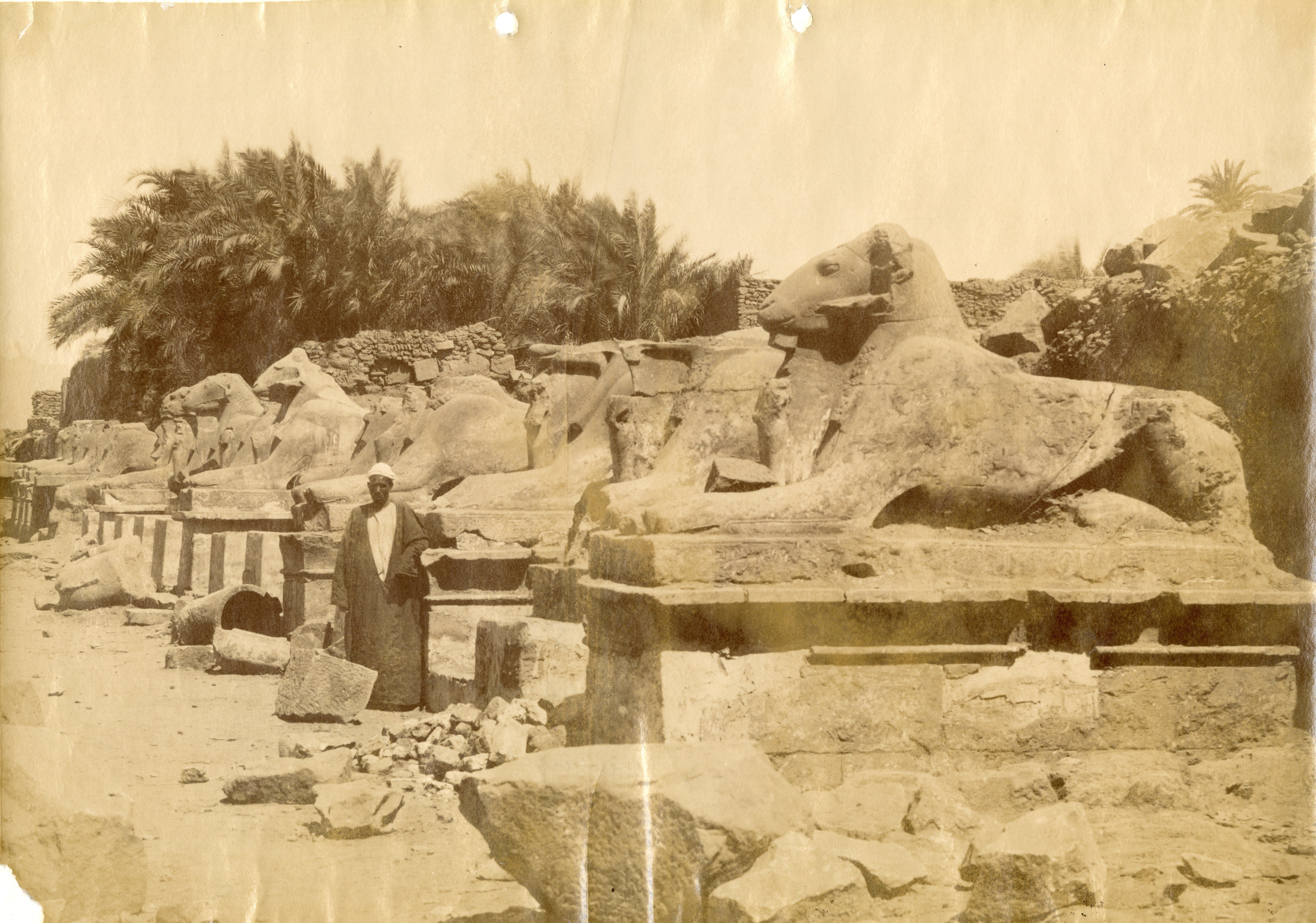
The photograph shows a view of the Avenue of Sphinxes, with ram's head, in front of the Karnak Temple Complex. Based on the style, the photograph can be attributed to Antonio Beato.
Download
Photo 2/9

The photograph shows a view of the Avenue of Sphinxes, with ram's head, in front of the Karnak Temple Complex. Based on the style, the photograph can be attributed to Antonio Beato.

1870 - 1888
A. Beato?
INV08_005
Positive/ Albumen paper
25,7x36,4
CC0
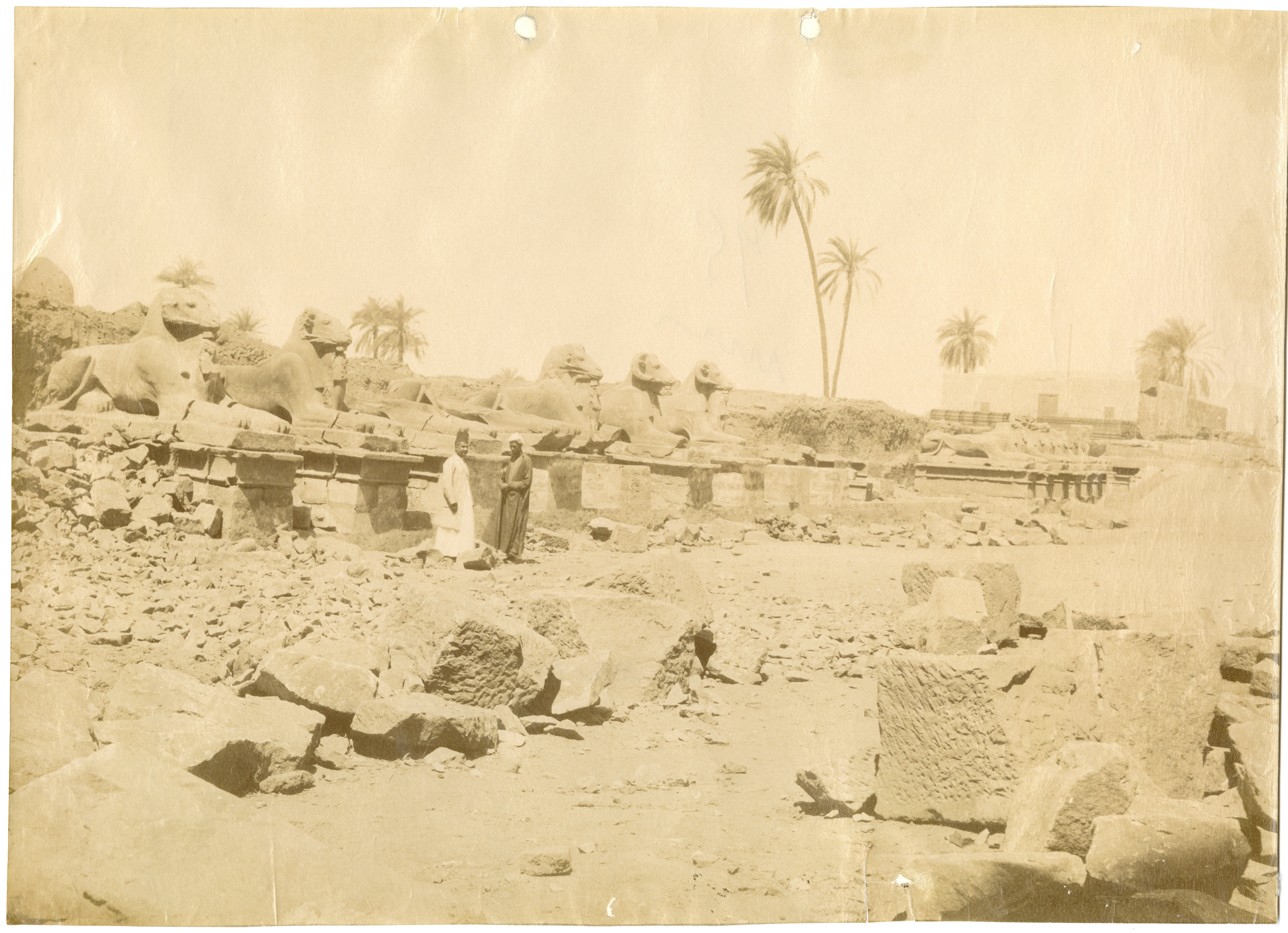
The photograph shows the ram-headed sphinxes of the great avenue leading to the first pylon of the Karnak Temple Complex, with two local inhabitants among the ruins of the ancient monuments. The photo can be attributed to Antonio Beato.
Download
Photo 3/9

The photograph shows the ram-headed sphinxes of the great avenue leading to the first pylon of the Karnak Temple Complex, with two local inhabitants among the ruins of the ancient monuments. The photo can be attributed to Antonio Beato.

1870 - 1888
A. Beato?
INV18_003
Positive/ Albumen paper
25,8x35,5
CC0
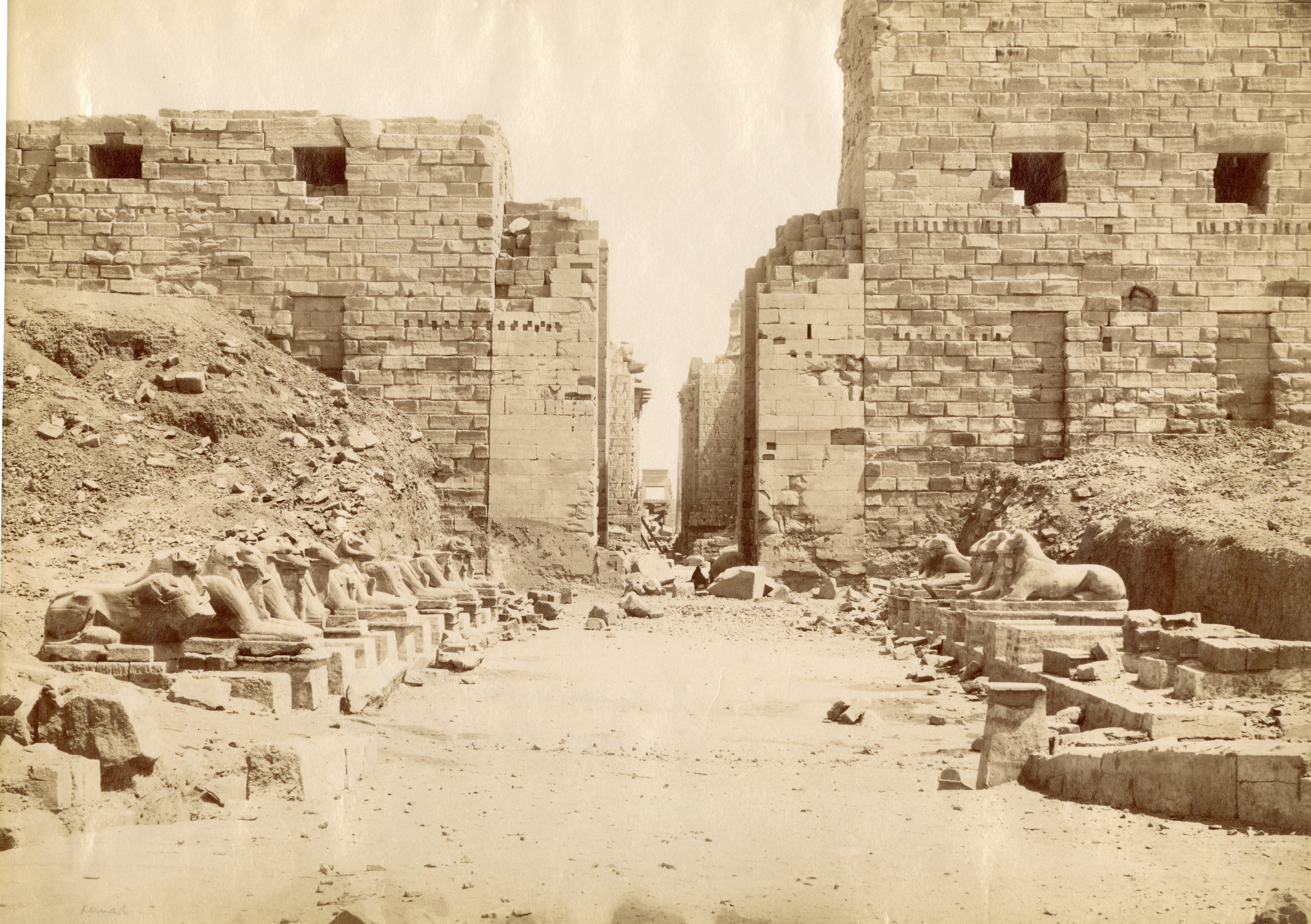
The image depicts the façade of the first pylon of the Karnak Temple Complex, photographed from the Avenue of the Sphinxes, with a figure sitting among the ruins. In the background, the central corridor of the Great Hypostyle Hall can be seen, aligned with the entrance to the temple. The photograph can be attributed to Antonio Beato.
Download
Photo 4/9

The image depicts the façade of the first pylon of the Karnak Temple Complex, photographed from the Avenue of the Sphinxes, with a figure sitting among the ruins. In the background, the central corridor of the Great Hypostyle Hall can be seen, aligned with the entrance to the temple. The photograph can be attributed to Antonio Beato.

1870 - 1888
A. Beato?
INV03_005
Positive/ Albumen paper
25,9x35,9
CC0
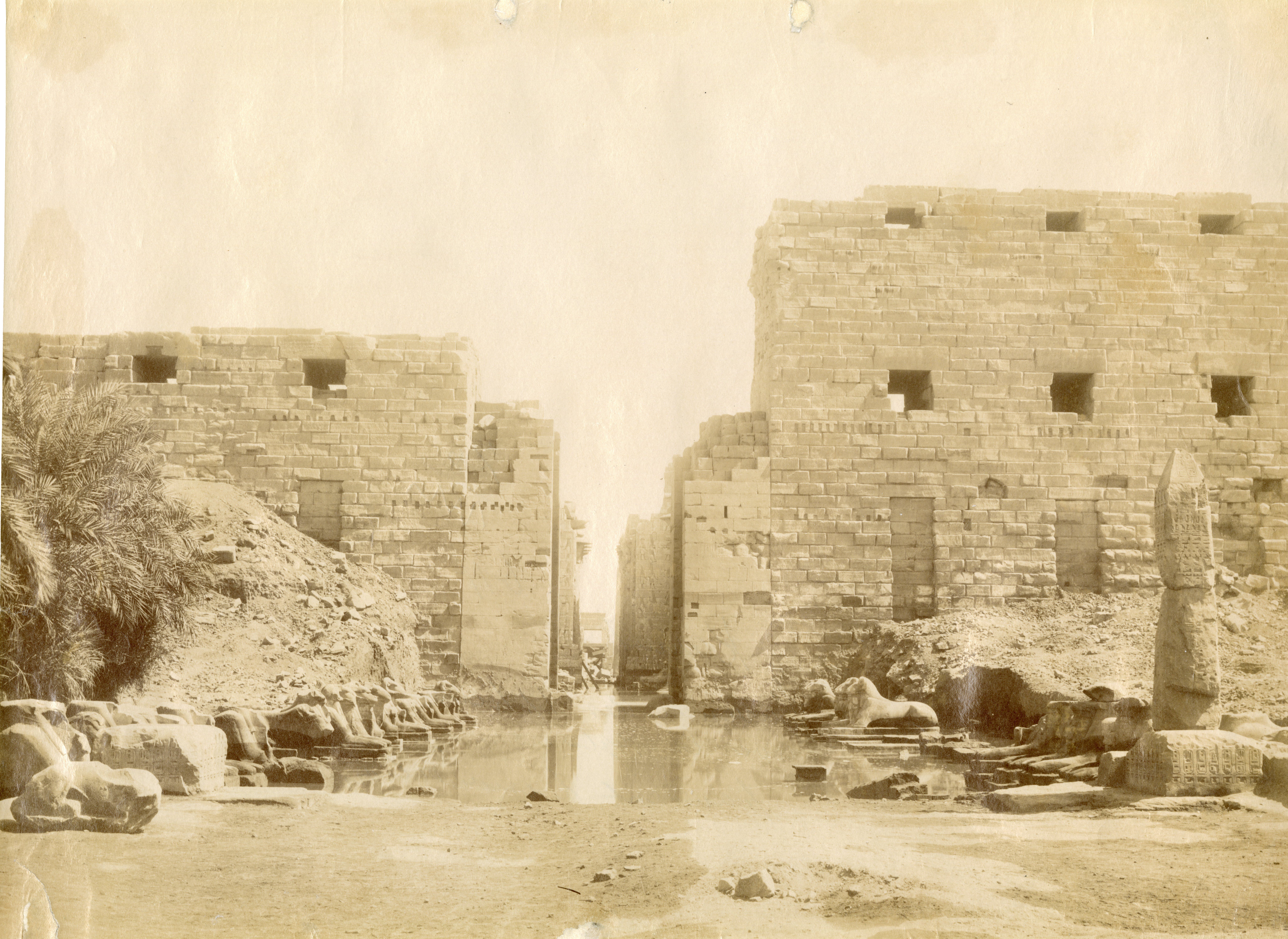
The photograph shows the main entrance to the Karnak Temple Complex (first pylon) from the Avenue of the Sphinxes with ram's head. This striking shot shows the ruins of the temple complex submerged in water during one of the Nile's floods. The photo can be attributed to Antonio Beato.
Download
Photo 5/9

The photograph shows the main entrance to the Karnak Temple Complex (first pylon) from the Avenue of the Sphinxes with ram's head. This striking shot shows the ruins of the temple complex submerged in water during one of the Nile's floods. The photo can be attributed to Antonio Beato.

1870 - 1888
A. Beato?
INV15_001
Positive/ Albumen paper
25,7x35,5
CC0
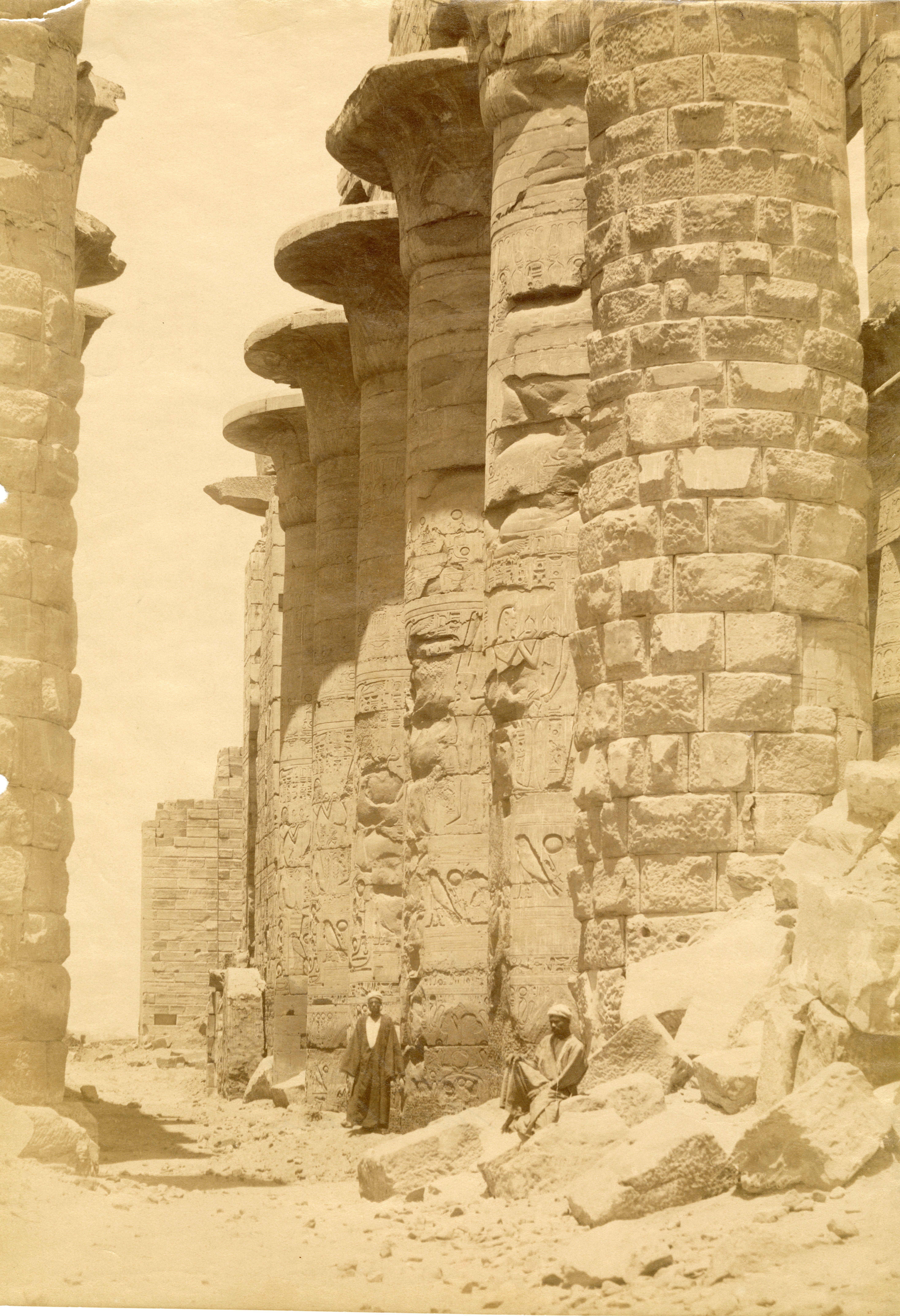
The photograph shows the central colonnade of the Great Hypostyle Hall inside the Karnak Temple Complex, with two men probably positioned to show the sheer size of the columns. In the background, to the right, part of the second pylon is visible. The shot can be attributed to Antonio Beato.
Download
Photo 6/9

The photograph shows the central colonnade of the Great Hypostyle Hall inside the Karnak Temple Complex, with two men probably positioned to show the sheer size of the columns. In the background, to the right, part of the second pylon is visible. The shot can be attributed to Antonio Beato.

1870 - 1888
A. Beato?
INV03_008
Positive/ Albumen paper
36,4x25,4
CC0
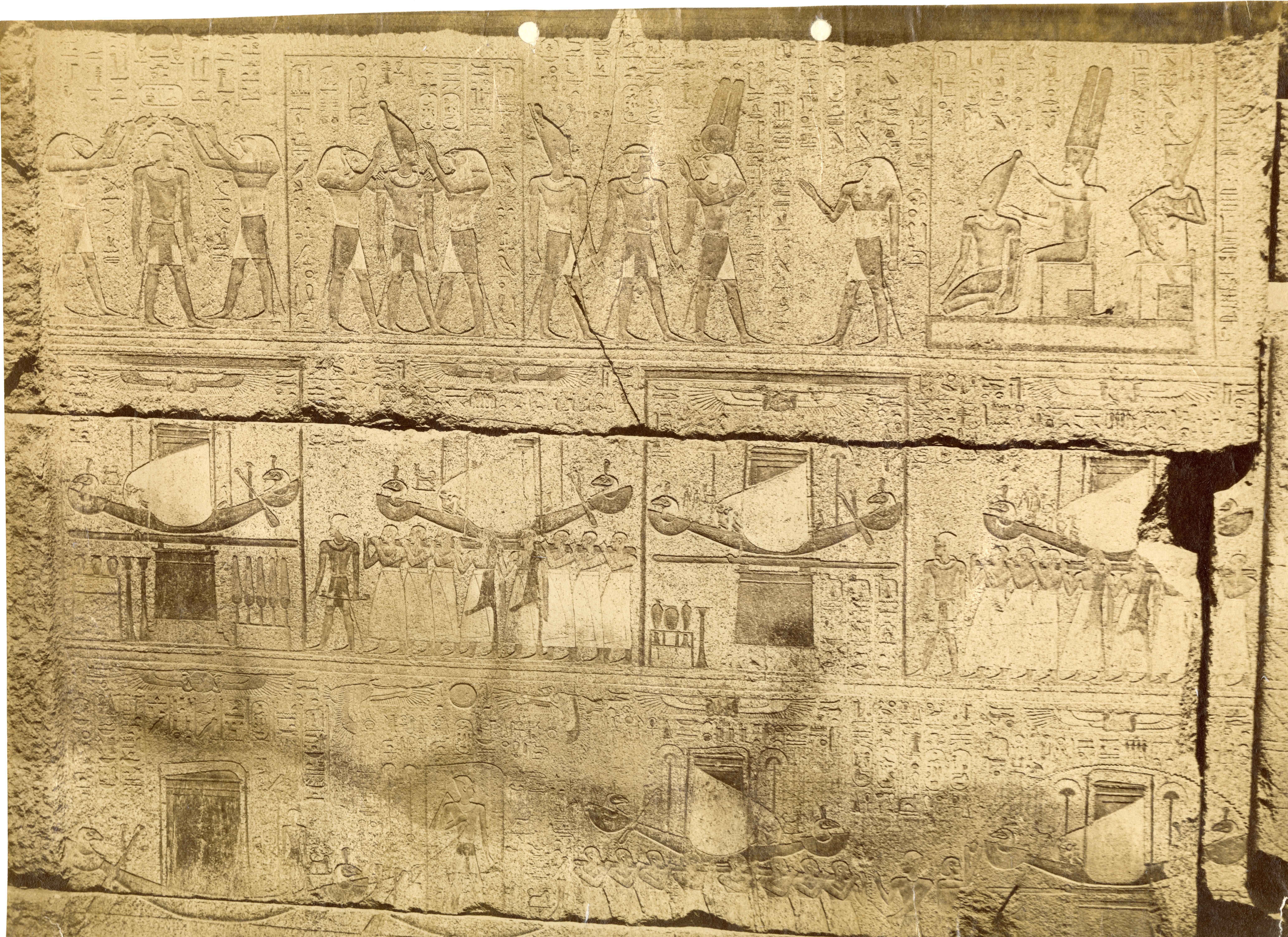
The photograph shows a detail of the wall decoration from the Karnak Temple Complex, in the “Sanctuary of the sacred boat” of Philip Arrhidaeus, depicting ceremonial scenes of presenting the King to Amun and the transport of the sacred boat. Based on the style, the photograph can be attributed to Antonio Beato.
Download
Photo 7/9

The photograph shows a detail of the wall decoration from the Karnak Temple Complex, in the “Sanctuary of the sacred boat” of Philip Arrhidaeus, depicting ceremonial scenes of presenting the King to Amun and the transport of the sacred boat. Based on the style, the photograph can be attributed to Antonio Beato.

1870 - 1888
A. Beato?
INV12_009
Positive/ Albumen paper
26x35,8
CC0
The image shows the ruins of the vestibule built by Tuthmosis III in the Karnak Temple Complex. In particular, the monolithic pink granite pillars bearing the emblems of Upper Egypt (right) and Lower Egypt (left) stand out, with the Lotus and Papyrus respectively. The photo can be attributed to Antonio Beato.
Download
Photo 8/9

The image shows the ruins of the vestibule built by Tuthmosis III in the Karnak Temple Complex. In particular, the monolithic pink granite pillars bearing the emblems of Upper Egypt (right) and Lower Egypt (left) stand out, with the Lotus and Papyrus respectively. The photo can be attributed to Antonio Beato.

1870 - 1888
A. Beato?
INV22_002
Positive/ Albumen paper
35,4x26,2
CC0
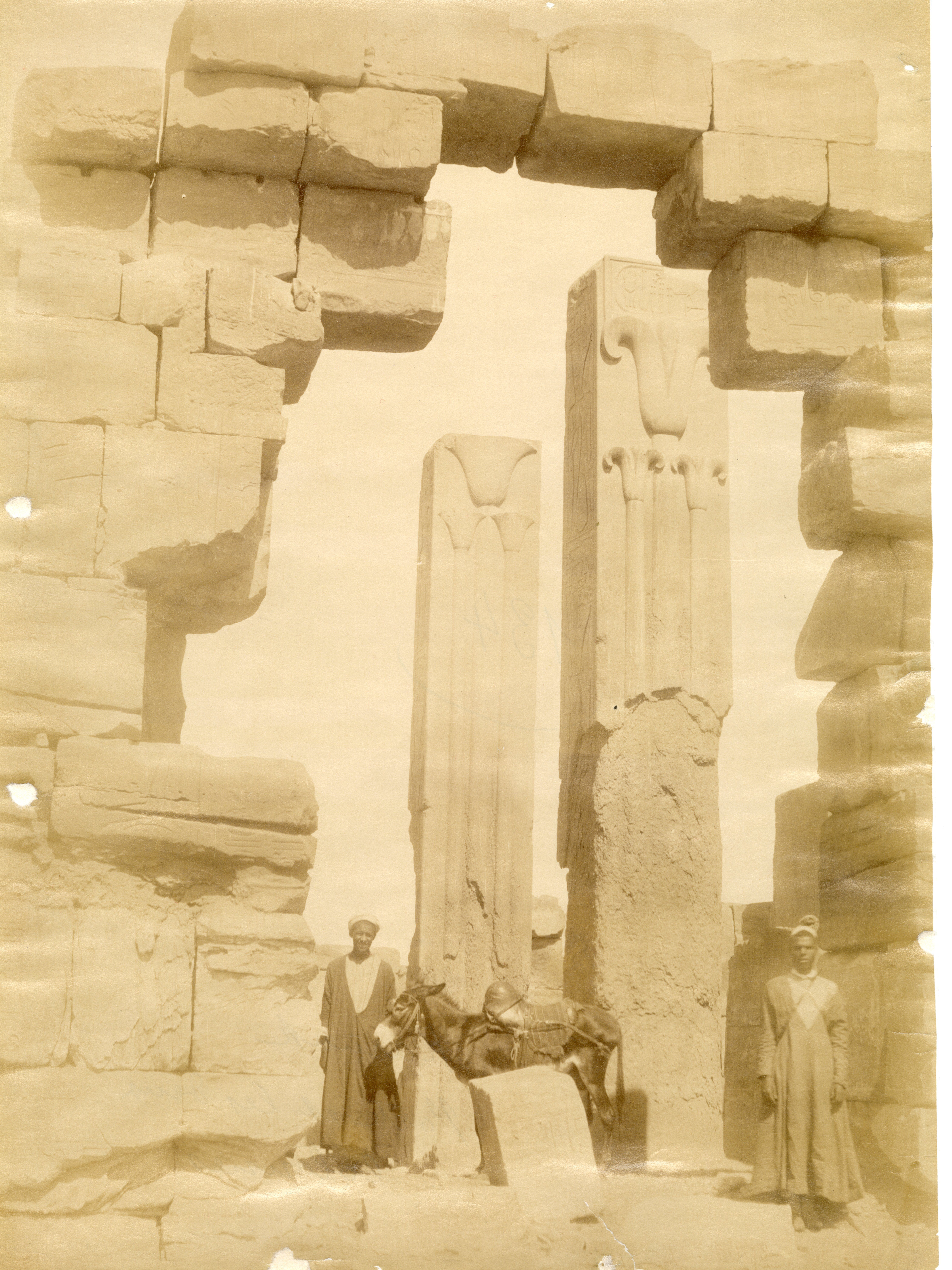
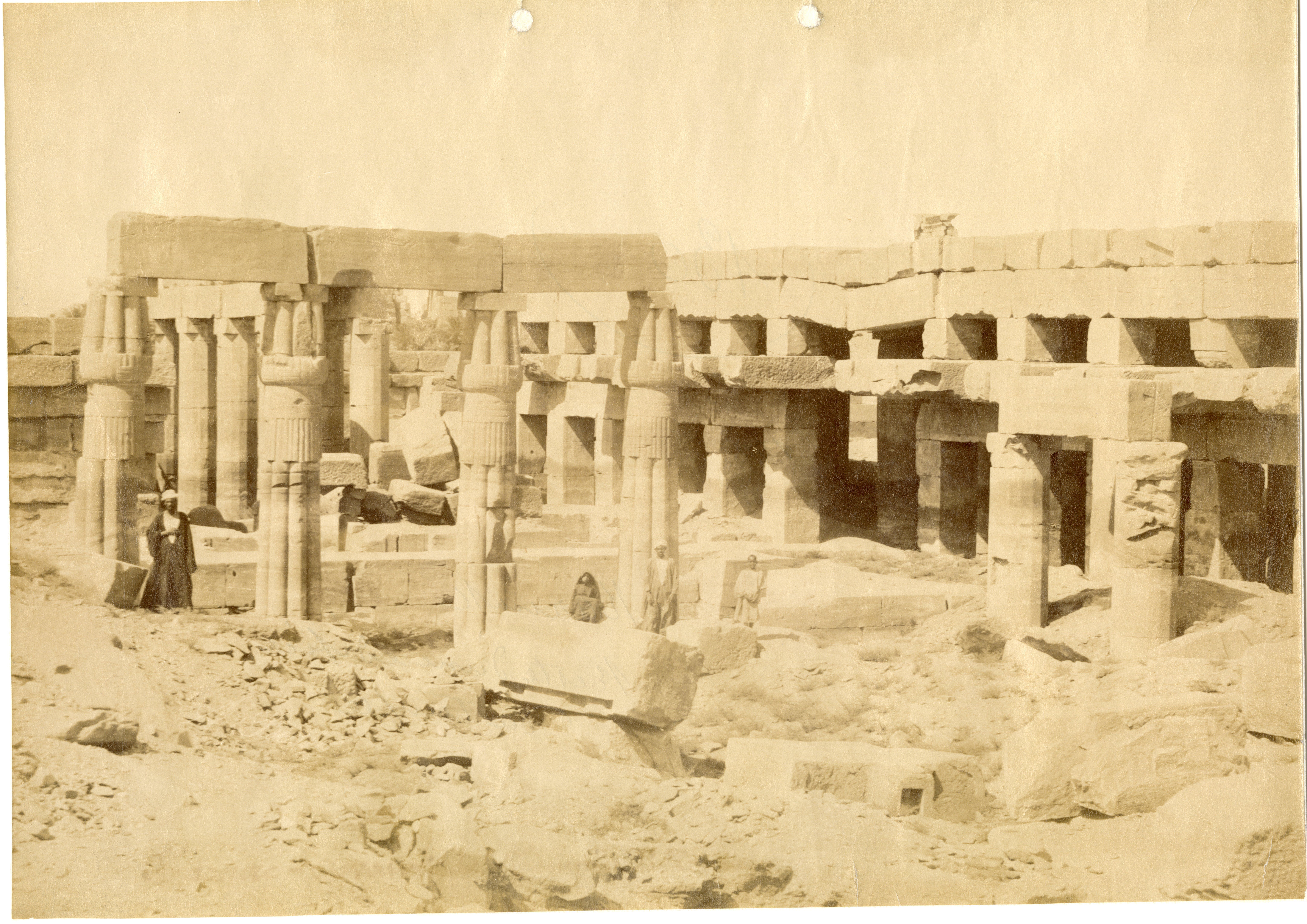
In the image there are some Egyptians among the ruins of the Akhmenu (“Festival Hall”), the temple built by ruler Tuthmosis III within the Karnak Temple Complex. Among the ruins, four papyrus columns are still standing. The photograph can be attributed to Antonio Beato.
Download
Photo 9/9

In the image there are some Egyptians among the ruins of the Akhmenu (“Festival Hall”), the temple built by ruler Tuthmosis III within the Karnak Temple Complex. Among the ruins, four papyrus columns are still standing. The photograph can be attributed to Antonio Beato.

1870 - 1888
A. Beato?
INV19_008
Positive/ Albumen paper
25,9x36,3
CC0
INV03_001
INV08_005
INV18_003
INV03_005
INV15_001
INV03_008
INV12_009
INV22_002
INV19_008
Museo Egizio

Via Accademia delle Scienze 6,
10123 Turin

+39 011 5617776

info@museoegizio.it 

Mon: 9:00 a.m. - 2:00 p.m.

Tue - Sun: 9.00 a.m. - 6.30 p.m.

  • About
  • Digitization project
  • How to use the Archive
  • © MUSEO EGIZIO, Turin 2025
  • Privacy and cookies
  • Accessibility
  • Contacts
  • Developed by 3x10¹⁰ S.r.l.
Condividi
Scarica